
A S-76C++ Ditched During a PC2 Take Off After an Engine Failure (Heli-Union F-HJCS 2011)
On 11 July 2011 Héli-Union Sikorsky S-76C++ F-HJCS ditched during take off from the Yetagun FSO in the Andaman Sea off Myanmar. The co-pilot and 2 passengers downed, 8 other occupants were rescued only after a delay initiating the FSO’s Emergency Response Plan (ERP).
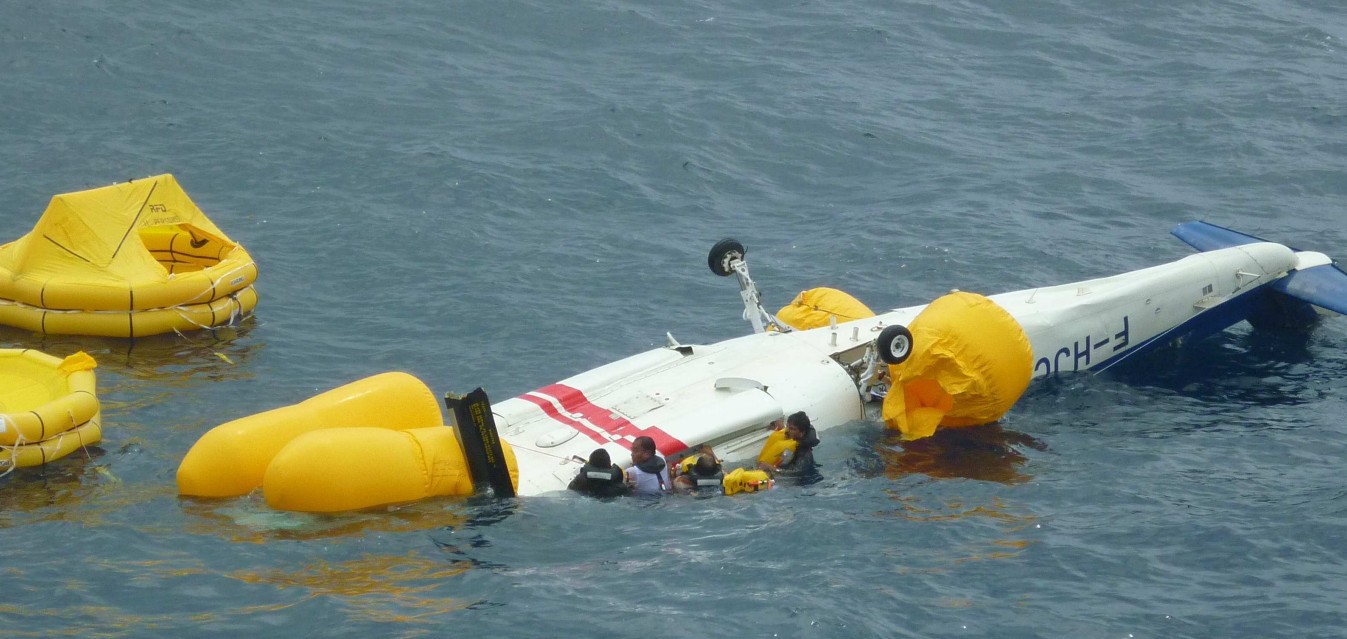
One engine had lost power during the take off and while a controlled ditching was attempted, the helicopter impacted the sea “rather hard” and capsized immediately.
The Myanmar Accident Investigation Bureau (MIAB) delegated the investigation to the Bureau d’Enquêtes et d’Analyses (BEA), the French Safety Investigation Authority, who released the final report.
History of the Accident Flight
The helicopter took off from Kanbauk at c 09:00 Local Time, landing 110 NM away on the helideck of the FSO at 10:13. The Aircraft Commander (Pilot Flying) had 5158 hours total experience (1173 offshore and 528 on type). The Co-Pilot (Pilot Monitoring) had 6338 hours total (2675 offshore and 3165 on type).
Its next sector was to be from the FSO to the Yetagun installation c 1 NM away: 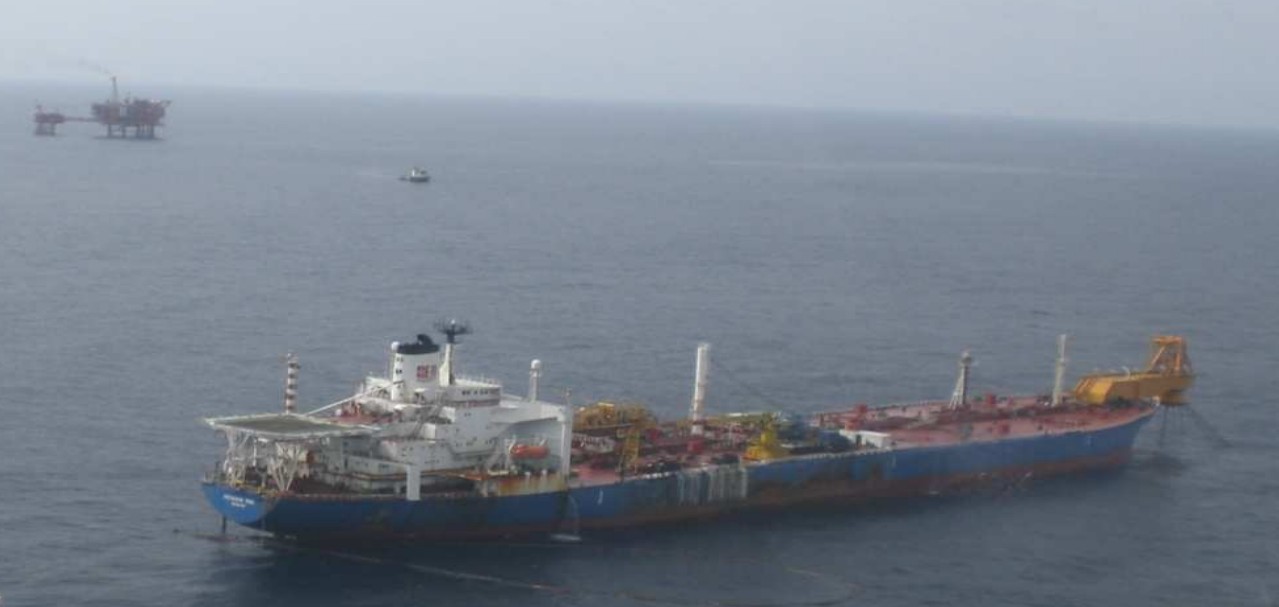 After the turnaround on teh FSO:
The FSO was oriented on a 215° heading, the wind was from 228° for 17-18 knots. The pilot hovered on heading 125° before take off.
The aircraft climbed vertically for a Performance Class 2 takeoff to 25 feet above the helideck (75 ft AMSL). Data from the CVFDR and HUMS (Honeywell EVXP) recorded that then…
…the aural warning sounded and ENGINE OUT warning light illuminated. The left engine temperature T5 was in the red zone (983°C read by the pilot) and the pilot felt the helicopter loosing power and heard a clanking noise. Because of the low height of the helicopter the pilot decided to ditch.
The crew inflated all the Emergency Flotation System (EFS) before contacting the water surface “rather hard”. The wave height was approximately 2 m and the wind from the right of the helicopter. The helicopter capsized onto its left side, the cockpit upper windows failed and “water poured into the cockpit”. The occupants, who had all completed Helicopter Underwater Escape Training (HUET)…
…got out within a few minutes by helping each other.
The captain evacuated through the right pilot’s door while the passengers and the co-pilot evacuated through the window of the right sliding passenger door.
All the [Mk 28] life jackets and two [RFD Aerolite 10] life rafts were inflated and the PF managed to help his co-pilot and passengers.
In relation to the FSO’s ERP, the FSO’s manual appropriately…
…describes the procedure in case of Helicopter Ditching in the vicinity of the FSO. “Preferably, the field stand-by boat will be in close support around the FSO with the fast zodiac ready for immediate launch. If the stand-by boat cannot be in close support, i.e. because there is an offload taking place, and she is secured to the export tanker or she is deployed elsewhere in the field, then the fast zodiac should still be available for launch. If the above is not possible, then the FSO starboard lifeboat should be ready for immediate launch. Should the helicopter ditch, the ability to reach the crash site as quickly as possible is essential…”
However, in practice on the FSO they just “threw life buoys and positioned a ladder” but crucially did not launch any rescue craft. Approximately 30 minutes later, the field standby vessel which the accident investigators say “was localised between FSO and the platform”, which are separated by a distance of only 1 NM (!), arrived to undertake rescue operations. The standby vessel was so slow the average human swimmer would have outpaced it!
Despite being only 50 m from the FSO when it ditched it took 60 minutes to recover the 8 survivors, 3 occupants “were dead of drowning”. The helicopter subsequently sank.
Safety Investigation
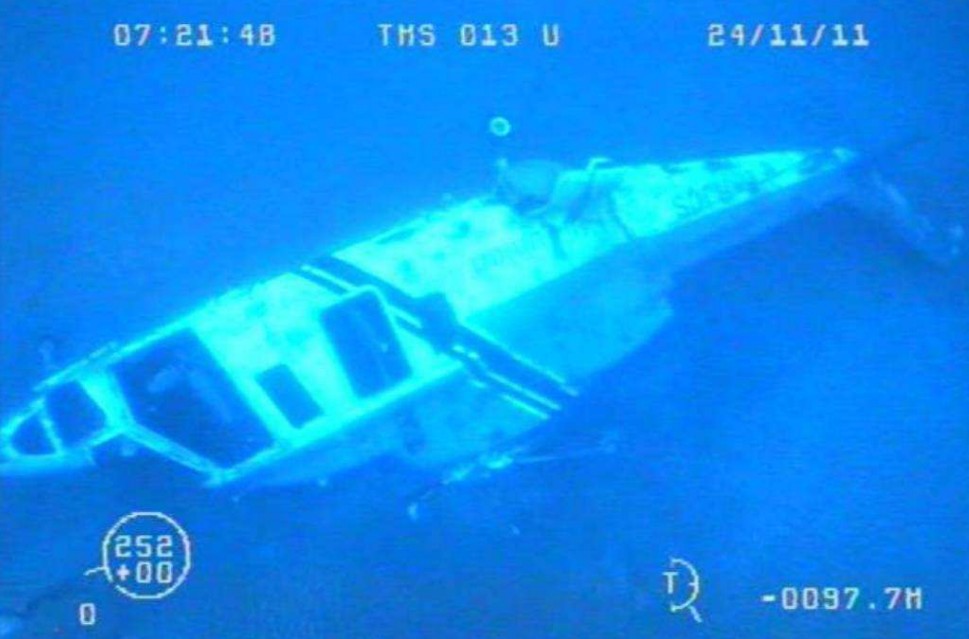
The wreckage was only located during the second search campaign and salvaged 26 November 2011.
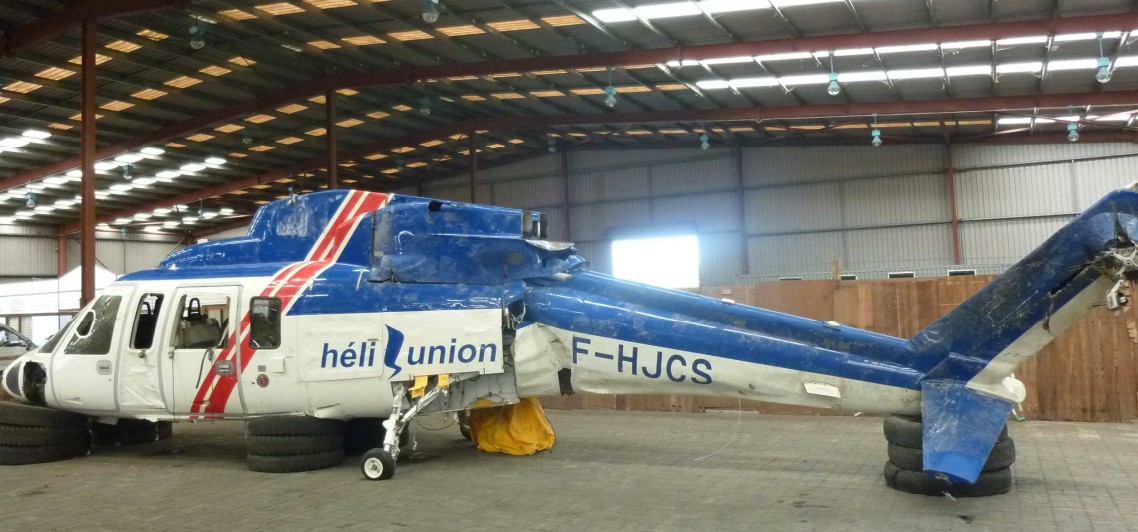
Investigators discovered that a blade of the High Pressure (HP) Turbine of the No 2 Arriel 2S2 engine had failed in fatigue near its root. This resulted in secondary damage to other HPT blades, impact damage to the Nozzle Guide Vanes and damage to the Gas Generator (GG) Turbine blades.
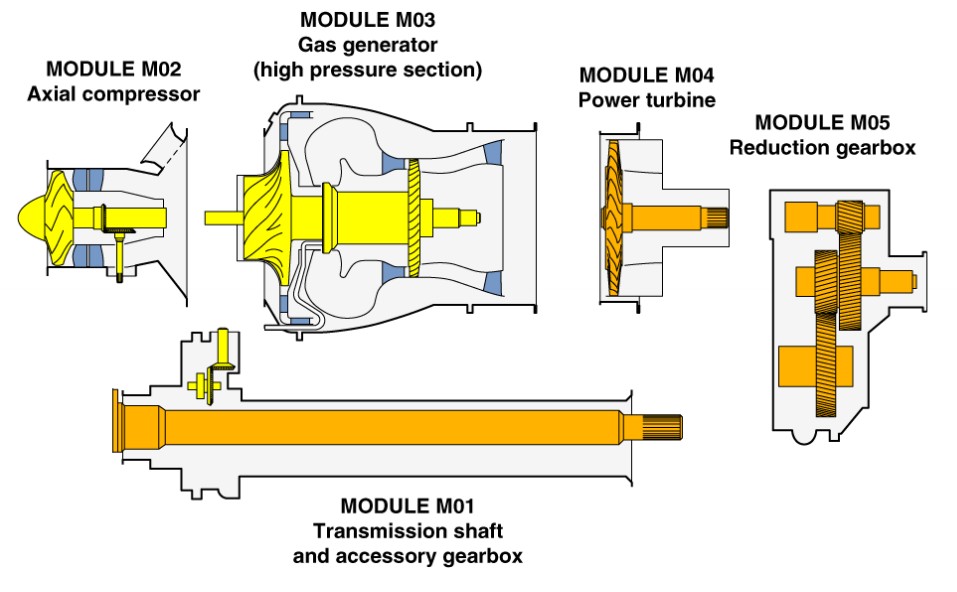
The HPT containment shield worked so the debris was contained. Previously…
On Arriel 2S2 engines, 7 cases of HP broken blades and 18 cases of cracked HP blades have been listed between February 2007 and December 2011. For the year 2011, 4 cases of in-flight engine shutdowns have been registered on Arriel 2 engines (2 events on Arriel 2S2 engines including the F-HJCS accident).
The investigators report that:
The probable scenario of the blades’ failure is a rupture excitation of one of the vibration modes of the HP blade in conjunction with several secondary contributing factors deemed sufficient to reduce the stress margin of the HP blade to a level consistent with the occurrences of ruptures encountered.
Engine manufacturer Turbomeca (now Safran) had issued modification TU166 to address this problem. It added a damper (see below) in the inter-blade area under the platform and inspections on the HP turbine discs.
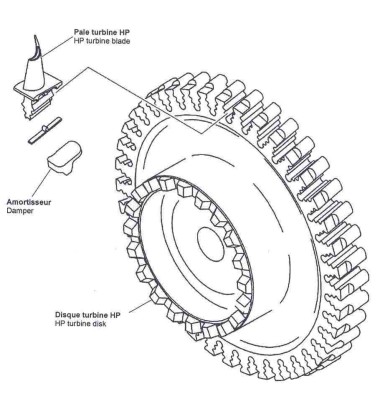
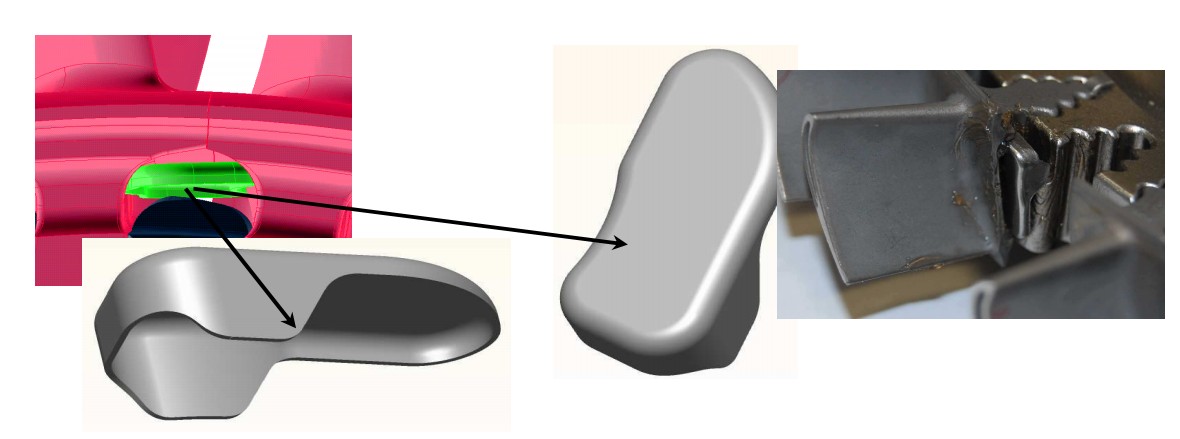
EASA had issued Airworthiness Directives AD 2010-0198 to make TU166 mandatory, but it applied only to single engine applications. F-HJCS had not been retrofitted with TU166. After the accident AD 2012-0124 extended applicability to the Arriel 2S2 fitted to the S-76C++.
The JAR-OPS3 3.517(a) approval for “Operations without an assured safe forced landing capability” depended on a powerplant system reliability assessment that required timely access to engine data. The investigators note that at the time there had been long delays getting access to data, stating:
At the end of 2011 the DGAC finally received data from the manufacturer for the period 2005-2009 after having asked several times.
Technically this was also the engine data, without any data on possible aircraft installation related causes. Investigators comment that:
The failure to release updated statistics within a reasonable time period makes it impossible for the national authorities to rule on the continuation or the suspension of eligibility for a helicopter type.
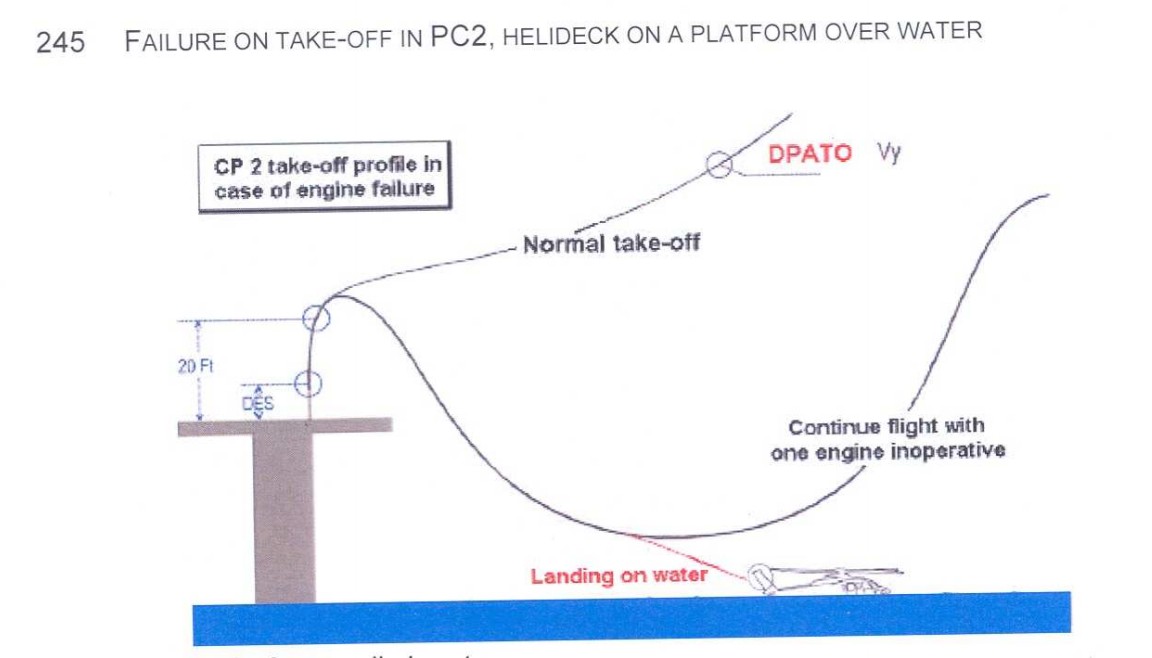
The S-76C++ Flight Manual states that when operating on an elevated helideck…
…the procedure to follow after an engine failure during a vertical take off depends on where in the take off sequence the failure occurs. If the engine fails before the TDP [Take Off Decision Point], the take off is rejected and the aircraft is landed on the helideck. The TDP is 30 ft above the take off surface. If the failure occurs after the TDP, the take off will be continued.
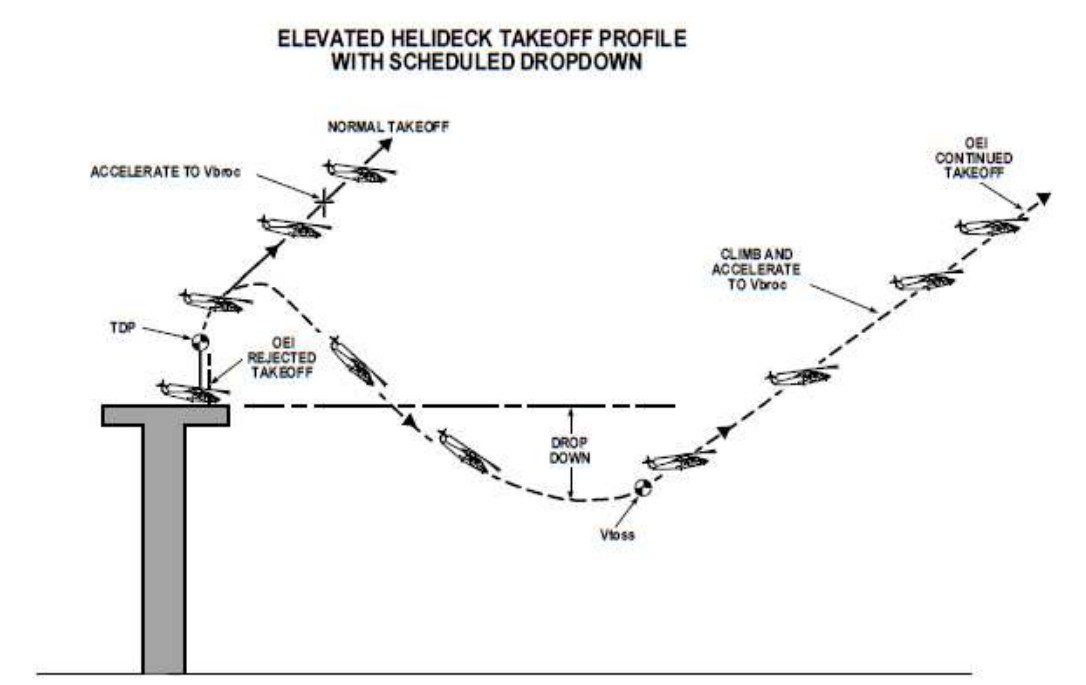
The aircraft should therefore have rotated at 30 feet not 25 feet. However, the investigators point out that:
The Héli Union operations manual, approved by the DGAC, makes no reference to the TDP nor to the rotation point in its description of the procedure for engine failure during takeoff from a helideck [see below]. However, the illustration indicates a height of 20 feet above the helideck.
In relation to emergency response:
…the emergency procedures were not followed properly. …the FSO should have immediately made a Zodiac or the Starboard lifeboat available as the field stand-by boat was not in the vicinity of the FSO.
Our Safety Observation
Our observation is that too often offshore installations focus on the ‘helicopter crash on deck’ emergency scenario at the expense of exercising the response to ditchings / water impacts within their 500 m zone. Our safety resources (below) include several case studies were there were delays or even total failures to initiate an emergency reponse.
Safety Resources
The European Safety Promotion Network Rotorcraft (ESPN-R) has a helicopter safety discussion group on LinkedIn. You may also find these Aerossurance articles of interest:
S-92A Night Approach Mode Awareness Incident
AW139 Loss of Control Climbing Away from SAR Exercise
North Sea Helicopter Struck Sea After LOC-I on Approach During Night Shuttling
Night Offshore Helicopter Approach Water Impact
Loss of Sikorsky S-76C+ 5N-BQG of Eastwind Off Nigeria 24 October 2024
29 Seconds to Impact: A Fatal Night Offshore Approach in the Irish Sea
S-76D Loss of Control on Approach to an Indian Drilling Rig
Fatal Taiwanese Night SAR Mission
NTSB Report on Bizarre 2012 US S-76B Ditching
Offshore Helicopter Emergency Response