Fatal Fall From B429 During Helicopter Hoist Training
18 February 2018
Fatal Fall From B429 During Helicopter Hoist Training
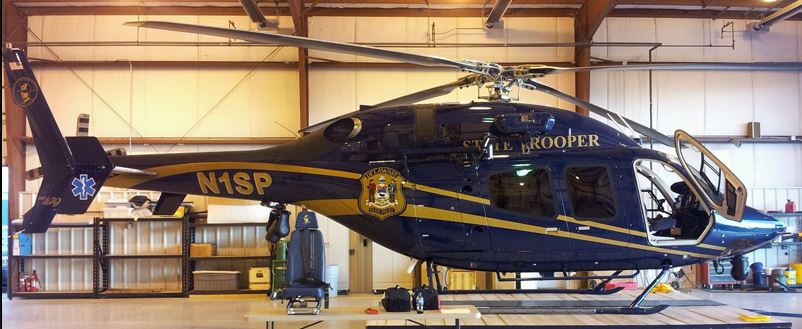
On 11 July 2016 Delaware State Police (DSP) Aviation UnitBell429 helicopter N1SP was performing recurrent rescue hoist training with volunteer fireman of the Delaware Air Rescue Team (DART) at Delaware Coastal Airport, Georgetown, DE when the hoist system operator (aka winch operator) fell from the helicopter and was fatally injured.
In their recently issued report, the US National Transportation Safety Board (NTSB) say there were three crew members in the cabin who:
…needed to complete 3 evolutions in each position [rescue specialist, a system operator, and a safety officer] to complete the recurrent training. All three individuals had most recently completed hoist operation training on June 15, 2016.
During an evolution, the rescue specialist would be lowered from the helicopter. The system operator, located on the helicopter’s skid, would retract the hook back into the helicopter, and the pilot would then return the helicopter to the original hover position in flight. Then, the rescue specialist would cue the crew to return to the target area (where the rescue specialist was located). The system operator would extend the hook, the rescue specialist would connect himself to the hoist, and the system operator would raise the rescue specialist back into the helicopter.
After three evolutions, the pilot would land the helicopter; the crew would rotate positions and restart the process. According to a rescue checklist, the security of each member’s safety harness was checked before each takeoff.
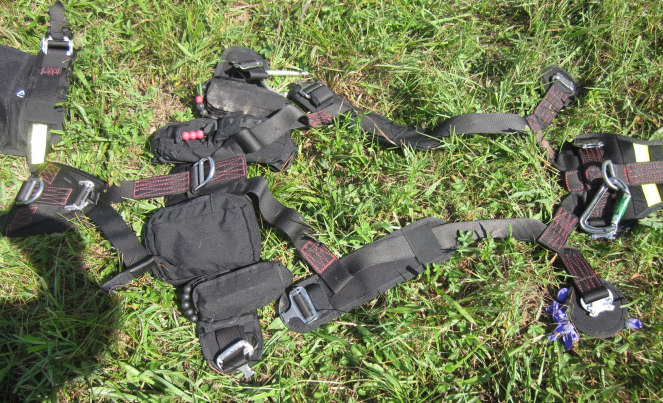
It incorporated 4 tether points; 2 on the front of the harness and 2 on the back.
DSP Harness Secured (Credit: FAA via NTSB)
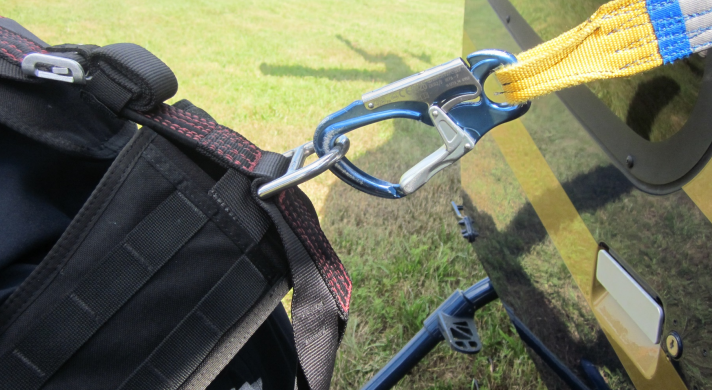
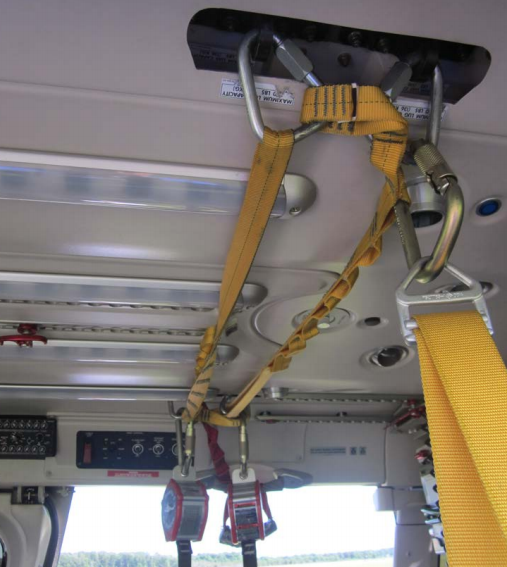
Each tether point incorporated a D-ring that could attach to a carabiner connected to the interior of the helicopter.
DSP Harness System Secured Inside B429 Cabin (Credit: FAA via NTSB)
The accident flight was the seventh evolution of the day, and the first flight where the fatally-injured crewmember acted as the system operator.
DSP procedures required two other people check the security of the restraints.
The safety officer and rescue specialist reported they checked and verified that the restraints were secure.
The helicopter then lifted off the ground, moved to the practice area, and the system operator requested and was granted permission by the pilot to move to the helicopter skid. The system operator stepped onto the skid [from where we would control the hoist and guide the hoist cable] and fell from the helicopter.
The pilot stated that throughout the accident sequence, the crew was not rushing while they completed the checklists.
Investigators say:
Examination of the system operator’s equipment did not reveal any failures or malfunctions that would explain the fall. Additionally, examination of the tether to the helicopter did not reveal any abnormalities. In the absence of any equipment failure, it is likely that the system operator was not fastened to the helicopter.
NTSB Probable Cause
The emergency response team’s failure to ensure that the system operator was secured to the helicopter, which resulted in his fall during the recurrent rescue hoist training operation.
Our Observation
Even with recently trained personnel and two independent checks of the harness, the winch operator was unsecured when he stepped on to the skid.
Of course winchmen / rescuers do disconnect from the hoist during rescues and don’t have the luxury of an independent and competent verification that they have reconnected correctly. A fatal accident occurred to a rescuer from Airbus HelicoptersBK117C2N392TC operated by STAR Flight, a US HEMS operator of Travis County, Texas on 27 April 2015. This fall occurred during a night-time rescue in rough terrain. The NTSB explain that:
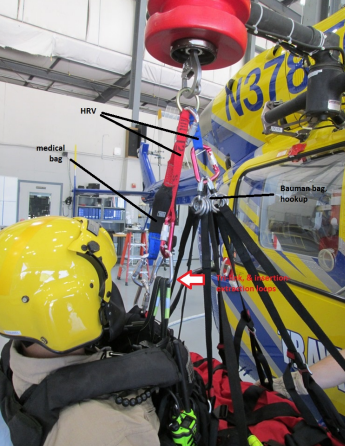
The patient, who was in a Bauman bag, and the rescuer were…lifted from the ground by the hoist. The hoist operator continued to reel in the patient and the rescuer as the helicopter transitioned from a hover to forward flight. When the patient and rescuer were about 10 ft below the helicopter’s skids, the rescuer fell about 100 ft to the ground.
Typical Hook-Up Arrangement (Credit: NTSB)
Examination of the rescuer’s equipment did not reveal any failures or malfunctions that would explain the fall. Additionally, examination of the hoist hook and helicopter equipment did not reveal any abnormities.
In the absence of any equipment failure, it is likely that the rescuer was not properly fastened to the hoist.
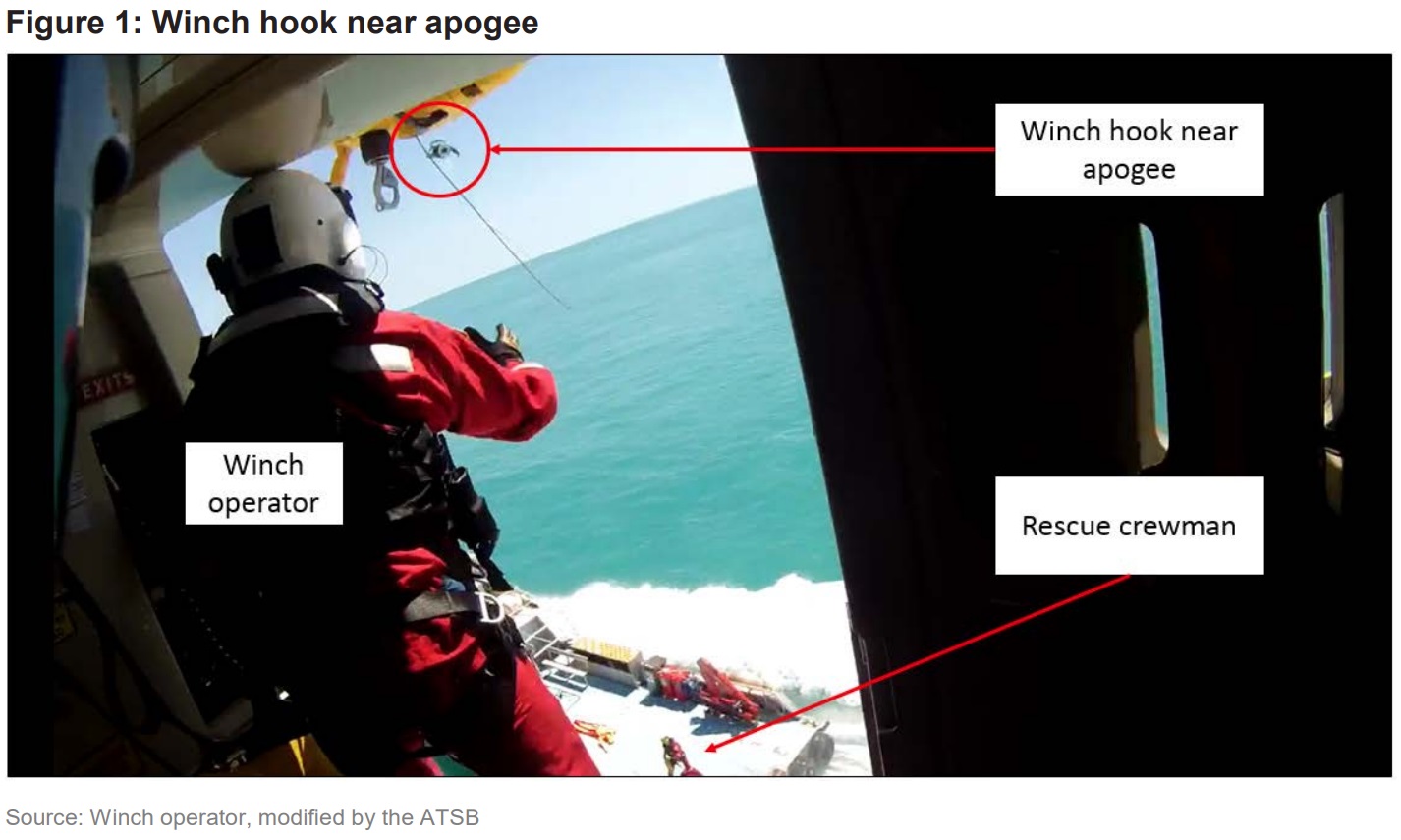
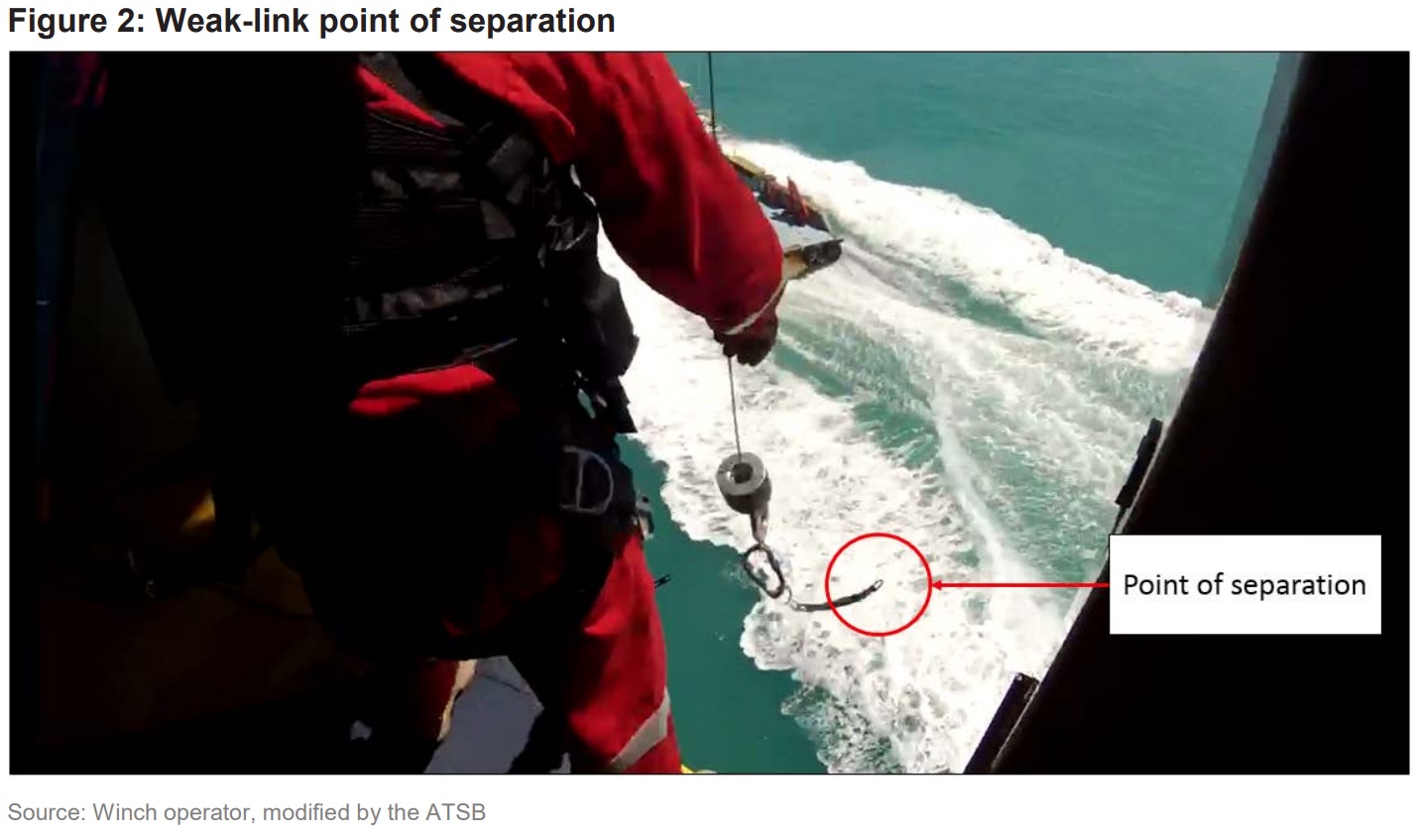
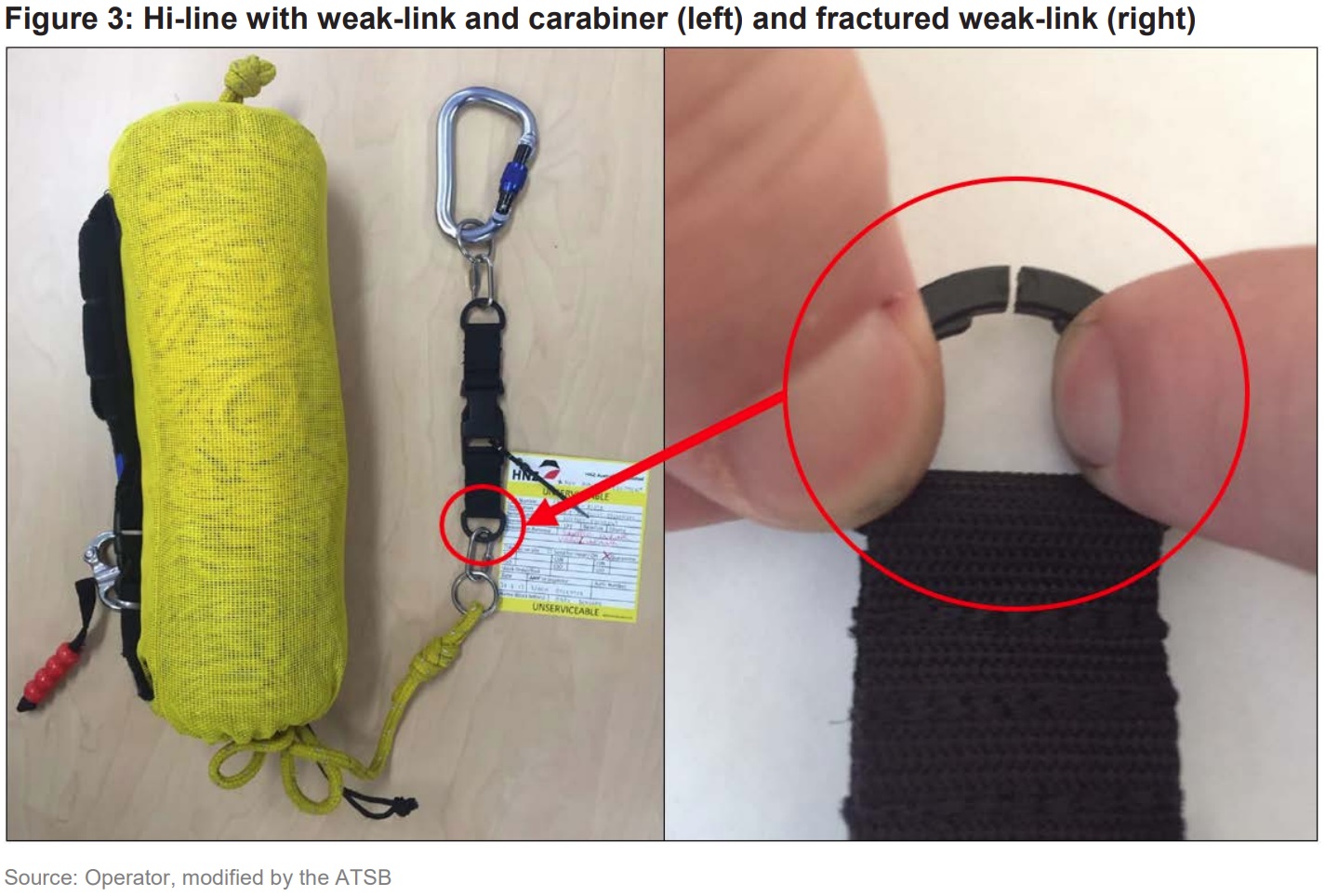
The Australian Transport Safety Bureau (ATSB) recently reported on a winching event involving HNZ AustraliaSikorskyS-92A, VH-IPE, near Broome, Western Australia, on 26 August 2017, which also featured rear-crew from an organisation other than the operator. During a SAR winching exercise to a vessel, the fracture of a Priority 1 Air Rescue hi-line weak-link resulted in a near contact of an unweighted winch hook with the helicopter main rotor.
There were no injuries and the helicopter was not damaged.
Aerossurance is pleased to sponsor the 9th European Society of Air Safety Investigators (ESASI) Regional Seminar in Riga, Latvia 23 and 24 May 2018.
Aerossurance has extensive air safety, operations, airworthiness, human factors, aviation regulation and safety analysis experience. This includes supporting a European Coast Guard and winching to offshore wind turbines. For practical aviation advice you can trust, contact us at: enquiries@aerossurance.com