The Part 135 charter flight was to transport billionaire Stephen Winn of Mirasol Capital from Dallas-Love Field to his ranch. Unmentioned by NTSB, but evident on inspection of the Aircraft Commander’s statement, is that the helicopter flight was delayed from 17:00 to 19:55 due to Mr Winn’s late arrival at Love Field from New York. This turned what would have been a daytime flight to a night approach.
The NTSB note that:
Due to previous issues with the helicopter’s autopilot system and the possible concern of losing control in instrument meteorological conditions, the captain decided not to perform an instrument flight rules flight to the heliport.
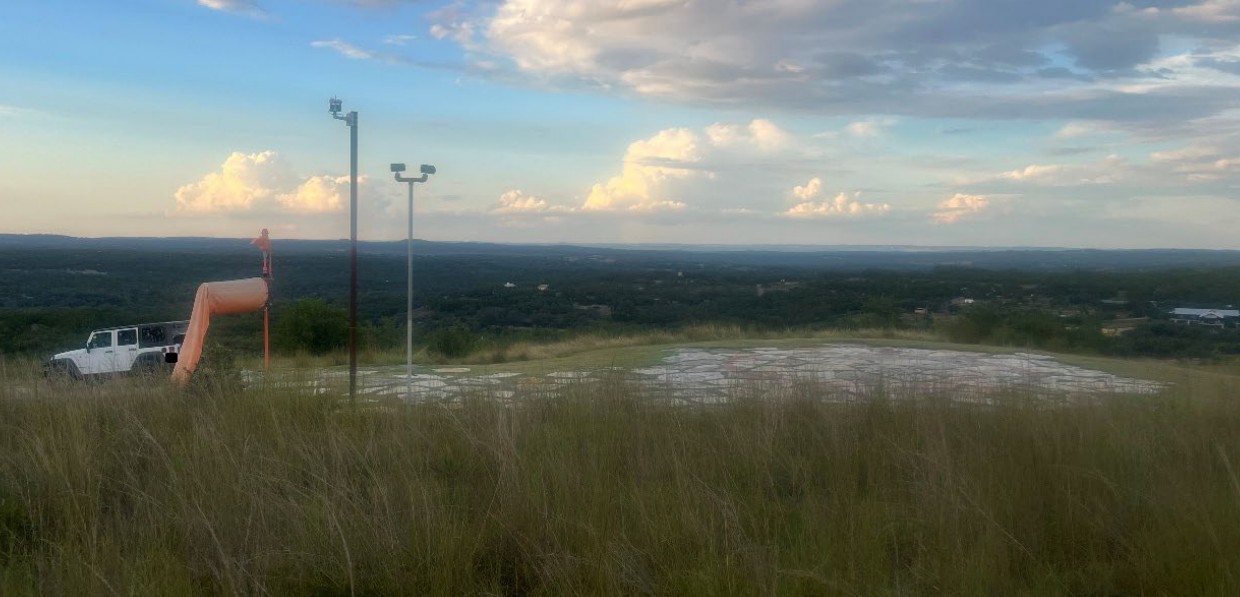
The TA22 Mirasol Hills Helicopter Landing Site – Looking North (Credit: FAA via NTSB)
The Aircraft Commander had 13043 hours total flight time, 344 on type. He had previously landed at this landing site 20 to 25 times, during both day and night. The Co-pilot had 6160 total hours, 56 hours on type. He had previously landed there c 20 times, but daytime only.
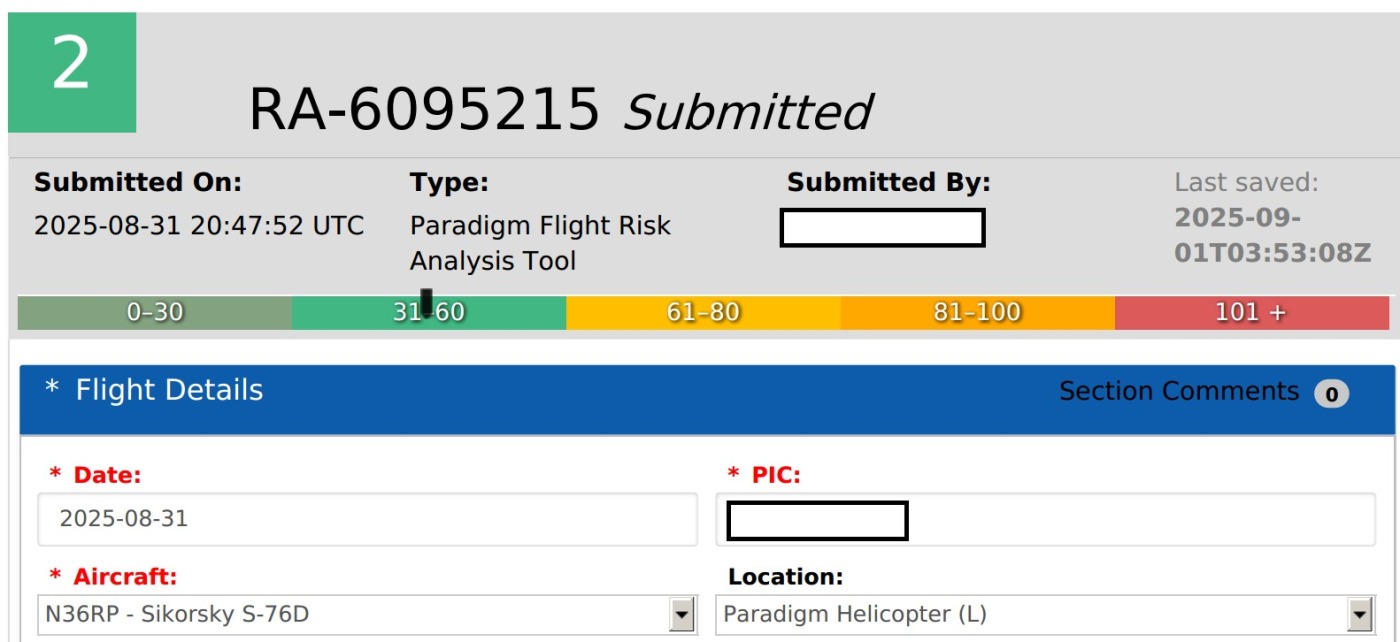
This was a BaldwinFRAT product. The flight came out midway in the next to lowest band, thus raising no concerns at the time.
NTSB go on to explain that:
…an instrument approach was loaded into the helicopter’s flight management system, but it was not activated. Additionally, each pilot had an Apple iPad mounted in the cockpit, that was utilizing ForeFlight with the heliport coordinates loaded into ForeFlight.
The Aircraft Commander’s statement explains that:
We departed VFR from Dallas and planned to conduct the entire flight VFR. Weather in central Texas was marginal but forecast to improve.
While flying southbound near the west side of the Hood MOA, we encountered periods of marginal weather. On two or three separate occasions, we discussed contacting Gray Approach and converting the flight to IFR. Each time, conditions improved quickly, and we continued VFR at approximately 2,000 feet indicated altitude and 130 knots airspeed.
The NTSB say:
During the approach to the heliport, the captain contacted the ranch manager via text message on a cellular phone, to ensure the heliport floodlight system was activated.
The first officer activated the heliport ground lights, which were a green color, via a radio frequency. Both pilots acknowledged observing green lights in their sight. The captain reported that he “cross-checked” the map display with the outside visual references to confirm alignment with the heliport, which he thought had matched.
The first officer extended the landing gear, he completed the before landing checklist, and he then transitioned to viewing outside of the helicopter to try and visually acquire the heliport.
The captain delayed turning on the landing lights until closer to the heliport to avoid glare from moisture and haze reflecting in the light beams.
This indicates an awareness of deteriorating visibility.
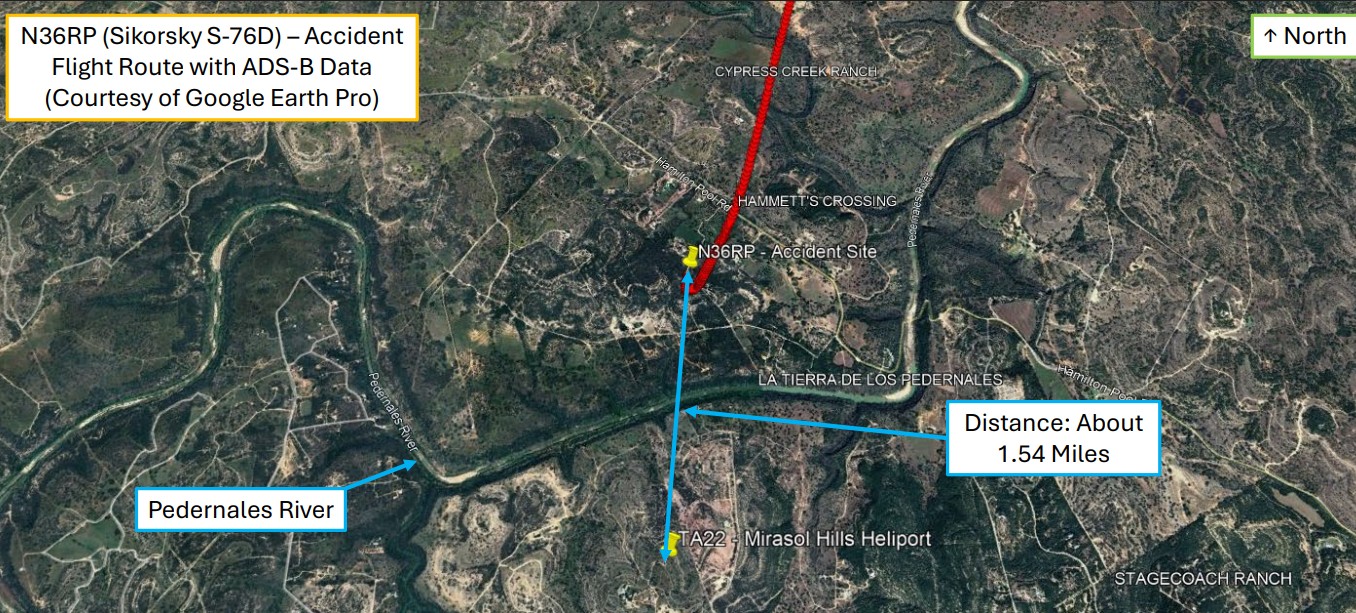
The captain began maneuvering the helicopter for landing. Within seconds, the captain lost outside visual references, and he transitioned to instruments. The first officer looked inside the cockpit and observed the radar altimeter indicated 20 ft. Before the first officer could verbally call out to execute a go around, the helicopter terrain awareness and warning system [HTAWS] activated an alert, and the helicopter impacted trees and terrain.
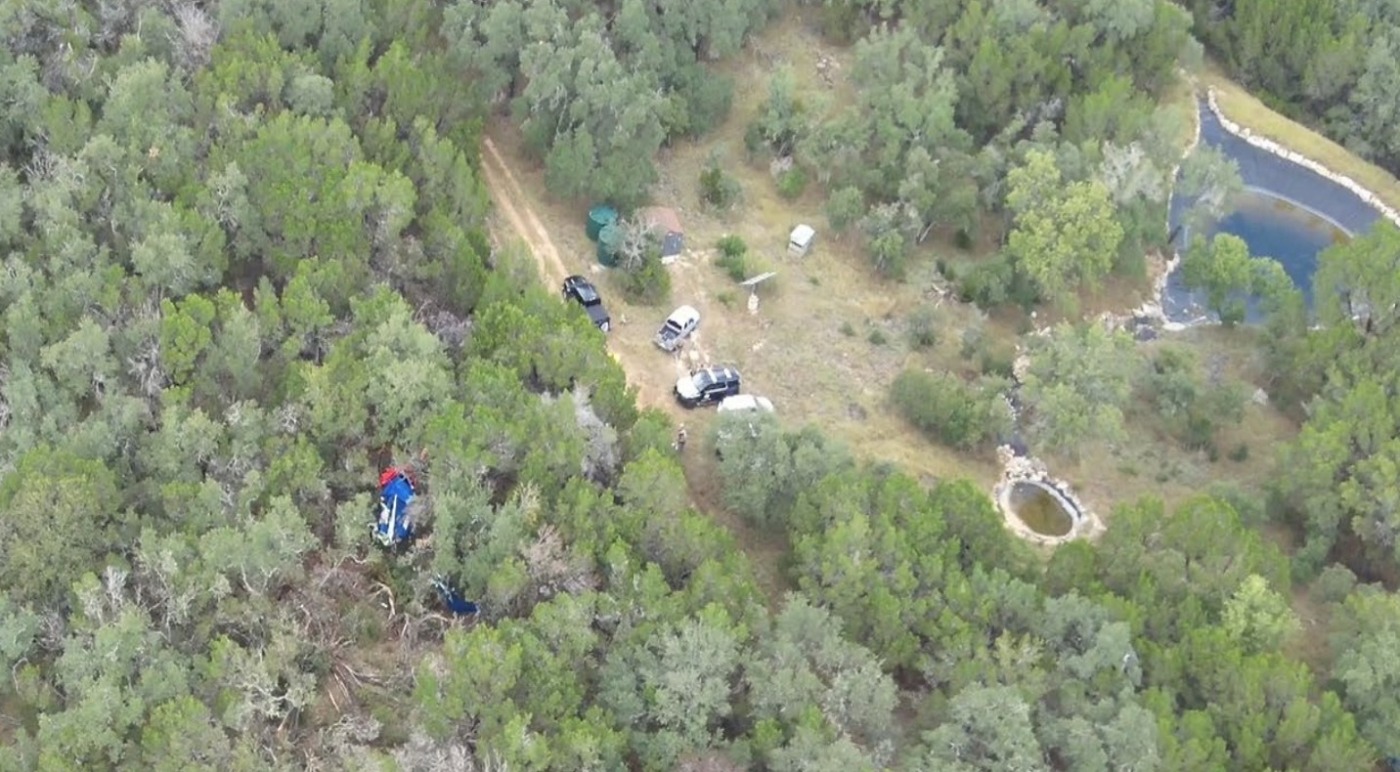
The “prominent” west to east running Pedernales River separates the two locations.
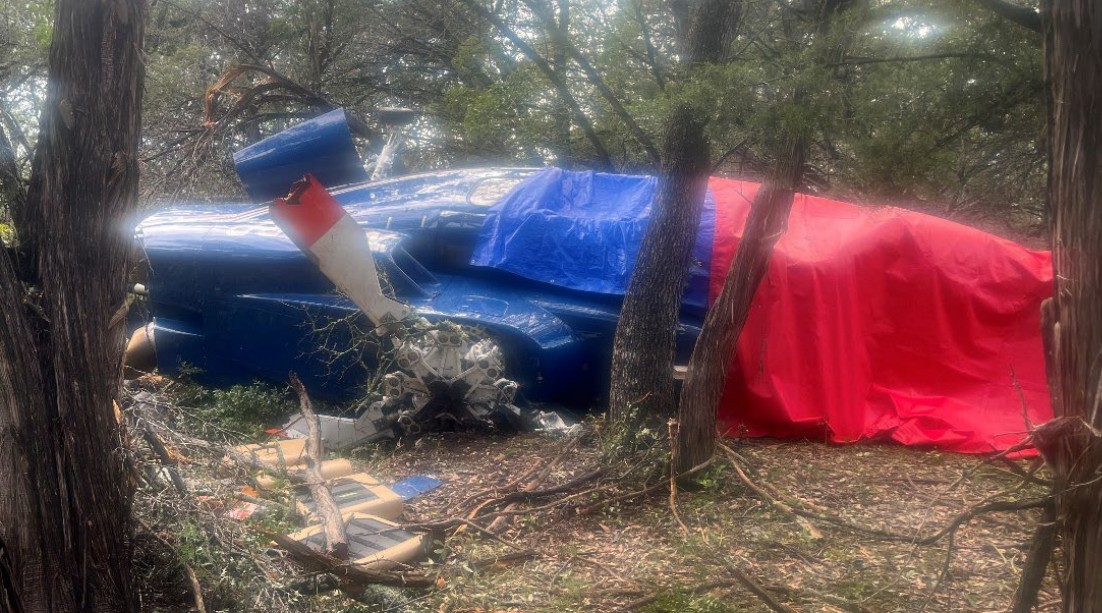
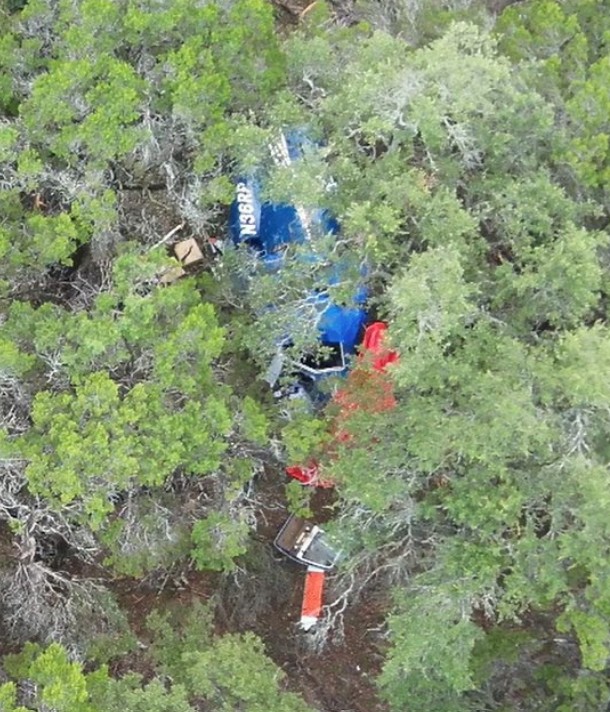
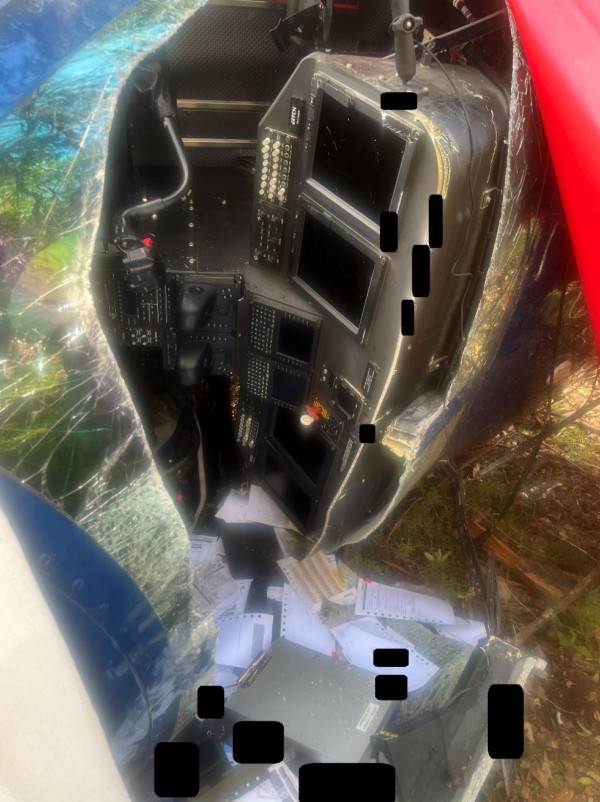
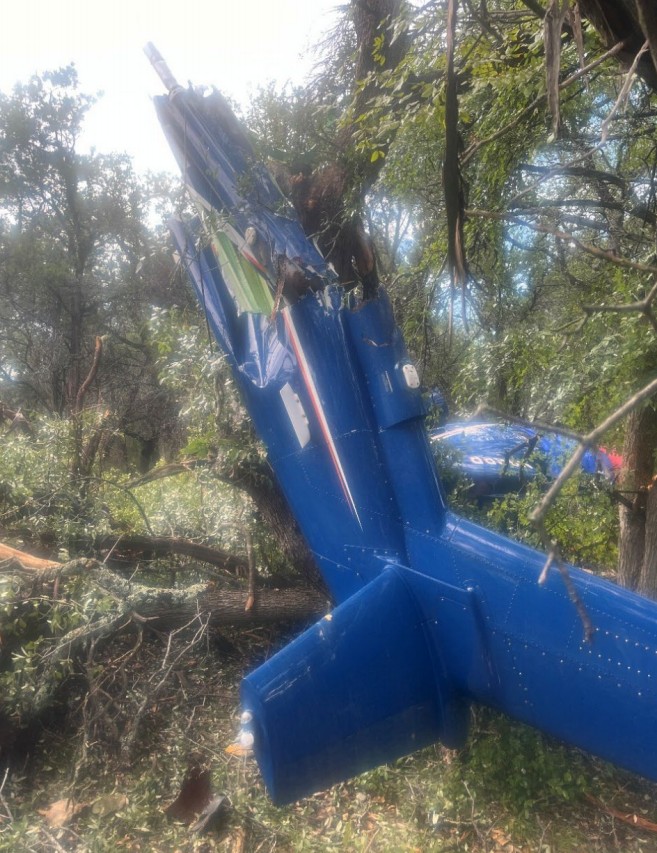
The helicopter came to rest on its right side.
Paradigm Helicopters Sikorsky S-76D N36RP Wreckage (Credit: FAA via NTSB)
The first officer, who then moved the two engine throttle levers to what he believed was the stop position, was able to egress from the helicopter on his own, while the captain and the passenger were assisted by witnesses and first responders.
Paradigm Helicopters Sikorsky S-76D N36RP Wreckage (Credit: FAA via NTSB)
Fortuitously, five people were having a barbeque at a cabin at the RV park just 50 m away and came to the occupants aid.
The NTSB Analysis
It is likely the flight crew failed to properly identify the heliport in dark night conditions, which resulted in the flight crew attempting to land at the incorrect location.
Since the impact was 1.3 NM from the landing site and the Aircraft Commander was “maneuvering…landing” at low altitude, “likely” is an overly conservative caveat. In contrast the NTSB’s next sentence is an understatement:
It is also likely the flight crew failed to properly utilize navigation information and visual cues to verify the location of the heliport.
Our Safety Observations
This is sadly yet another rather superficial NTSB report. Certainly a key factor, the misidentification of the landing site is not examined in detail. Its possible that lighting at the remote camp site was mistakenly identified as the landing site’s lights. While the accident occurred north of Pedernales River, Cypress Creek runs parallel to it north of the accident site which could have encouraged a false mental model.
Oddly, the advice NTSB give for “Preventing Similar Accidents”, is to link to their 2 page safety alert “Landing at the Wrong Airport (SA-033)”, last revised in 2015 that discusses cases where a B737-700 airliner and a B747-400LCF Dreamlifter cargo aircraft landed at an adjacent airfield after misidentifying their destination. Neither seem very relevant to a helicopter approaching a rural landing site at night.
We doubt the efficacy of the FRAT methodology in use. Autopilot defects, the delayed departure, the change to a night flight and a remote landing site with minimal cultural lighting and a Co-pilot that had not flown there at night & had relatively low time on type, all suggest a heightened level of risk, but the software did not determine that.
Baldwin state on their website that they ‘partner’ with their customers:
Its disappointing that the HTAWS performance was not examined. Its possible that the crew did not perceive the warning, as happened in the 2012 case of G-WIWI. The operator did suggest NVIS as a possible safety recommendation. That would be very unusual for non-emergency service operations.
Aerossurance has extensive air safety, flight operations, airworthiness, human factors, aviation regulation and safety analysis experience. For practical aviation advice you can trust, contact us at: enquiries@aerossurance.com