
Maintenance Error Fitting a Louver Panel Causes Loss of Air Ambulance Tail Rotor (Metro Aviation Airbus BK117C1 N117NC)
On 19 May 2025 Airbus Helicopters BK117C1 air ambulance N117NC of Metro Aviation, operated for PennSTAR, was damaged in a forced landing near Fort Washington, Pennsylvania. The three occupants received minor injuries.
dailyvoice.com/pa/media/pen…
— Aerossurance (@aerossurance.bsky.social) 2025-05-20T06:52:59.319Z
The US National Transportation Safety Board (NTSB) published their safety investigation report on 19 August 2026.
The Accident Flight
The helicopter was returning from Penn Presbyterian Medical Center North Heliport (PA39) to its home base of Wings Field Airport (LOM), after a patient transport flight, at c 1300 ft and 120 knots.
At 19:41 Local Time, shortly before landing, the helicopter suddenly “became uncontrollable” and “began shuddering violently” without any prior warning. The pilot reported…
…a total loss of tail rotor control, including the loss of pedal authority and tail rotor thrust.
The pilot lowered the collective and initiated an autorotation descent. During the descent, he identified a grass field adjacent to a driveway as a suitable forced landing area. The helicopter touched down following a rotation of about 180 degrees. The pilot performed an emergency engine shutdown and applied the rotor brake.
The Safety Investigation
NTSB report that:
Examination of the airframe at the accident site revealed the top portion of the vertical stabilizer was missing, consistent with the in-flight separation of the tail rotor gearbox and tail rotor assembly.
The skid gear exhibited splaying, and the fuselage structure was displaced about 12 to 18 inches to the left of centerline, consistent with impact in soft terrain.
One main rotor blade (the “A” blade) exhibited minor damage about 3 ft inboard from the blade tip. The left vertical stabilizer and tail stinger exhibited damage consistent with ground contact.
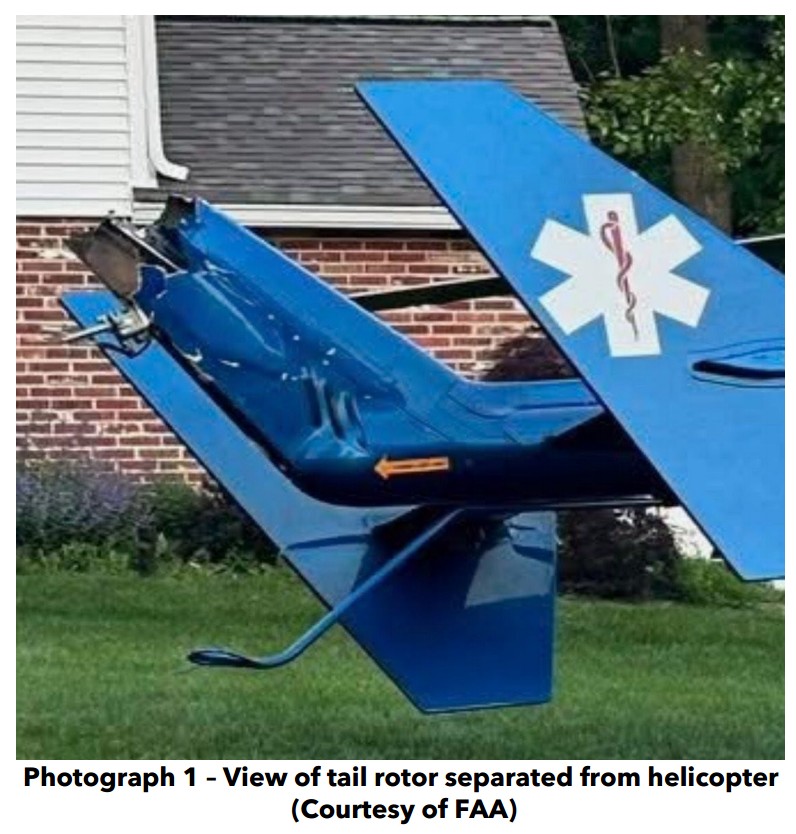
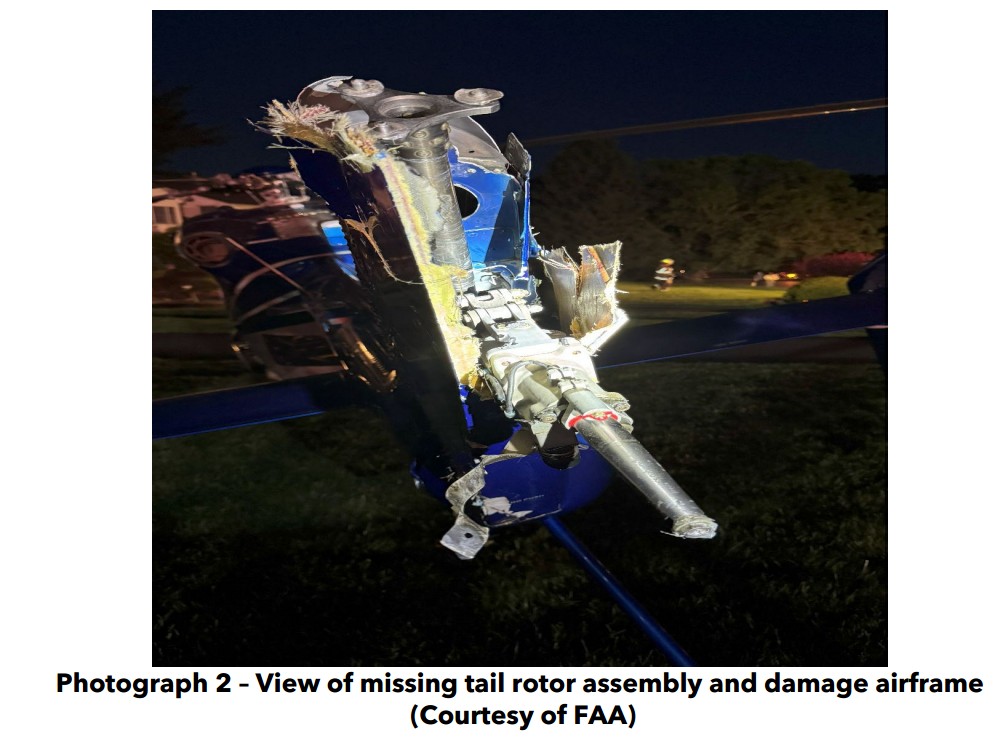
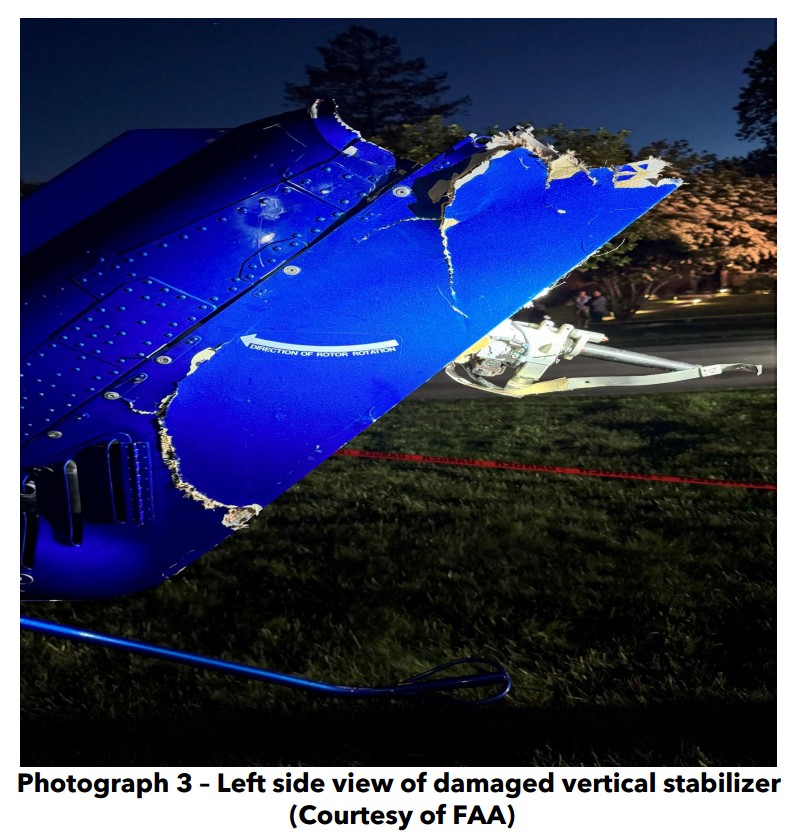
Crucially also lost in flight was the forward portion of an air conditioning louver assembly (originally installed as part of a Kieth Products STC).
A recovered louver fragment exhibited contact damage from a tail rotor blade, and both tail rotor blades were destroyed.
Inspection of the forward attachment points for the louver assembly revealed that both rivet nuts were stripped and exhibited damage.
An AN3-4A bolt (17/32-inch length; 1/8 inch grip) was recovered from the right side of the engine deck, and an AN3-6A bolt (25/32-inch length; 3/8-inch grip) was located within the driveshaft plenum area on the left side of the helicopter.
The forward right corner of the louver assembly featured a doubler at the attachment interface, consistent with a prior structural repair or reinforcement.
A review of maintenance records indicated that work was performed on the air conditioning coil assembly on May 7 and 9, 2025, at an airframe total time of 9715.9 hours (15.7 flight hours prior to the accident). According to the aircraft manufacturer, this would have required removal and reinstallation of the louver panel.
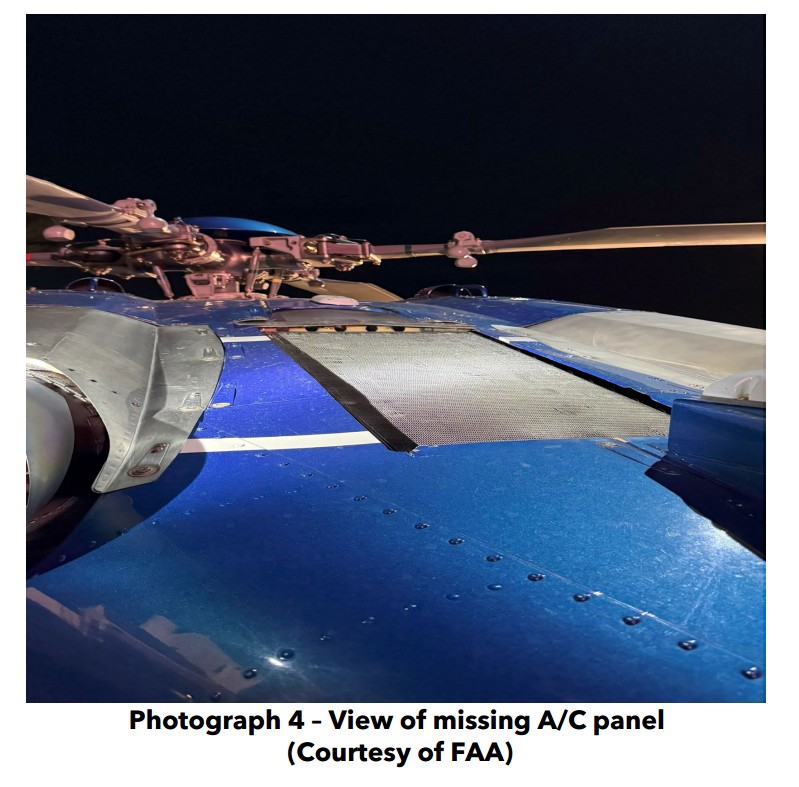
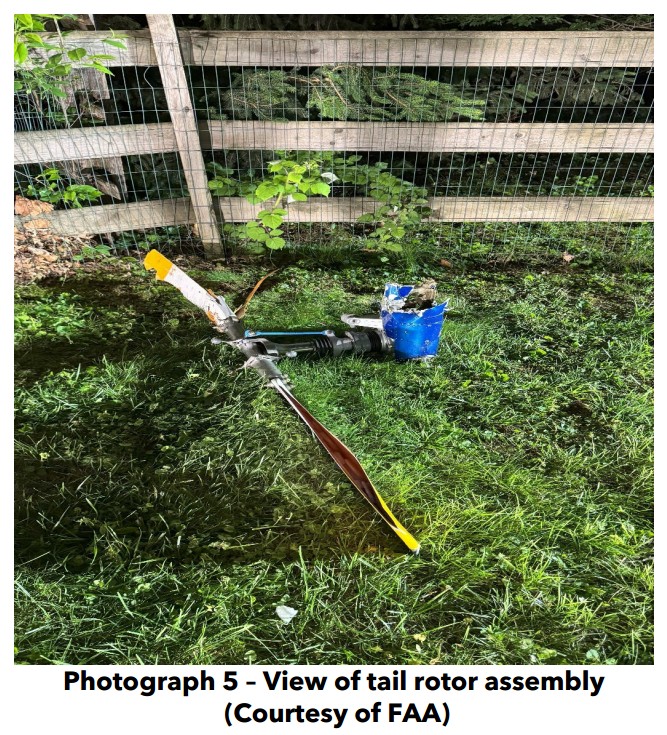
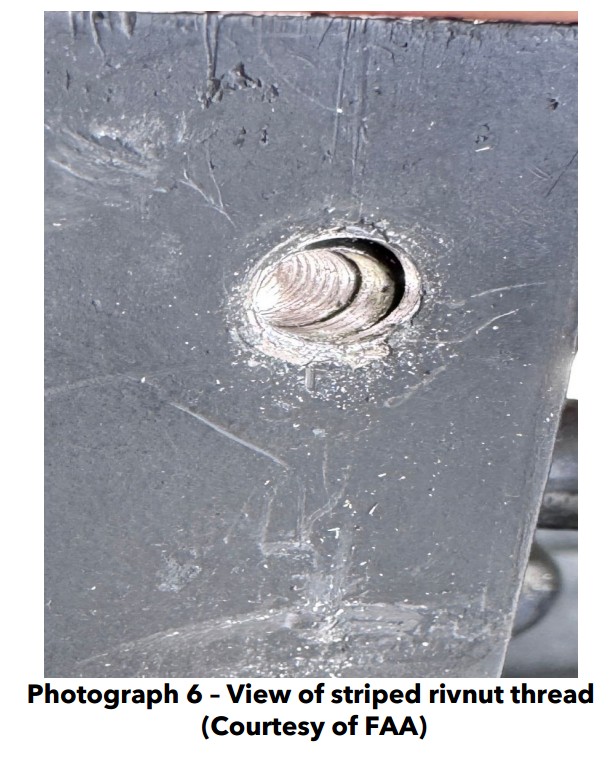
The investigators concluded that…
…the rivet nuts for the air conditioning louver assembly were likely stripped during maintenance, resulting in the louver assembly separating from the helicopter in flight and impacting the tail rotor. The tail rotor assembly then separated from the helicopter, which led to a loss of control.
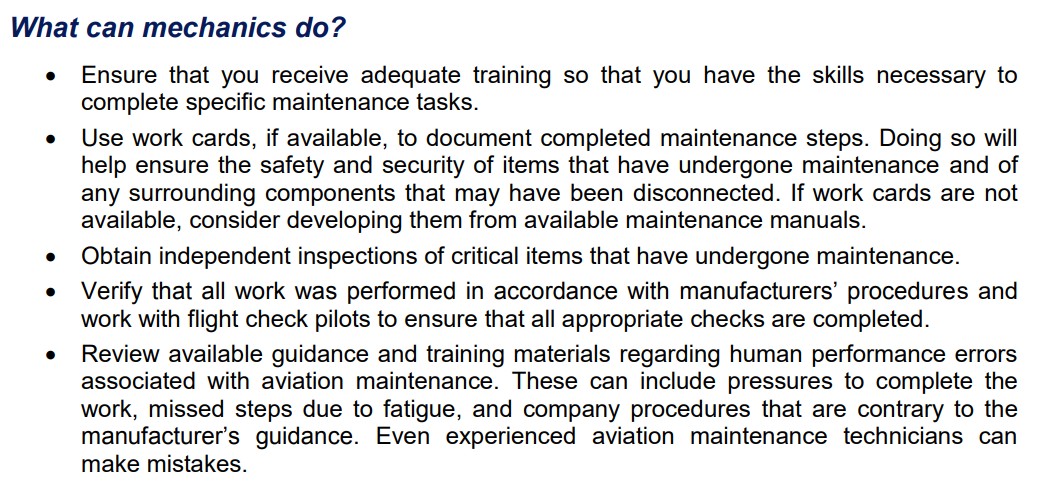
NTSB repeat a 2 page 2015 Safety Alert “Safety Stats in the Hangar” which includes:
Our Safety Observations
Disappointingly the NTSB investigation lacks any follow up on the maintenance conducted less than 2 weeks earlier, the circumstances it was conducted in and any relavent human factors that may have influenced it. It is a weakness of the NTSB Form 6120.1 that even though the reporter can specify a mechanical failure occured, for example, there is no prompt for data on prior maintenance other that Time Since Inspection / Overhaul for that component.
So while they repeat their brief safety alert, there is no indication the NTSB themselves examined the very issues they advise maintainers consider:
- Maintenance personnel training
- The work cards in use
- The inspection techniques and error capture techniques used (if any)
- Human performance generally
Consequently the opportunities to really learn from this particular event are minimal.
Safety Resources
The European Safety Promotion Network Rotorcraft (ESPN-R) has a helicopter safety discussion group on LinkedIn. You may also find these Aerossurance articles of interest, starting with a prior maintenance related accident at the same organisation from 2013:
Misassembled Anti-Torque Pedals Cause EC135P1 Accident
Maintenance Misdiagnosis Precursor to EC135T2 Tail Rotor Control Failure
T-Bolt Trouble: Unrecorded Maintenance on US HEMS BK117C2/H145 and Loss of TR Pitch Control
Missing Cotter Pin Causes Fatal S-61N Accident
SAR AS365N3 Flying Control Disconnect: BFU Investigation
Fatal $16 Million Maintenance Errors
Human Factors of Dash 8 Panel Loss
BEA Point to Inadequate Maintenance Data and Possible Non-Conforming Fasteners in ATR 42 Door Loss
Identical Error Paradox in Aviation Maintenance
Professionalism and Integrity in Aviation
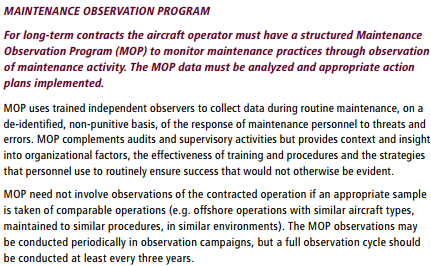
Aerossurance worked with the Flight Safety Foundation (FSF) to create a Maintenance Observation Program (MOP) requirement in 2016 for their contractible BARSOHO offshore helicopter Safety Performance Requirements to help learning about routine maintenance and then to initiate safety improvements:
Aerossurance can provide practice guidance and specialist support to successfully implement a MOP.