On board were two pilots, one aircrew ‘crew chief’ and two Coast Guard Administration (‘CGA-SSC’) personnel to be transferred to a grounded cargo ship.
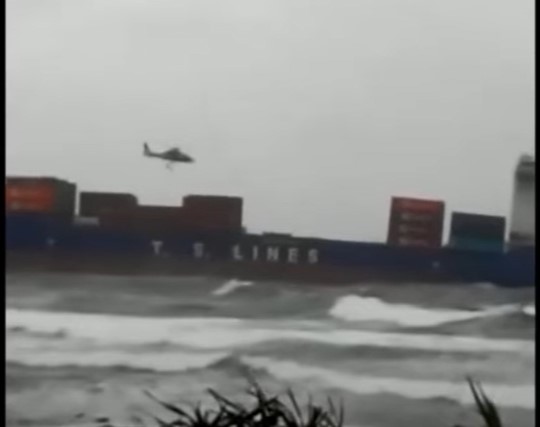
On the day of the occurrence, at 1045 Taipei local time the aircraft successfully completed a first …transport mission [to the ship] and returned to Taipei Songshan Airport. After receiving the order for [a] return mission notice at noon, the flight crew did a crew briefing at 1237 and decided to…perform personnel hoisting (executed one person at a time and two times per [flight]). After arriving above the grounded cargo ship, the aircraft circled the cargo ship in clockwise direction…and began to approach the deck of the cargo ship.
NASC Airbus Helicopters AS365N3 NA-107 Flight Track (Credit: ASC)
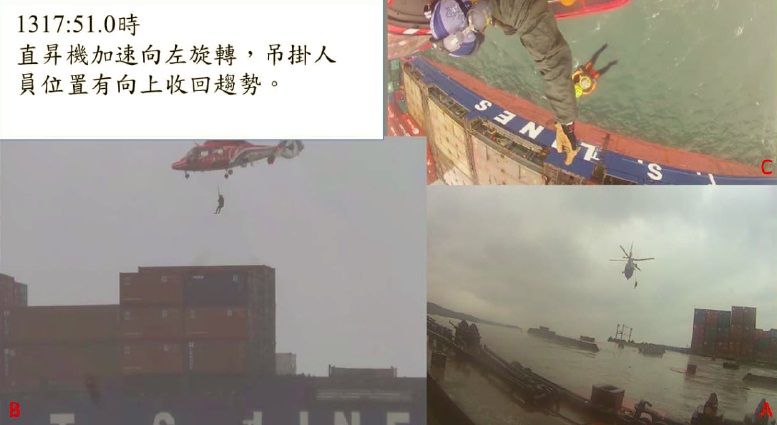
The crew chief began to perform the hoist mission, dropping off the [first] CGA-SSC member… The GPS system indicated that the aircraft began yawing towards the left at 1317:44. Four seconds later (1317:48), the aircraft began to turn drastically. According to the copilot’s interview, the aircraft was shaking in all directions as the aircraft drastically spun towards the left. The copilot also heard the pilot saying, “What is happening to the aircraft?”
NASC Airbus Helicopters AS365N3 NA-107 as Yaw Rate Increases (Credit: ASC)
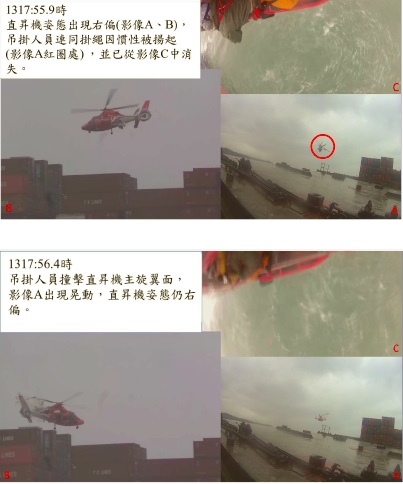
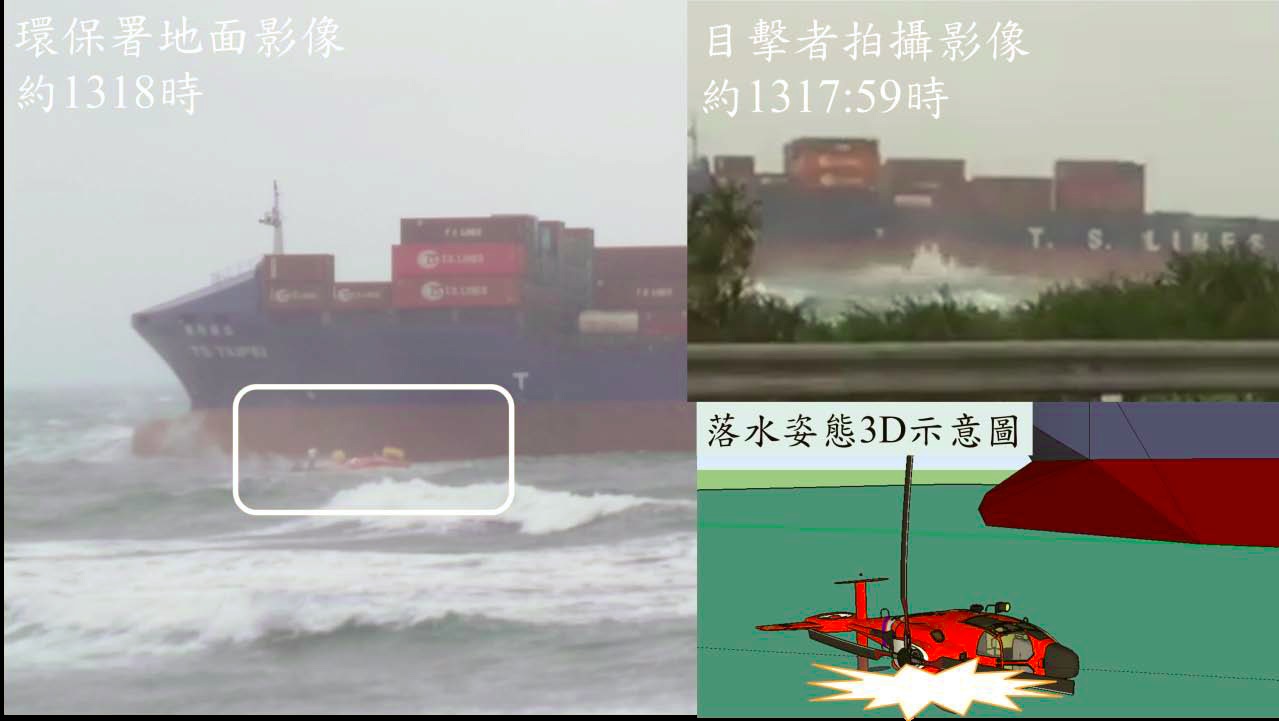
As the spinning speed of the aircraft accelerates, the CGA-SSC member [being hoisted] was thrown up by the great centrifugal force generated by the spinning motions and aircraft altitude change. After the CGA-SSC member impacted the main rotor and crashing into the sea, the aircraft plummeted on the sea surface to the left of the cargo ship at 1317:59 with a right roll in an easterly direction.
NASC Airbus Helicopters AS365N3 NA-107 as Yaw Rate Increases (Credit: ASC)
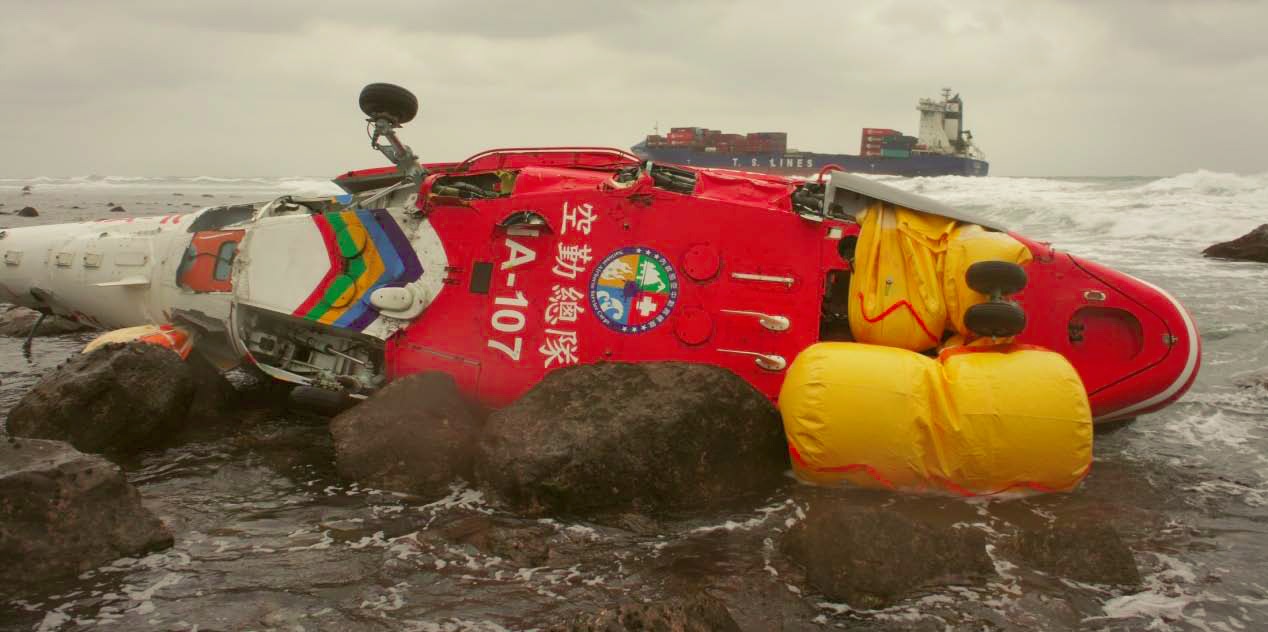
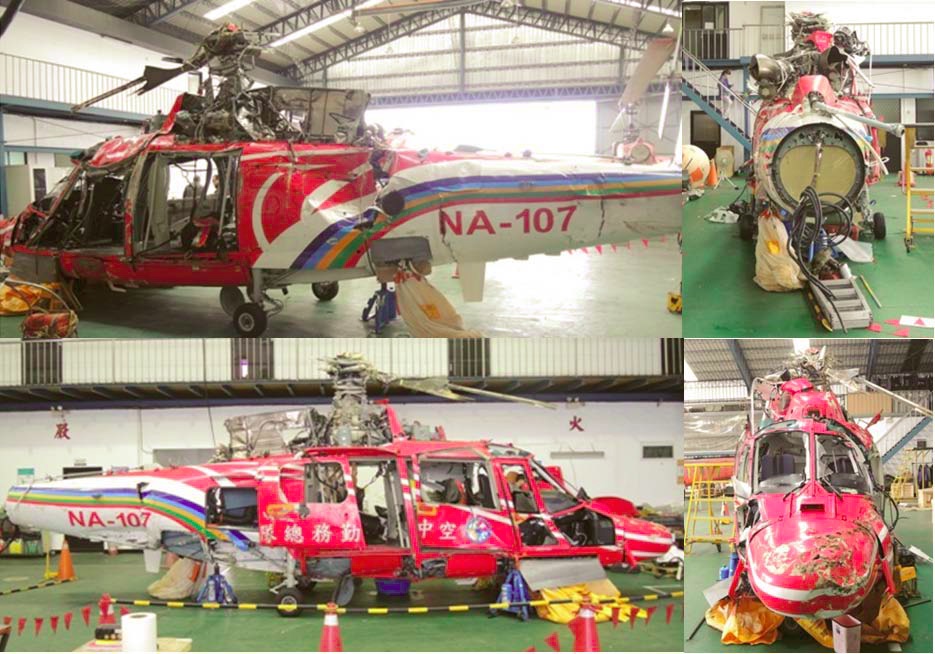
The helicopter was destroyed.
NASC Airbus Helicopters AS365N3 NA-107 Impact (Credit: ASC)
The aircraft commander’s cause of death was abdominal bleeding and drowning and the hoist passenger were killed upon after the main rotor blade strike. The other occupants sustaining serious injuries.
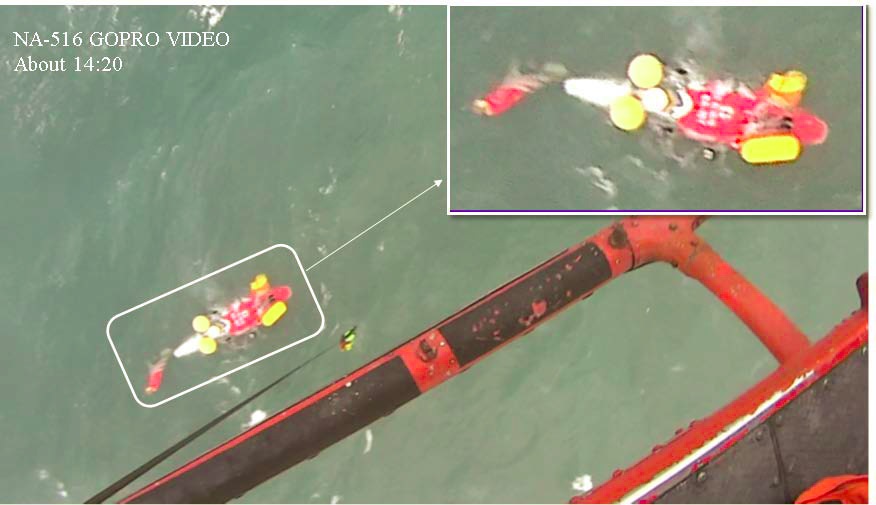
The helicopter’s emergency flotation system was deployed but the aircraft impacted on its right side. The front right bag did not inflate due to impact damage. The internal cabin life raft was not deployed. The three survivors all escaped underwater from the capsized helicopter and clung to the belly until rescued. The passengers were not equipped with life jackets and the commander had a non-issue ‘lightweight’ life jacket. Sea temperatures at that time of year are typically 20°C. The survivors were rescued within an hour.
Rescue by NASC Bell UH-1H NA-516 (Credit: ASC)Wreckage of NASC Airbus Helicopters AS365N3 NA-107 Reconstructed Ashore (Credit: ASC)
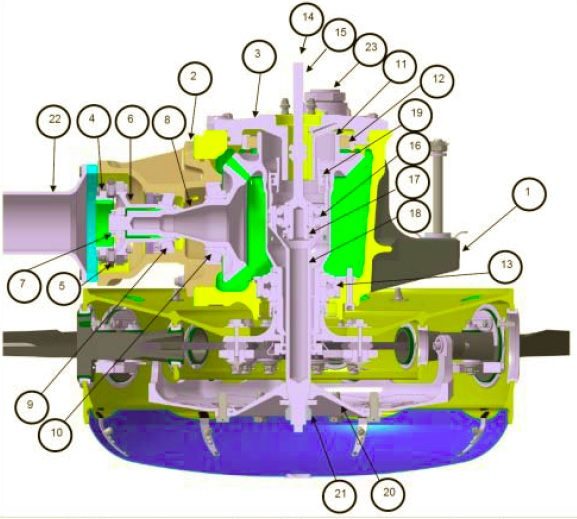
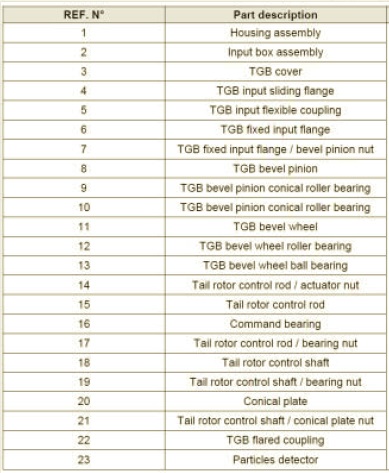
The fenestron control rod double bearing (item 17) was subject periodic inspection in accordance with the Alert Service Bulletin AS365-05.00.61R4 (EASA Airworthiness Directive 2012-0170R2), which had evolved after a couple of prior loss of yaw control events (and 8 prior degraded bearings in total).
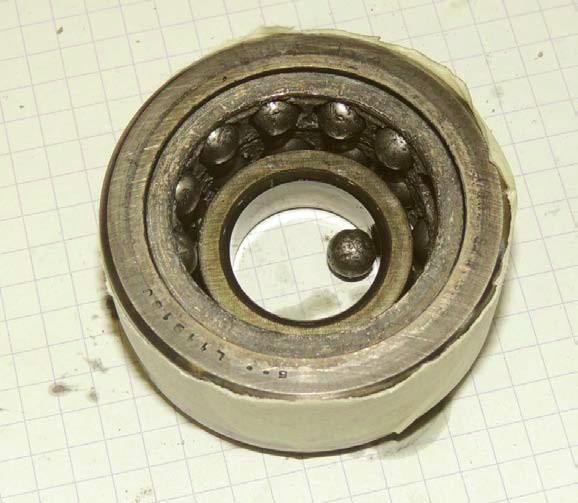
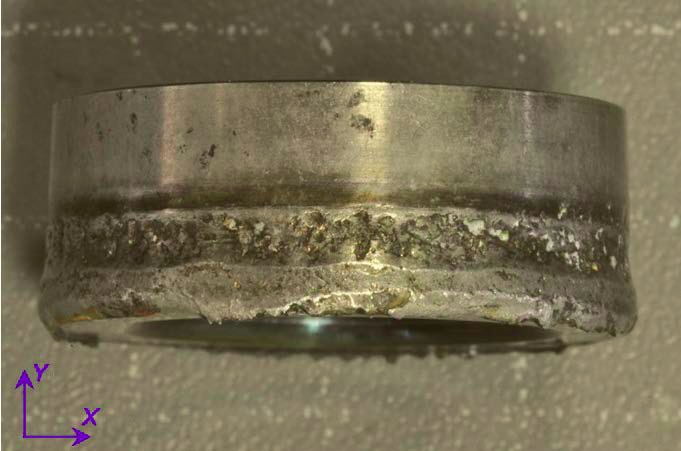
Worn SKF Tail Rotor Pitch Change Bearing from NASC Airbus Helicopters AS365N3 NA-107 (Credit: ASC)Spalled Inner Race of SKF Tail Rotor Pitch Change Bearing from NASC Airbus Helicopters AS365N3 NA-107 (Credit: ASC)
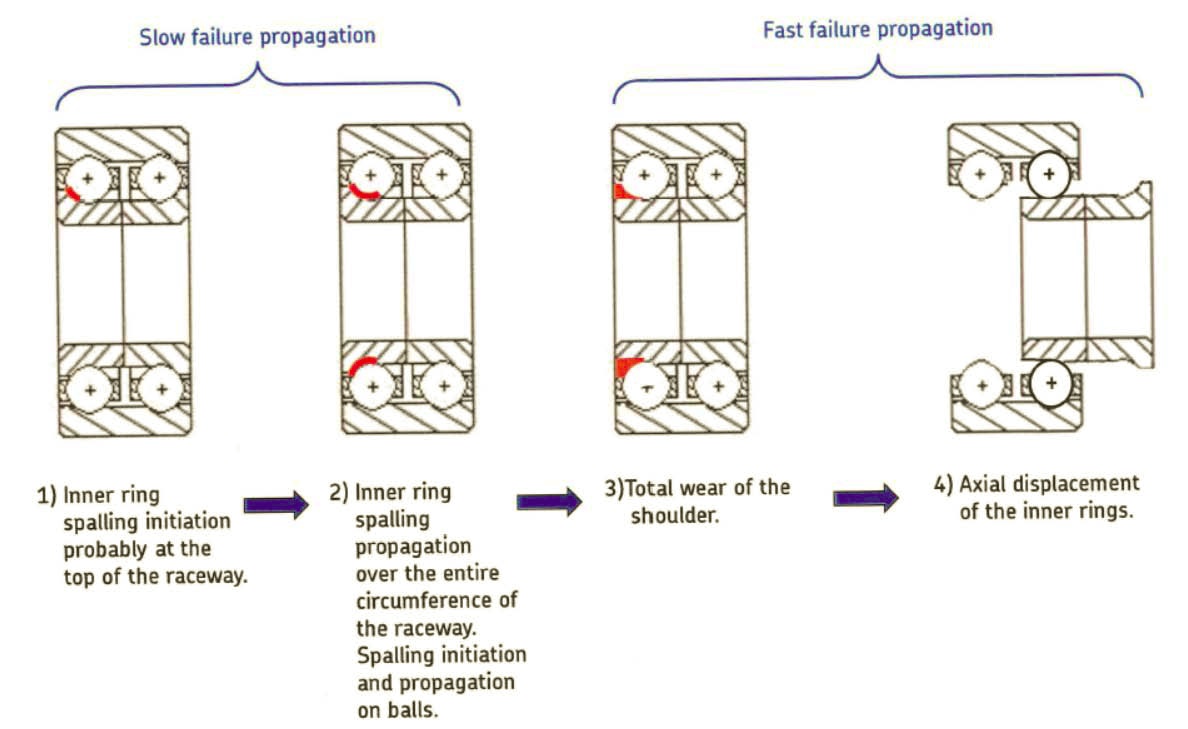
Wear of the SKF manufactured bearing continued and eventually led to a loss of tail rotor pitch control after the inner race retaining shoulder rapidly deteriorated. Five of the twelve ball bearings on one side had been released (all were undersized due to wear). Laboratory examination confirmed the bearing had been manufactured to drawing specifications. The ASC say:
The maintenance personnel did not detect the bearing was worn, the tactile/sensitive manual axial play check is mainly based on the judgement of the operator and therefore subjective to detect manually.
The ASC do however note that:
Two of the tail gear box magnetic plug inspections of the occurrence aircraft exceeded the twenty five flying hours or fifty landing cycles regular inspection period.
The ASC report is unclear but this appears to be due to usage assumptions being used for forecasting that did not reflect actual usage. The ASC do also say:
The National Airborne Service Corps has management procedures for technical documents but no standard training guidance for relevant staff members in charge of airworthiness directives (AD)
ASB 01.00.67 R1 (made mandatory by EASA AD 2016-0097), was issued by the manufacturer in May 2016. A subsequent AD was issued the following year (AD 2017-0007). The ASC note that due to the expense, simulators were not being routinely used by NASC crew. They cite the safety benefit of simulators by referencing a European Helicopter Safety Team (EHEST) leaflet from 2013. The ASC also observe:
The search and rescue vessel did not implement the on scene commander dispatch principles; an identical communication frequency was not used; and when communication was unsuccessful, the aircraft did not establish indirect contact through notifying the affiliated service command center. The scramble nets on the sides of the Coast Guard Administration search and rescue vessel are suitable for physically capable survivors and are unsuitable for the nearly disabled. The national law or regulation has not mandated the installation of flight recorders on the public aircraft.
The ASC made 14 safety recommendations.
Note: This article is based on translation from Chinese of the ASC Final Report. Readers needing authoritative data should consult / translate the Chinese language Final Report directly.
Aerossurance’s Andy Evans presented on rotor and transmission safety at the European Aviation Safety Agency (EASA) 10th Rotorcraft Symposium in Cologne in December 2016.
Aerossurance is pleased to have sponsored the 2017 European Society of Air Safety Investigators (ESASI) 8th Regional Seminar in Ljubljana, Slovenia on 19 and 20 April 2017. ESASI is the European chapter of the International Society of Air Safety Investigators (ISASI).
Aerossurance has extensive air safety, operations, airworthiness, human factors, aviation regulation and safety analysis experience. For practical aviation advice you can trust, contact us at: enquiries@aerossurance.com


 Five of the twelve ball bearings on one side had been released (all were undersized due to wear). Laboratory examination confirmed the bearing had been manufactured to drawing specifications. The ASC say: