
Questions of Financial Stability: Twin Otter Runway Excursion and Collision with Parked Helicopter
On 24 August 2023 CAIRE (Compagnie Aérienne Inter Régionale Express) De Havilland Aircraft of Canada DHC-6-400 Twin Otter F-OMYS, operating an Air Antilles flight, veered off the left side of runway 28 upon landing at Saint-Barthélémy Airport, striking a parked and unoccupied Airbus AS350B2 (F-HMYL).
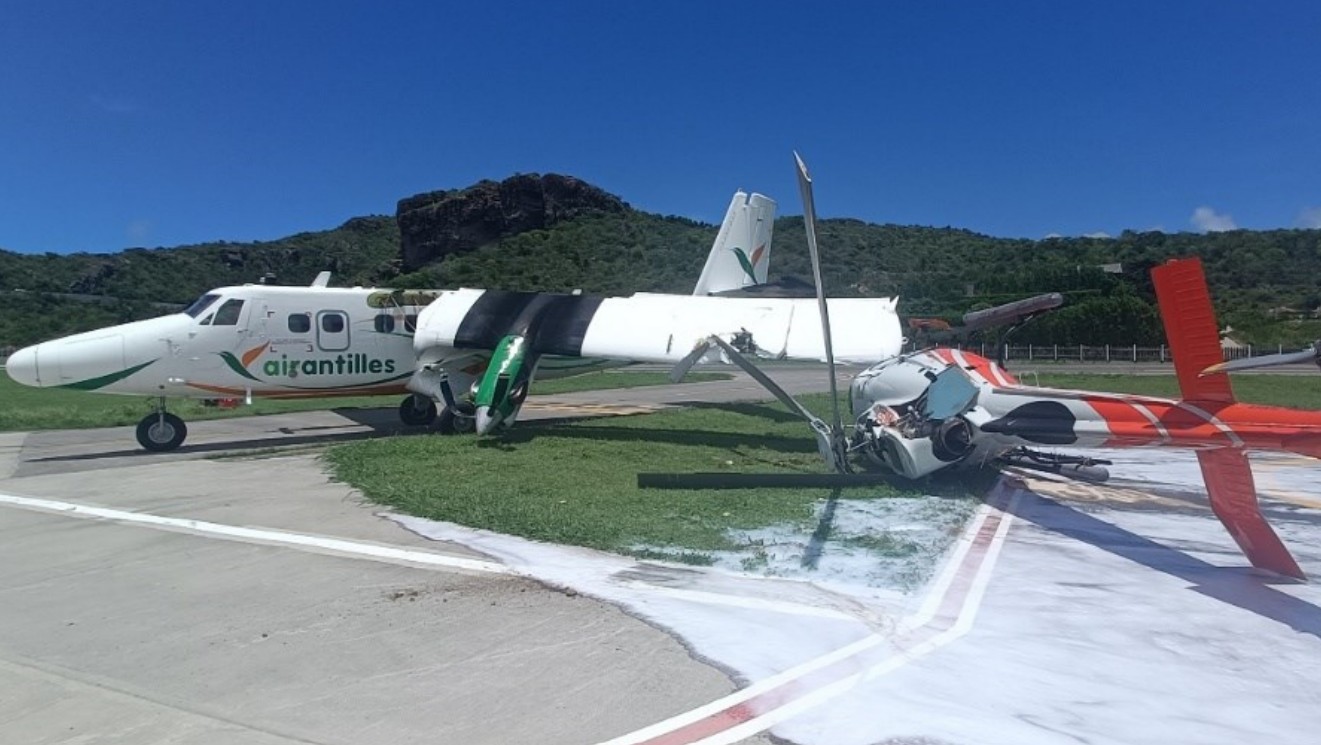
Le Bureau d’enquêtes et d’analyses pour la sécurité de l’aviation civile (BEA) issued their safety investigation report 13 March 2026.
The BEA note that:
Pilots of the CAIRE group had been on strike since 14 July 2023. A cabin crew union served a strike notice on 25 July 2023. The following day, CAIRE declared itself bankrupt. On 2 August 2023, CAIRE was placed in compulsory liquidation with operations being continued by the Pointe-à-Pitre Commercial Court. The strike action was suspended following this liquidation. The court gave CAIRE two months to find a buyer, with a deadline of 1 October 2023.
This circumstance may have affected the crew’s performance…
The Accident Flight
The crew were making the first sector of their second rotation of the day between Pointe-à-Pitre – Le Raizet (Guadeloupe) and Saint-Barthélemy.
The Aircraft Commander had 4,538 flight hours total experience, 3,208 hours on type. The Aircraft Commander told investigators that he had felt tired due to poor sleep due to…
…concern about the company’s situation, the impact of this situation on the payment of salaries, his domestic responsibilities and feeling obliged to fly due to the company’s situation.
The Co-Pilot had 1,150 hours, 950 on type. They said they were not physically tired but said they felt “morally fatigued” (i.e ‘stressed’) by the company’s financial situation.
The BEA report that:
At 15:26, the crew started the descent.
At 15:37, realising that the aeroplane was too high on approaching point “COCO”, the captain decided to carry out a three sixty to lose altitude. The crew selected flaps 10° and positioned the propeller pitch lever to MAX. During the turn, the captain felt a pain in his left ear and informed the co-pilot of this. The crew selected flaps 37°.
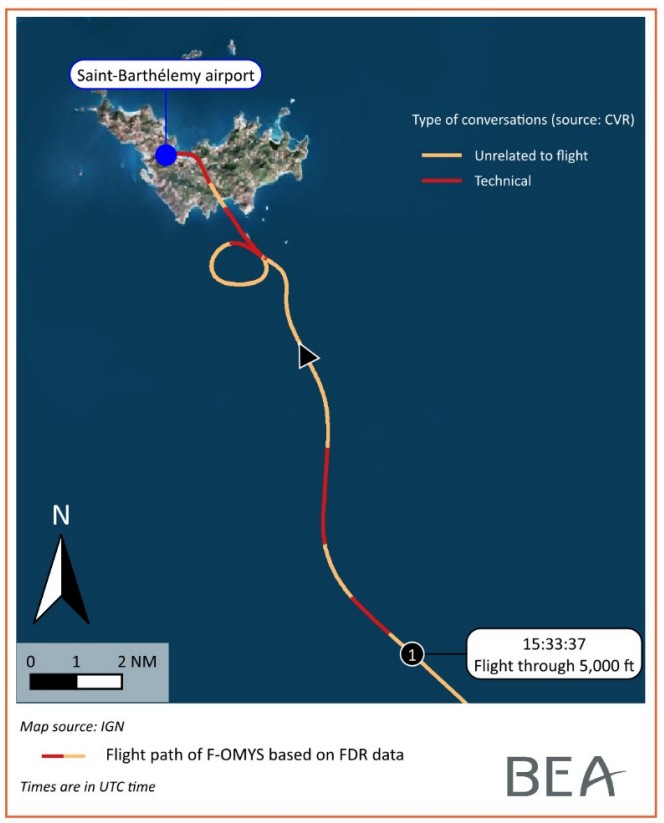
Out of the 8 min 46 s spent 5000 ft, when the operator’s sterile cockpit policy applied, “58% of the time was devoted to conversation unrelated to the flight. Moments of silence were nearly non-existent”.
At 15:40:21, at the end of the turn, at around 1,000 ft, the captain still had ear pains. Unable to clear his eardrum, the captain transferred the controls to the co-pilot so that he could blow his nose and perform the Valsalva manoeuvre. During this phase, the captain asked for the before landing checklist. The checklist was read out by the co-pilot and the captain replied to him. A few seconds after the end of the checklist, the captain’s eardrum suddenly cleared and he took back the controls.
At 15:41:18, a “CAUTION TERRAIN” alert was transmitted by the TAWS, immediately followed by a “TERRAIN PULL UP” warning. As they had sight of the ground and realising that they had forgotten to inhibit the TERRAIN alerts [as per operator’s SOPs for that runway], the captain called out to disregard the warnings and asked the copilot to activate their inhibition. During the last turn, at around 190 ft, while the captain was reducing the pitch attitude to adjust the interception of the slope, the “SINK RATE” alert was activated.
At 15:42:22, the aircraft touched down and…
…the crew heard a squeal of tyres and observed that the aeroplane was veering to the left. Thinking that he may have incorrectly positioned his feet, the captain adjusted their position to ensure that they were not on the brakes and then made an input on the right-hand pedal.
The aeroplane continued to veer to the left.
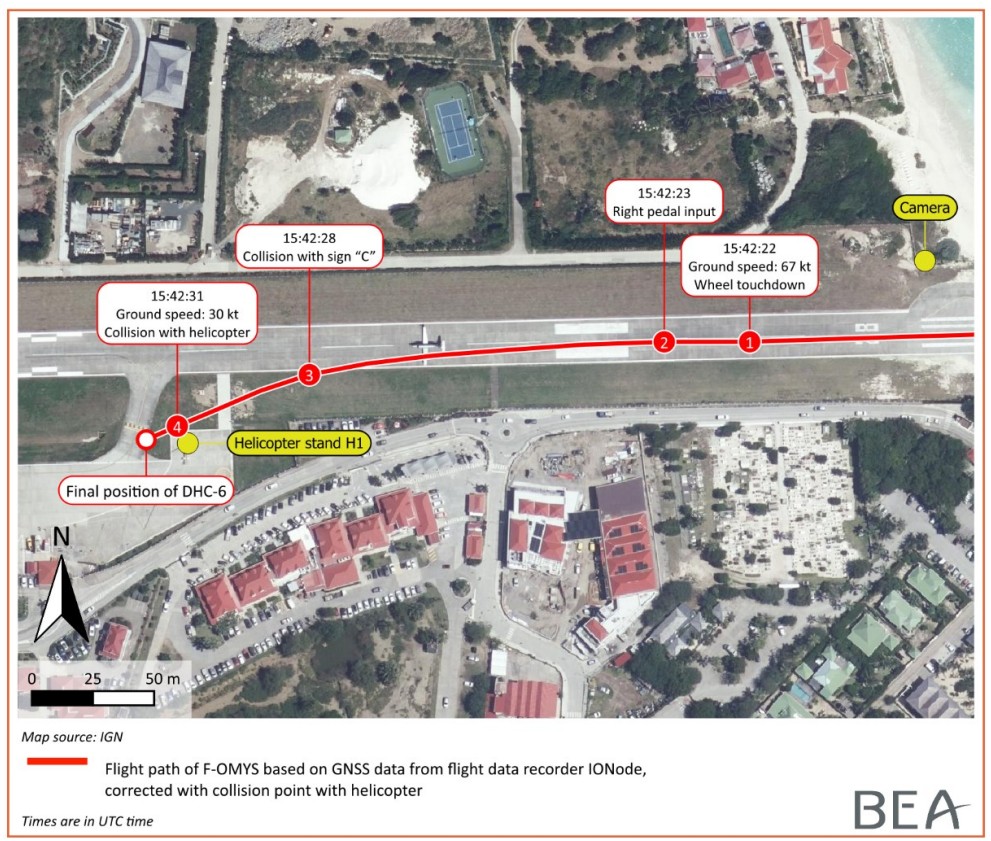
The captain then suspected that the left-hand wheel had locked and applied pressure to the brakes in the hope that this would release the left-hand brake. He also tried to correct the path by maintaining pressure on the right-hand pedal and turning the control wheel to the right. Observing that they were reaching the edge of the runway, he decided to use the reverse thrust. It seemed to him that this attenuated the aeroplane’s tendency to veer to the left, but that it was not sufficient to correct the phenomenon.
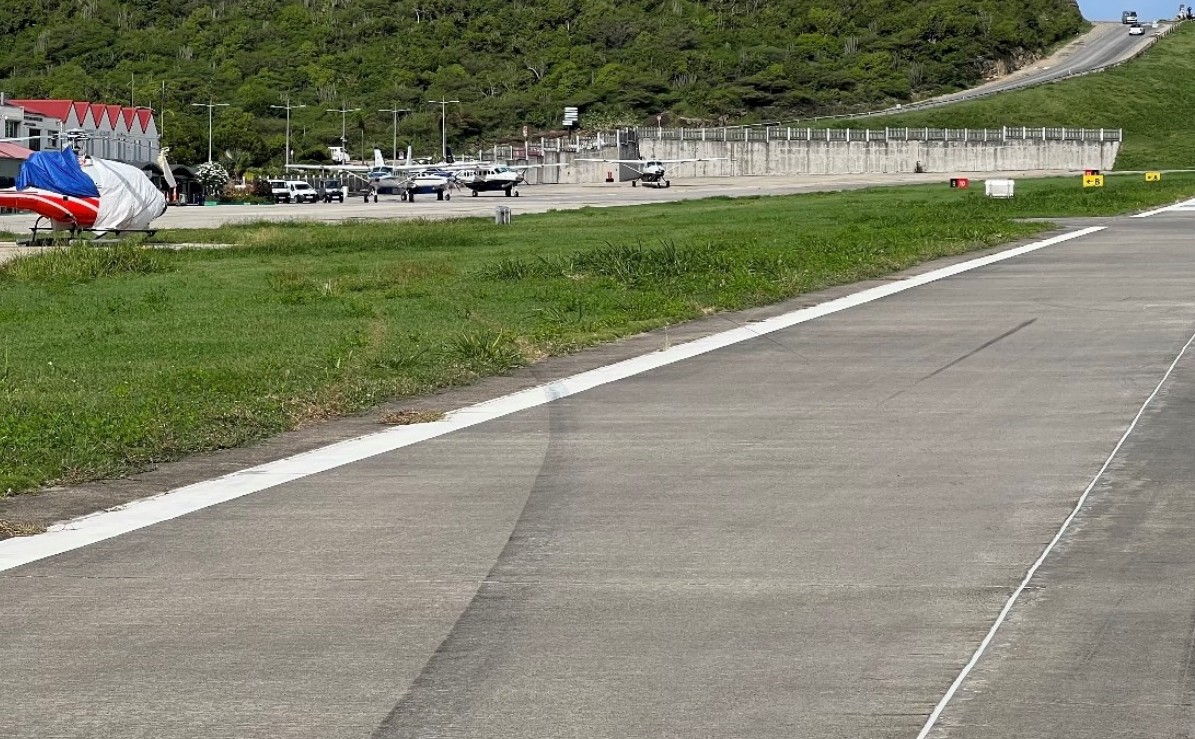
The aeroplane then ran over the runway’s grass shoulder. It struck the sign indicating the junction with taxiway C. The captain then decided to use the nose wheel lever by pushing it with all his force to turn right.
The aircraft was evacuated.
The left wing of the DHC-6 was torn off and held by the strut, control rods and other connecting hoses. Damage was visible on the leading edge corresponding to the point of contact with the helicopter. The left propeller had deformations linked to contact with the ground.
The BEA Safety Investigation
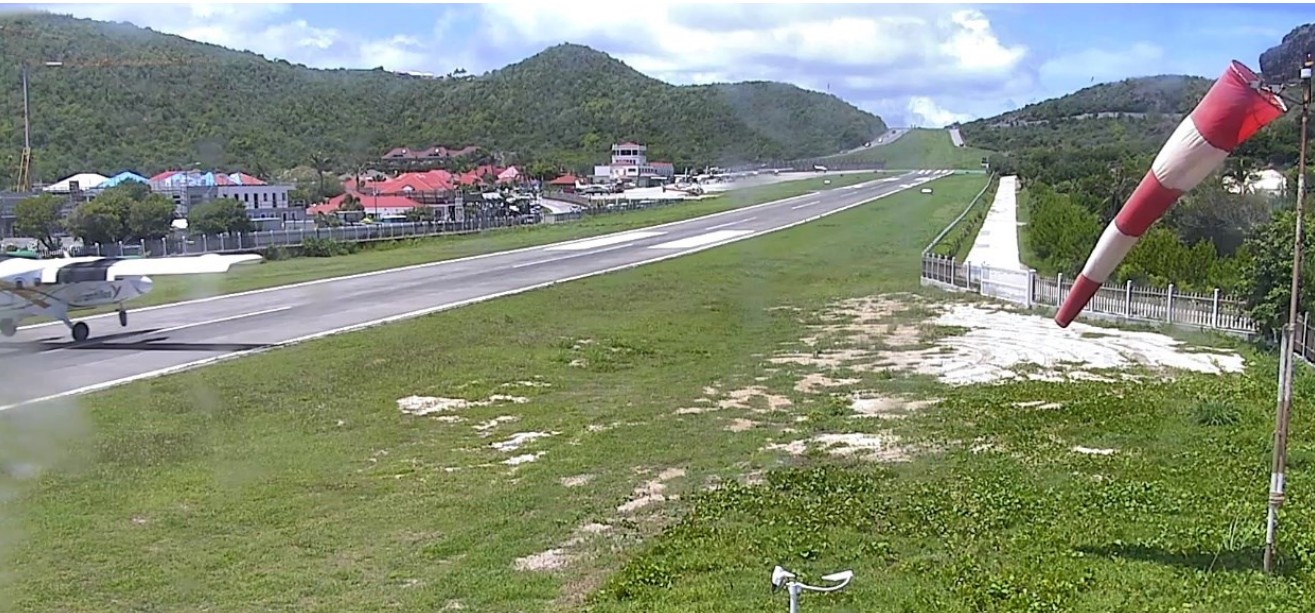
Airport CCTV confirmed that the nose wheel was turned to the left before touch down.
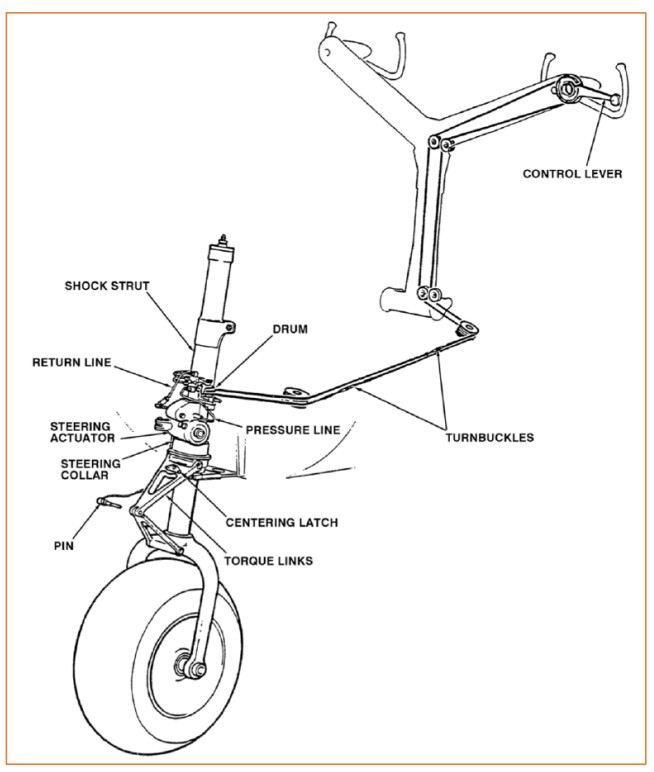
The use of the Nose Wheel Steering (NWS) is not recommended in the Pilot Operating Handbook (POH) for take-off or landing; instead the rudder should be used. The DHC-6 nose wheel is steered only from the left hand seat in the cockpit using a small lever that on the control column, marked NW STEER, with R (right) and L (left) direction arrows.
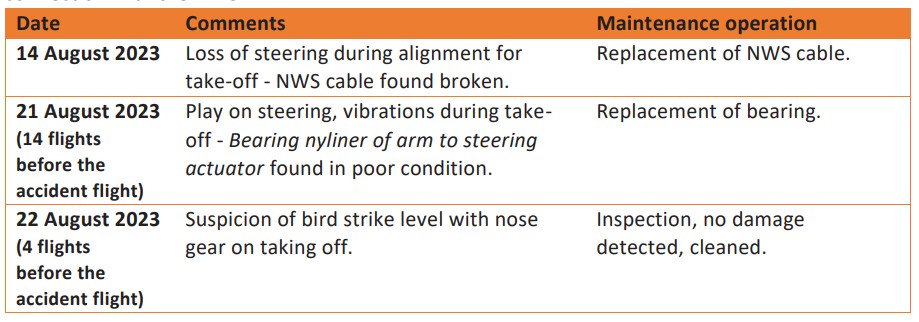
The last major scheduled inspection was EMMA (Equal Maintenance for Maximum Availability) inspection (one of 48 packages every 125FH over 6000FH) …from 8 to 11 August 2023. This inspection included checks on the nose gear and the nose wheel control system, which revealed nothing unusual.
However, the following items were subsequently recorded in the Technical Log:
The initial post-accident examinations did not identify any defects with the NWS but “the alignment marks could be offset to varying degrees although the gear was locked in the centred position by the spring latch” as shown below:.
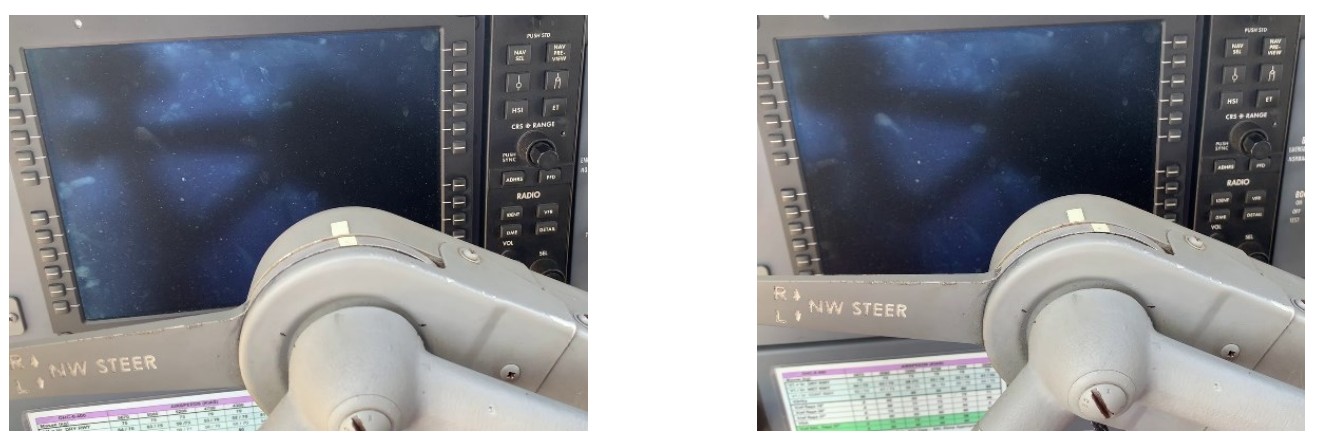
Furthermore “the marks could be aligned although the nose gear was not locked in the centred position by the spring latch” as shown below:
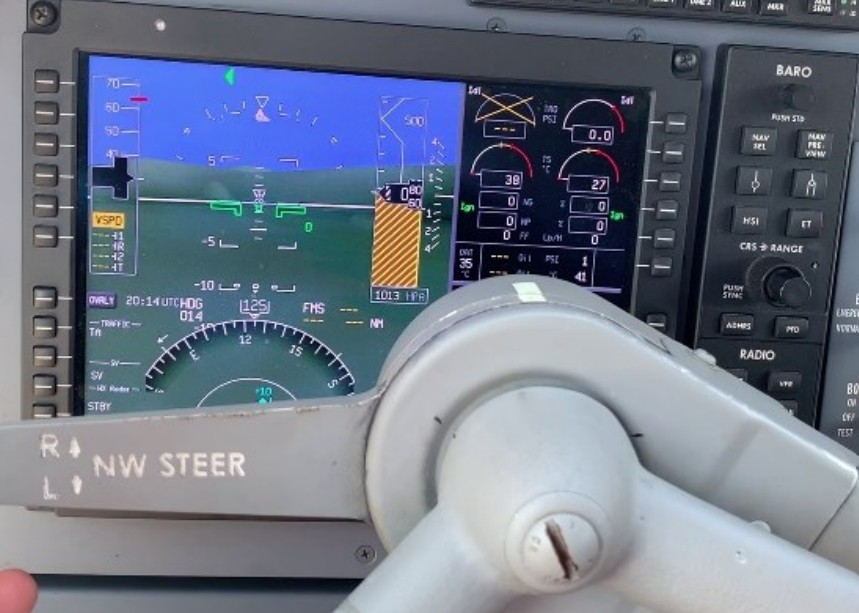
Subsequently it was identified that “the tension of the connecting cable between the NWS lever and the actuator was insufficient” for undetermined reasons.
According to De Havilland, an insufficient NWS cable tension can lead to the offset described above, with the marks aligned although the gear is not centred. In this case, if locking is not checked in accordance with the amended procedures, the orientation of the wheel can change during the flight.
Operationally:
The “Safety and Operational Tips” section of the POH states that it must be confirmed that the nose wheel is centred in the straight-ahead position before beginning the take-off run. To do this, it is recommended, after manoeuvring to the take-off position on the runway, to centre the nose wheel using the NWS lever, and then allow the aeroplane to move forward approximately three metres to confirm that the nose wheel is correctly centred.
Furthermore…
…after take-off, the pilot must ensure that the nose wheel is centred and locked. To do this, he must, if necessary, align the marks on the NWS lever and then apply slight upward and downward pressure to the lever to confirm that the nose gear is locked in the centre position. This action ensures that the spring latch is actually in the locked position.
This procedure is described in a temporary amendment (referenced TA-31), dated 2 October 2017. The previous procedure consisted solely of checking that the NWS lever was centred by aligning the marks if necessary.
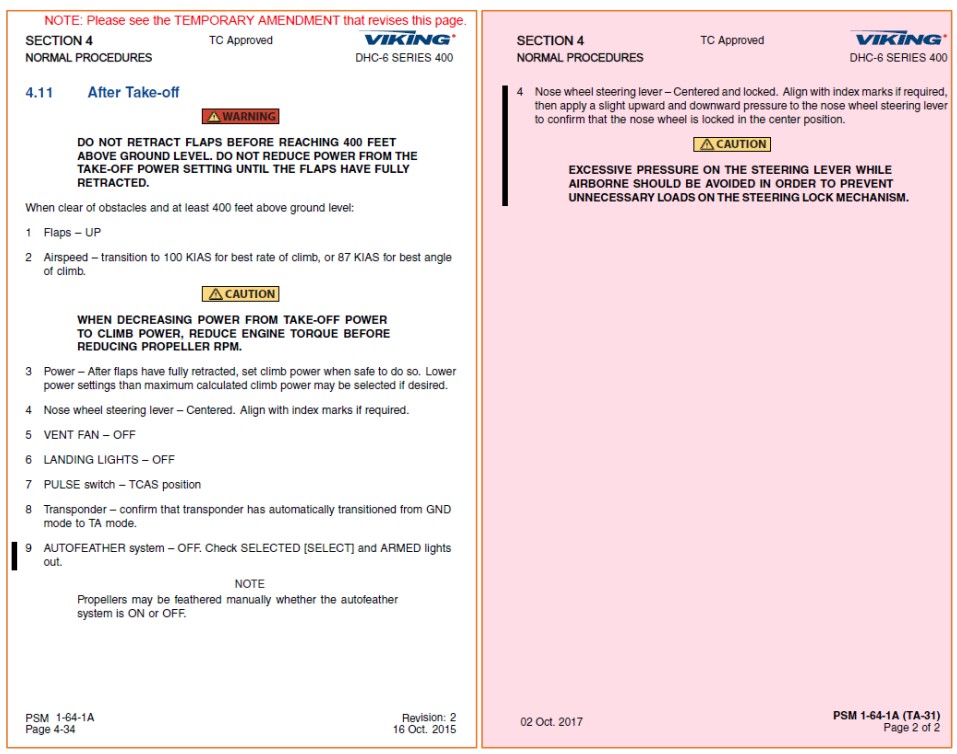
This amendment had not been incorporated into CAIRE’s Operations Manual’s Normal Procedures.
During the approach, according to the “Normal Procedures” section of the POH, the pilot must ensure that the nose wheel is centred and locked using a method similar to that used after take-off. This procedure is also described in a temporary amendment (referenced TA-32), dated 2 October 2017.
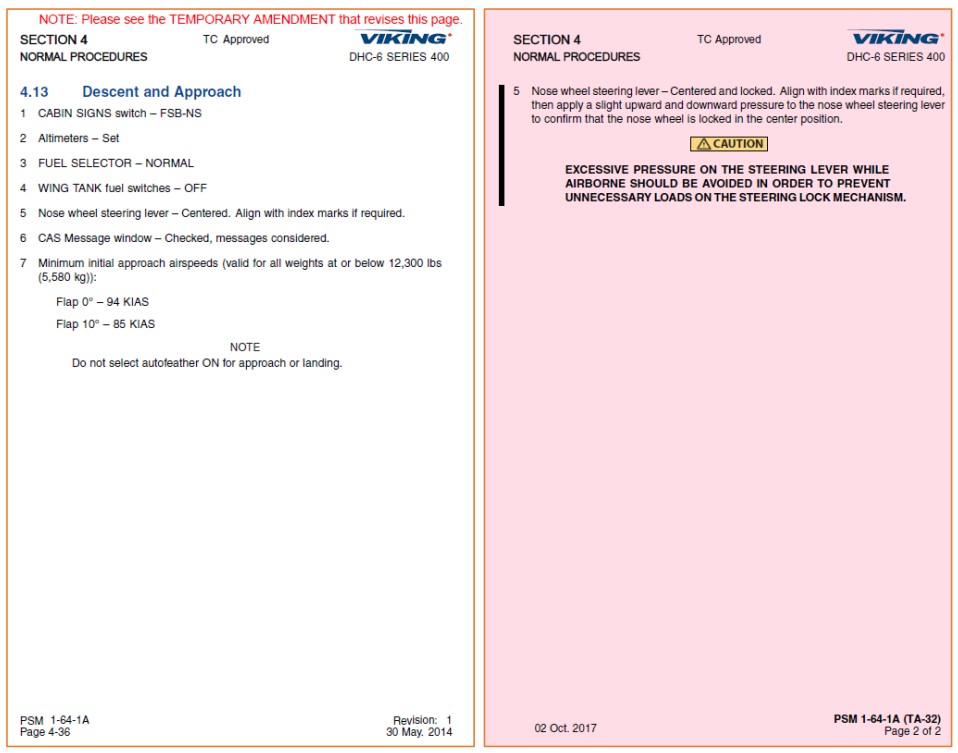
The normal procedures in the CAIRE operating manual for the DHC-6 do not contain any actions relating to the NWS during the descent or approach. The Before Landing Checklist includes the verification item, “STEERING…CENTERED”.
Neither pilot could specifically remember conducting the Before Landing Checklist for this flight (though it was captured by the CVR recording).
While that item is not elaborated upon the Aircraft Commander explained that normally…
…he visually checked that the marks were aligned on the NWS lever. He indicated that there was play in the lever and that sometimes the marks were slightly offset to each other. He added that the NWS marks were in his field of vision when he looked at the PFD and he thought that he would have noticed if these marks were not aligned during the flight.
BEA interviews determined that…
…NWS was addressed in the 2022-2023 theoretical knowledge cycle, with a particular focus on an occurrence in December 2022. [That involved a] runway excursion during take-off due, notably, to the use of the NWS during the take-off run. This [training] point highlighted the risks associated with using the NWS during take-off or landing.
However, the Aircraft Commander…
…thought that the subject…had not been mentioned during his last recurrent training. He added that he may have been given information about this when he passed the type rating for the DHC-6 in 2018, but he could not remember it.
He could not remember an instructor ever bringing the matter up.
The investigators also identified some previous relavent occurrences:
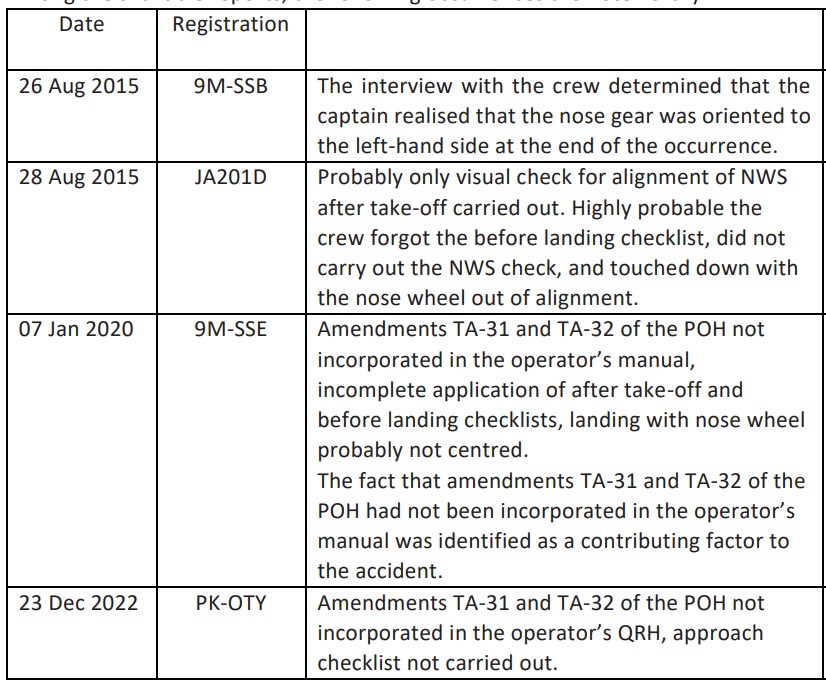
They note that neither the nose gear angular position nor the NWS lever position are recorded, hence in investigations…
…it is difficult to establish with certainty that a non-alignment of the nose gear is a contributing factor in a runway excursion, except when an external recording allows the gear position to be verified, as was the case in the F-OMYS accident, or when a crew member realizes their error (9M-SSB on 26 August 2015).
They also comment on a NASA study by Dismukes & Berman “Checklists and monitoring in the cockpit: Why crucial defenses sometimes fail”.
This study, based on observation flights in the cockpit, showed a certain number of cases where “a pilot either responded verbally to a challenge item [of a checklist] without visually inspecting the item, responded verbally before inspecting the item or responded that the item was correctly set when in fact it was not.
In some cases what we recorded as responding without looking may actually have been instances of “looking without seeing”. Expectation that an item is correctly set arises from memory of having just set or checked an item and from the vast number of previous instances in which that item has been correctly set. Thus, even though the pilot may direct gaze toward the item to be checked, he or she may perceive it to be in the correct position even when it is not, especially if gaze fixation on the item is brief due to rushing. Also, it is possible that pilots’ response to the checklist challenge may become so automatic that pilots sometimes utter the response automatically, perhaps not even realizing that they have not visually confirmed the challenged item.”
Investigators say that factors observed in this accident, which support the hypothesis of the lack of effective Before Landing Checklist visual verification of NWS alignment include:
- a distraction effect linked to the occurrence of the compensation problem in the captain’s ear, concomitant with carrying out the checklist;
- a task saturation effect, or even reduced attention on the part of the co-pilot: the checklist was completed at a time when the distribution of tasks was no longer standard—it was read by the co-pilot while he was temporarily the PF, while the captain attempted to resolve his ear problem. Combined with reduced availability linked to the accumulation of tasks, this probably deprived the co-pilot of his ability to visually check the alignment of the NWS marks;
- more generally, a probable lack of concentration, linked to non-compliance with the sterile cockpit rule – forgetting to disable TERRAIN alerts for the approach is an illustration of this insufficient concentration.
The investigators comment that:
The examination of the duty, flight and rest times of each crew member…did not show any exceedance of the regulatory limitations.
However:
The captain’s fatigue, linked to sleep deprivation in the days preceding the accident, combined with the stress related to the company’s situation, felt by the two crew members, may have made the crew even more vulnerable to this type of error.
Also of note is that a regulatory audit of CAIRE, conducted April 2016, made several findings which included ‘significant’ repeat findings on:
- the management system, in areas such as risk management, personnel training, and monitoring compliance;
- the time dedicated by nominated managers to their management tasks;
- flight crew repeatedly exceeding their duty time.
For these reasons, CAIRE was placed under reinforced oversight in May 2016. This reinforced oversight consisted of a reduction in the oversight cycle time and an increase in the number of in-flight and ground checks during stopovers.
Improvement had been seen from 2017 onwards. Its not clear in the BEA report how long the enhanced oversight continued.
BEA Conclusions
The crew were not aware of the modifications to the procedures for checking the Nose Wheel Steering (NWS) system after take-off and before landing which consisted of checking that the NWS was locked in the centred position. De Havilland had introduced them in the Pilot Operating Handbook (POH) for the DHC-6 series in 2017. These modifications were not included in the operator’s procedures which were an adaptation of the De Havilland procedures for multi-pilot operations.
Therefore the crew did not make…
…a manual input on the NWS lever to check that the NWS was locked in the centred position.
The tension in the NWS control cable was insufficient. It was not possible to determine the cause of this incorrect adjustment. The probable consequences of this was a situation where, on take-off, the NWS marks were aligned although the NWS was not locked in the centred position. As it was not locked, the nose wheel probably pivoted during the flight.
Safety Lessons Identified by the BEA
Risk Management
The accident illustrates the importance, at the organisational level, of being proactive in the identification of the risk.
Malfunctions in the operator’s development of the documentation had been identified and this was improving. However, the modifications to the DHC-6 operating procedures published in 2017 by De Havilland had not been included in the operational documents used by the CAIRE crews. This created a latent error situation.
Active monitoring of the occurrences experienced by the worldwide DHC-6 fleet could have drawn the operator’s attention to the risk linked to the checklist amendment not being taken into account and might have led the operator to check its operational documents with respect to this particular point.
The crews, and more specifically instructors, are also proactive safety actors. It is probable that a crew member’s incorrect application of the checklist will be detected, for example during a check or training flight. It seems important that this detection be the subject of in-depth reflection that goes beyond simply noting the error and informing the individual who made it. Training flights must therefore be a space for reflection that leads to an understanding of why the error was made.
Sterile Cockpit Procedures
The sterile cockpit rule is a requirement that, during critical phases of flight, non-essential activities in the cockpit are strictly prohibited. This rule was imposed in the United States in 1981 by the FAA following the findings of several accident investigations, which concluded that the distraction of the crews, linked to non-essential conversations or activities during critical portions of the flight, had contributed to the occurrence of the accident. Conversely, studies have also shown that cockpit discussions, even if it is simply chatting to “get to know each other”, contribute to crew synergy.
The sterile cockpit rule has the advantage of clearly defining when it is time to put aside non-essential activities and focus strictly on the task at hand to ensure safe flight operations.
BEA Safety Recommendations
De Havilland Aircraft of Canada Limited remind DHC-6 operators of the evolution of the Nose Wheel Steering (NWS) check, introduced by Temporary Amendments TA-31 and TA-32 to the DHC-6 POH and of the importance of them taking these into account (notably by updating the operational documents and integrating this update into crew training programs). [Recommendation FRAN-2026-001].
Transport Canada subsequently published safety information on this aspect of the accident (though oddly claiming the accident involved a paramilitary aircraft).
Following difficulties converting and analysing the Twin Otter’s FDR data:
De Havilland Aircraft of Canada Limited complete its efforts to produce the necessary documentation to convert the recordings of the FDR on the DHC-6 400. [Recommendation FRAN-2026-002].
EASA impose [retrospectively] that FDR conversion documentation is produced by design organisations of CS-23 category aircraft equipped with FDR recorders, thus enabling operators of these aircraft to comply with requirement CAT.GEN.MPA.195. [Recommendation FRAN-2026-003]
Our Safety Observations
This accident neatly highlights potential hazards during periods of organisational financial instability (that include cash flow issues, underfunded pension obligations or an inability to repay loans or bonds).
It also indicates the sort of smaller issues that can build up in the incubation period to such instability.
Safety Resources
You may also find these Aerossurance articles of interest:
Improvised Ice Road IMC Approaches – Twin Otter CFIT
Startled Shutdown: Fatal USAF E-11A Global Express PSM+ICR Accident
DA62 Forced Landing After Double Engine Shutdown Due to Multiple Electrical Issues
Crew Confusion in Firefighting 737 Terrain Impact
“Sensation Seeking” Survey Fatal Accident
Double Trouble: Offshore Surveillance P68 Forced to Glide
Dornier 328-100 Crossed Apron During Runway Excursion
DC3-TP67 CFIT: Result-Oriented Subculture & SMS Shelfware
Big Bustard Busts Blade: Propeller Blade Failure After Bird Strike
Brake Failure Causes PA-31 Runway Excursion During Taxi
NTSB Report on Miami Air International Jacksonville B737-800 Runway Excursion
Pilatus PC-12 Collided with Pick-Up Truck During Dusk Take Off
ATR 72 Rudder Travel Limitation Unit Incident: Latent Potential for Misassembly Meets Commercial Pressure
Dash 8 Q400 Control Anomalies: 1 Worn Cable and 1 Mystery
Runaway Dash 8 Q400 at Aberdeen after Miscommunication Over Chocks
Investigators Suggest Cultural Indifference to Checklist Use a Factor in TAROM ATR42 Runway Excursion
US Dash 8-100 Stalled and Dropped 5000 ft Over Alaska
ATR72 Survives Water Impact During Unstabilised Approach
Challenger Damaged in Wind Shear Heavy Landing and Runway Excursion
Fatigue Featured in Anchorage Alaska Air Ambulance Accident
Saab 340 Runway Excursion Exposes Safety Management Issues
Unalaska Saab 2000 Fatal Runway Excursion: PenAir N686PA 17 Oct 2019
Twin Otter Nose Wheel Steering Misused in Runway Excursion
Man Hit By Aircraft During Arctic Nuclear Sub Exercise
Significant Twin Otter NLG Crack
Investigation into Secretive Surveillance Aircraft Accident in Malta 24 Oct 2016
Unstable Approach Dash 8 Touches Down 450ft Before Threshold
CHIRP Critical of an Oil Company’s Commercial Practices