AS365 Crewman Dragged from Boat During SAR Training
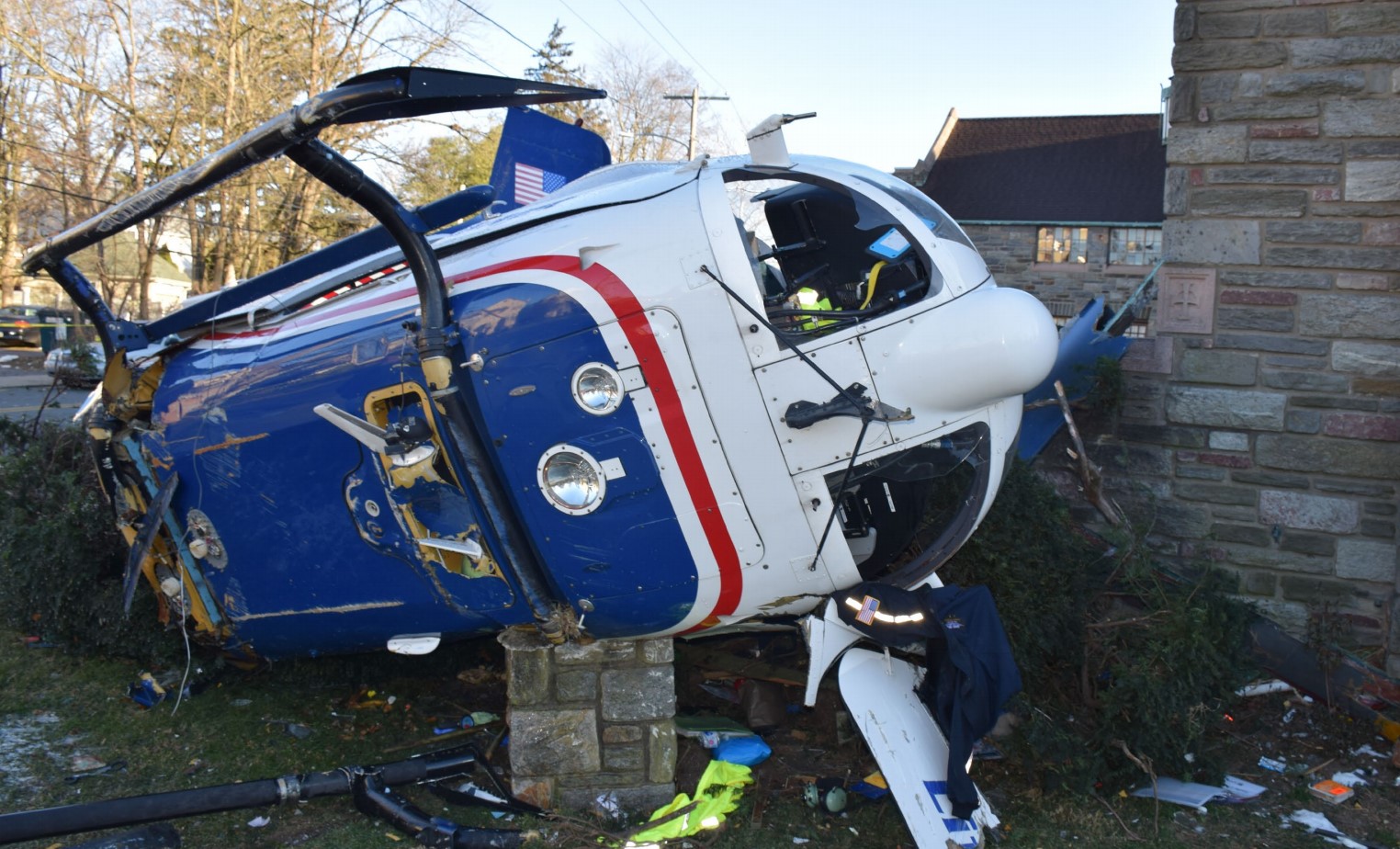
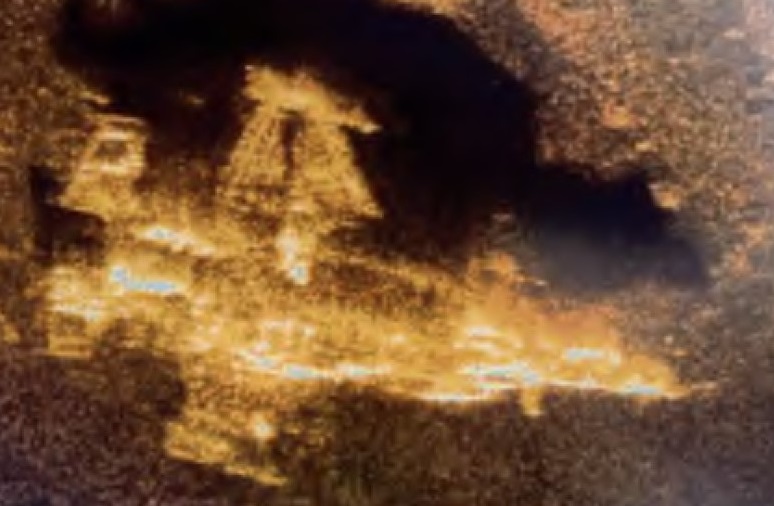
AS365 Crewman Dragged from Boat During SAR Training (Western Australia Police Air Wing Airbus AS365N3 VH‑WPX) On 29 September 2020 Western Australia Police Air Wing Airbus AS365N3 VH‑WPX was conducting SAR training exercises near Swanbourne, Western Australia. While conducting an exercise with a small vessel, a rescue crewman attached to the hoist cable was pulled overboard and dragged through the water. The crewman was recovered uninjured. The Australian Transport Safety Bureau (ATSB) issued their safety investigation report on 22 September 2021. The Day’s Training & Incident Flight The crew commenced duty at 07:00 Local Time at their Jandakot base. They departed at 09:33 for a staging area at Rous Head, Fremantle, landing at about 09:50. The crew for the exercises comprised of the pilot, four tactical flight officers (TFOs) and one TFO instructor. It involved the TFOs rotating through the roles of winch operator, rescue crewman and diver. They conducted the first training exercise of the day at a nearby beach. The following exercises involved training with the 40 ft volunteer rescue vessel, Stacy Hall c 1-2 km offshore Swanbourne. The aim was to conduct an initial vessel winching Operator Proficiency Check for one TFO and recency flights for two other crewmembers. At the time of this incident the three key crew members were: The pilot: joined the Australian Army as a Blackhawk pilot in 2008 and then the WA Police in Sept 2019. They had 3,566 flying hours of experience, 320 on type. The hoist operator: who had served in the WA Police Air Wing since 2010, and had 1,596 hours of experience, including 110 cycles of water winching. The rescue crewman: who been with the Air Wing as a helicopter crewman since mid 2018 and had 864 hours, including 74 cycles as a rescue crewman. The weather was overcast with clear visibility. The temperature was about 19°C with wind from the north‑west at 21 km/h (11 kt) gusting to 30 km/h (16 kt). Sea state was forecast to increase to 1.5 to 2 m during the morning. After the first training it was decided only to conduct further operational recency training for the already qualified TFOs due to the sea state. At 11:31, they departed from Rous Head for the third training sortie. During a dummy run to the vessel the winch operator observed that the Stacy Hall was bouncing in the waves, so the crew requested…course and speed changes. …as the rescue crewman was winched clear of the deck, they swung towards the canopy on the forward end of the deck and required the use of their arms to fend off…with the winch operator commenting to the crew that the sequence ‘…was pretty hairy’. Further hoist training with the vessel and a helocast (free drop) / wet hoisting recovery exercise were conducted without issue, before a further return to Rous Head. This suggests relatively low concern about the sea state. At 12:10 the helicopter departed to rendezvous with the Stacy Hall 1-2 km off Swanbourne for the fourth exercise. After take-off, the crew completed fly‑away checks, pre-landing checks, pilot brief and winch checks. The pilot brief confirmed the crew would undertake two hoist cycles to the vessel, which would be travelling on a course of 300° at a speed of 12 kt. The helicopter approached the Stacy Hall and...
read moreFirefighting Bucket Snags Trees During Autorotation
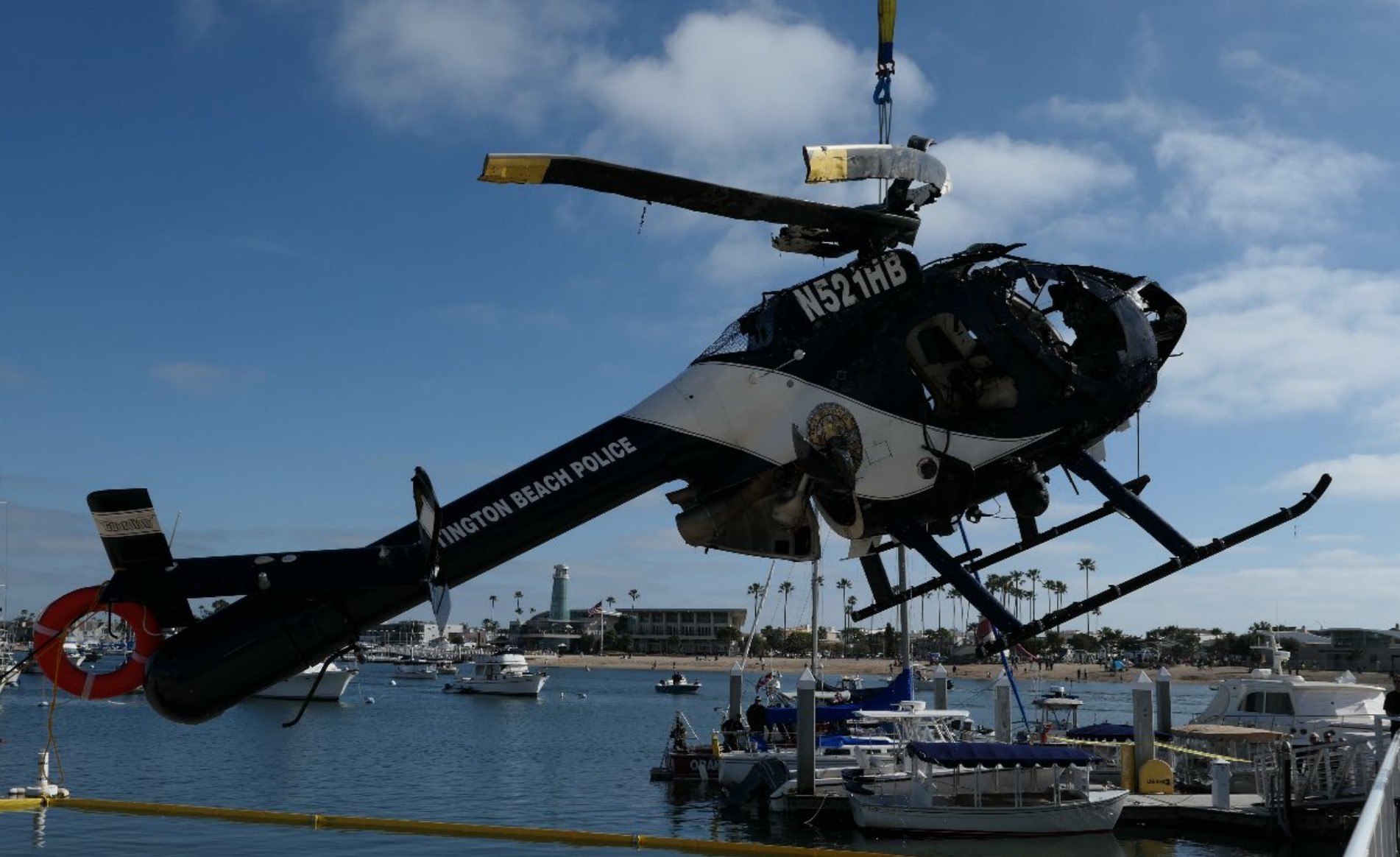
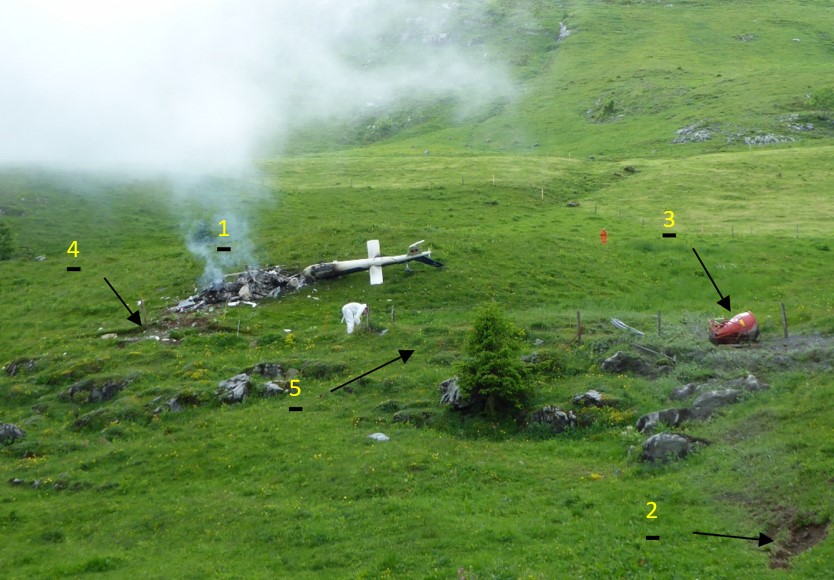
Firefighting Bucket Snags Trees During Autorotation (Valhalla Helicopters Bell 205 C-GRUV) On 19 July 2023, Valhalla Helicopters Bell 205A-1 C-GRUV crashed while conducting firefighting in northern Alberta. The pilot died of his injuries. The Transportation Safety Board of Canada (TSB) published their safety investigation report on 27 February 2025. The Accident Flight At 1803 Local Time, 9 minutes after being tasked, the helicopter departed Haig Lake firebase, Alberta, on a VFR flight to a forest fire located approximately 15 NM northeast of Peace River Aerodrome Alberta. The helicopter had an empty firefighting bucket, a1230 l SEI Industries Bambi Bucket BB2732, on a 150-foot longline. The pilot had 8711 flying hours total time, 3286 on type and a further 2048 on the B212. The helicopter was powered by an Ozark Aeroworks (formerly Honeywell) T5317B. Very shortly after departure, after reaching 1400 ft AGL, the helicopter experienced an engine failure. The helicopter began a 180° turn to the right, to a heading of approximately 025° magnetic, during which it continued to lose altitude. The helicopter then experienced a complete loss of engine power and the pilot began to autorotate into a section of muskeg to the west of his current location. During the subsequent autorotation the water bucket became entangled in trees. The helicopter consequently impacted the ground in a nose-down, left-banked attitude. The main rotor struck the tail boom. The damage indicated low rotor rpm at the time of impact. There was no post-impact fire. The pilot survived the initial impact and was able to egress from the helicopter but later died of his injuries. The Safety Investigation The helicopter was not equipped with a flight data recorder or a cockpit voice recorder. Neither were required by regulation. The helicopter’s Garmin GPSMAP 496 provided the investigation with information about its flight path. A teardown of the T53 engine determined that a failure of the engine air diffuser’s No. 2 bearing support cone brazing resulted in the compressor rotor making contact with the power shaft, resulting in a high level of damage and vibration. The failure of the brazing was due to an undetermined manufacturing defect that created a localized stress concentration that, over time, resulted in the progressive failure of the braze bond. The helicopter was equipped with an Onboard Systems keeperless cargo hook kit rated for loads up to 5000 lbs. Investigators found the longline wrapped around treetops in the vicinity of the impact site. The snagged water bucket resulted in forward momentum being translated to a circular acceleration vector toward the ground, increasing the helicopter’s rate of descent. To counteract this, the pilot likely pulled aft on the cyclic and increased the collective to arrest the descent. With the engine no longer producing power, these actions would have led to a decay in main rotor rpm in the final moments of flight. The main rotor blades slowed to the point that the main rotor rpm would not have been recoverable. As the main rotor slowed, the retreating blade (left side) would have stalled, causing a roll to the left and a pitch forward in the final seconds before impact. For unknown reasons, the pilot did not jettison the external load using either the electrical or the manual release methods at the beginning of the autorotation. The pilot could have...
read morePassenger Struck by Tail Rotor While Unloading at a Hunting Camp
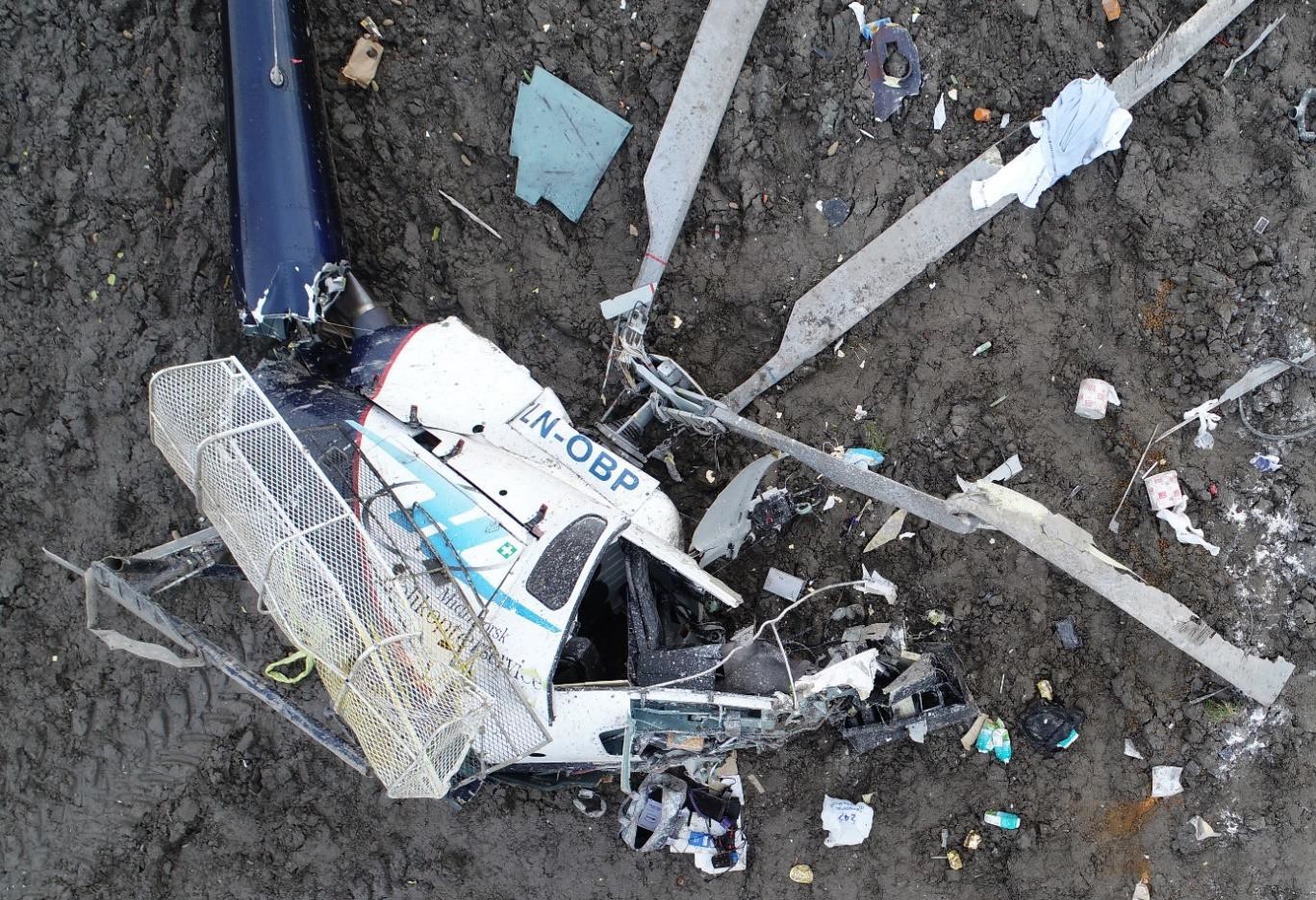
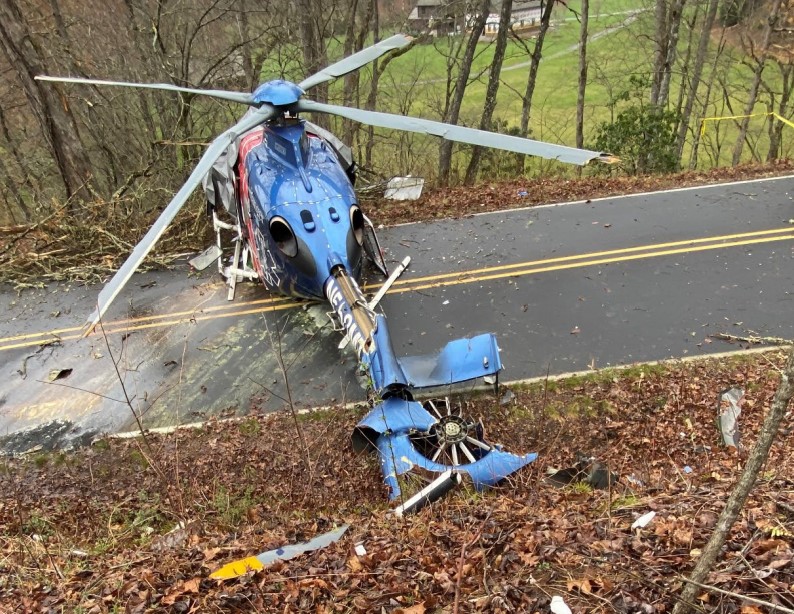
Passenger Struck by Tail Rotor While Unloading at a Hunting Camp (Heli Explore Airbus AS350BA C-GWMO) On 21 April 2024, Airbus AS350BA C-GWMO of Heli Explore Inc, was conducting a series of VFR flights from Attawapiskat Airport, Ontario. These were to various hunting camps in support of the annual ‘Goose Break‘ hunt. A passenger fatality occurred unload after the 9th flight of the day. The Transportation Safety Board of Canada (TSB) published their safety investigation report on 12 February 2025. The Accident Flight The helicopter had picked up one passenger at Attawapiskat Airport for Camp 17 on Akimiski Island, Nunavut, 15 minutes flying away. The passenger had participated in the loading of the helicopter, under the supervision of a maintenance engineer. Hunting equipment was being carried in panniers and pods on either side of the helicopter. The pilot landed facing the northeast, where he could see the trail leading to the camp. He left the engine running and rotors turning and his hands remained on the controls. This technique was often used during ground handling (passenger and cargo loading and off loading) to allow for a swift reaction if the helicopter were to shift or become unstable on the landing area. An individual on a snowmobile towing a sled arrived to help unload the helicopter. He waited off to the left side of the helicopter, in view of the pilot, until the pilot gave a signal that he could move closer. The pilot told the passenger he could get out of the helicopter and signalled to the snowmobile driver that he could approach the helicopter. The snowmobile and sled were parked near the external cargo basket on the left side, facing the same direction as the helicopter, where it remained throughout the occurrence. The passenger exited the helicopter and began unloading cargo from the left hand side with the snowmobile driver. As the passenger completed unloading the cargo pod, the snowmobile driver walked around the front of the helicopter to unload the right-side pod. Crucially: Once the passenger emptied the cargo pod, he secured its door and started walking toward the tail of the helicopter. The snowmobile driver saw that the passenger was approaching the back of the helicopter, and tried to warn him by yelling and gesturing for him to stay away from the back of the helicopter. The passenger continued along the left side of the tail boom toward the back of the helicopter, past 4 antennas mounted below the tail boom, and past the left-side horizontal stabilizer. He then ducked under the tail boom, aft of the horizontal stabilizer, but forward of the tail’s vertical fin. As he crossed to the right side, he was struck by the spinning tail rotor and was fatally injured. The impact caused the tail rotor and most of the tail rotor gearbox to detach from the helicopter. Safety Investigation In previous years at Attawapiskat, a person employed by Heli Explore Inc arranged passenger bookings and provided safety briefings to passengers. This documented that passengers had received a safety briefing, helped as some passengers only spoke Cree and “helped speed up the process of moving many passengers to the various camps”. However in 2024… …a new individual from the community was selected to arrange the passenger bookings in Attawapiskat. This individual...
read moreS-76D Loss of Control on Approach to an Indian Drilling Rig
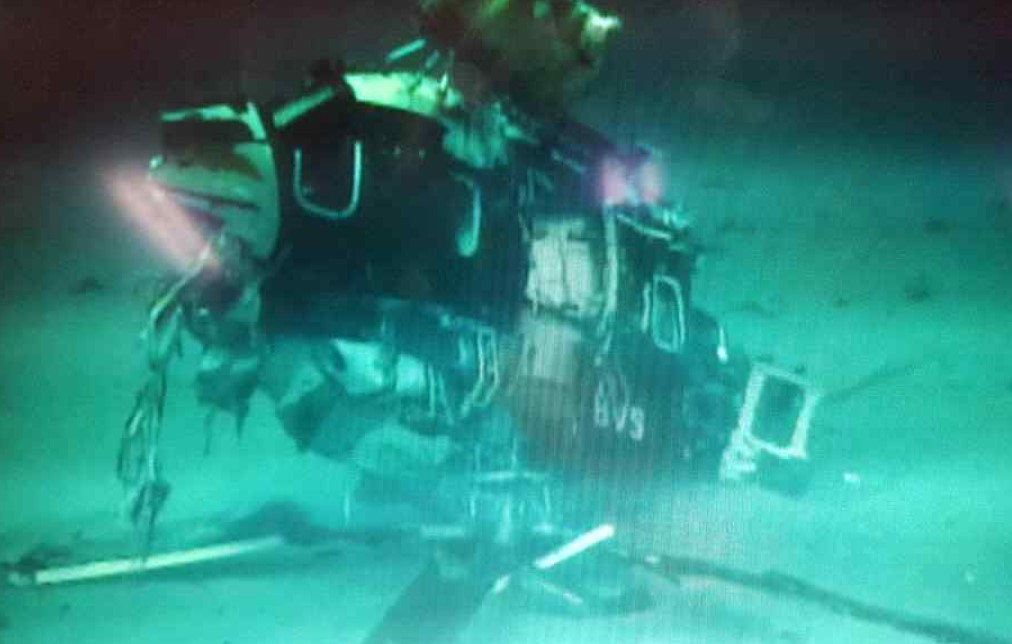
Pawan Hans Sikorsky S-76D Loss of Control on Approach to an Indian Drilling Rig (VT-PWI) On 28 June 2022 Pawan Hans Sikorsky S-76D VT-PWI, contracted by ONGC, impacted the sea on approach to the Sagar Kiran jack-up drilling rig in the Arabian Sea. The helicopter capsized and while all 9 occupants egressed the helicopter, four passengers died in the water before they were rescued. Two passengers suffered serious injuries. Another passenger and the two flight crew escaped with minor injuries. The Indian Aircraft Accident Investigation Bureau (AAIB) published their safety investigation report in August 2023. ONGC, Pawan Hans and the Introduction of the S-76D in India State owned ONGC is the largest oil and gas company in India. As is also common in Mexico and Brazil, the state oil company is the main customer for offshore helicopters in their domestic market. Pawan Hans (PHL) was formed in 1985. ONGC owns 49% of the company, with the Government of India holding the majority stake. The Government has made 4 attempts to sell off their stake in the last 8 years. Privately owned competitors to Pawan Hans include Global Vectra and Heligo. Pawan Hans operated 44 helicopters of 7 helicopter types at the time of the accident. Offshore operations were their largest operating sector. For many years the Airbus AS365 family had been their prime offshore type, with 31 in their fleet in 2022. According to the in the AAIB report: ONGC…had put the criteria that aircraft being made available for operations should not be more than 7 years old [presumably for the commencement of new tenders]. Pawan Hans was not in a position to meet the customer demand without induction of newer aircraft in its fleet. Thereby, PHL’s top management decided to go for induction of new helicopters through leasing option. An attempt to lease S-76D and S-76C++ helicopters from a leasing company was made earlier but could not fructify. Hence, alternate leasing options were explored and PHL processed for leasing seven S-76D helicopters with planned induction in 2019-2020. These aircraft, formerly operated by Thai Aviation Services, were being replaced by Leonardo AW139s. After disruptions and delays owing to Covid-19, a master lease agreement was signed with lessor in October 2020. Pawan Hans was required to comply with provisions contained in the Air Operators Certification Procedure CAP 3400 for induction of new helicopter in its fleet. Pawan Hans submitted request for pre-application meeting to [Directorate General of Civil Aviation] DGCA on 10 Nov 2020. Pawan Hans thus became the only operator of the S-76D in India. The aircraft was leased to Pawan Hans by Milestone Aviation company Vertical Aviation No1 Ltd though to 17 February 2028. The aircraft arrived at Pawan Hans on 26 Aug 2021 in disassembled condition. Aircraft had 4636:42 hrs at the time of delivery to Pawan Hans. Aircraft was assembled and ground run was carried out on 23 Oct 2021. The test flight for issue of ARC was carried out on 11 Jan 2022, and Certificate of Airworthiness and ARC was issued by DGCA on 28 Mar 2022. Pawan Hans has a Safety Management System (SMS), accepted by DGAC. Pawan Hans hadidentified various risk mitigations for the S-76D introduction, including: Experienced offshore S-76D TREs/TRIs were to be recruited S-76D offshore experienced PICs will be hired/deployed in initial stages Existing...
read moreTwo Rescuers Fell When Hoist Cable Damaged After a Loss of Hover Reference
Two Rescuers Fell When Hoist Cable Damaged After a Loss of Hover Reference (Australian Helicopters Bell 412 VH‑EMZ) On 9 November 2009 Australian Helicopters Bell 412 VH‑EMZ was involved in a hosting accident that left two crew members seriously injured. The Australian Transport Safety Bureau (ATSB) issued their safety investigation report on 21 January 2011. Preparations for the Medevac Flight The helicopter, call sign ‘Rescue 700’, based at Horn Island Aerodrome, Queensland was tasked to rendezvous with a 281m container ship Maersk Duffield located about 132 km west of Horn Island. The flight was to medevac an ill crew member to hospital. On board were to be four crew: On board the helicopter were the pilot, who was seated in the front right seat; an air crew officer (ACO), who was seated in the front left seat; and a rescue crew officer (RCO) and paramedic, who were seated in the rear cabin. The ACO “generally occupied the front left seat and relocated into the rear cabin” when required to operate the hoist. The RCO’s role was to accompany the paramedic during hoisting. The pilot had c 8000 hours of flying experience, 2000 on type in command. The ACO had 7 years of experience with about about 690 hours of operational experience, but just 25 hoist sorties of which only 8 had been involved ships. No experience details were provided for the RCO or paramedic. Before departure, the crew had been advised that the patient would need to be hoisted from the ship’s forecastle. This area was ahead of the 16.2 m high forward mast with c 8-9 m horizontal clearance. The crew were provided with photos. The decision to undertake the winch to the forecastle was made by the master. The other options available for consideration were the ship’s bridge wings, the monkey island; or the top of the containers on the deck. The bridge wings and monkey island were considered unsuitable because of the number of aerials and other obstructions present, and the height of the containers above the deck meant that they were not accessible by the ship’s crew. While awaiting the arrival of the paramedic, the pilots AO and RCO developed a plan. They would… …request the ship to manoeuvre to provide a relative wind that was about 30° off the starboard side in order to provide the pilot with a visual reference of the ship. [In] order to reduce the overall time required to conduct the retrieval, the RCO suggested that he and the paramedic be winched together directly onto the forecastle. The suitability of the plan was to be confirmed on arrival overhead. The Accident Flight The helicopter departed Horn Island at 15:00 local time, arriving on scene at about 15:38. The pilot conducted a number of orbits of the ship to assess the proposed winching area and the relative wind via smoke from the ship’s funnel. Following that reconnaissance, the pilot requested that the ship’s master change the ship’s heading and reduce speed in order to obtain the originally planned relative wind. There was no restriction to the manoeuvring of the ship in preparation for the winch. While the ship altered its heading, the helicopter conducted a final orbit and the crew confirmed they were were ready to commence hoisting. The ship’s master...
read moreWindward’s Wayward Rain Pants Down an H500: Loose Article Hazards
Windward’s Wayward Rain Pants Down a Hughes H500 in Hawaii (N690WA): Loose Article Hazards On 20 February 2024 Windward Aviation Hughes 500 (369D) N690WA made a forced landing on Maui, Hawaii after a loss of tail rotor drive. The helicopter was charted by the National Parks Service (NPS). On 2 December 2024 the US National Transportation Safety Board (NTSB) issued their final report. NTSB explain that: The pilot reported that after landing at a remote landing zone (LZ) to pick up a single passenger, the passenger loaded their gear in the aft right seat and secured it with a seatbelt. The pilot sat in the front left seat. The helicopter was being operated ‘open door’. While enroute, the occupants heard a “loud and violent bang”, helicopter yawed to the right and vibrations ensued. The pilot looked back at the tail rotor, saw it was spinning freely, and confirmed the tail rotor drive train had failed. The pilot decided to perform an autorotation into an open field in the Palikea flats area of the Haleakalā National Park. He told the NTSB: I rolled the throttle back to idle when it was confirmed I could reach a desired spot. I was unsure of how level the flats were and the area is known to be muddy/boggy. I decided it would be best to have as little ground run as possible so I tried to slow the bird in the flare as much as possible. I leveled out and pulled but didn’t have a whole lot of energy. I first contacted slightly aft left. rocked forward a little and settled into a final resting spot with no visible run on: making it feel like a bounce and settle or like a rough hovering auto – I guess would be the best way to describe it. After this skillful landing, which resulted in no injuries or further aircraft damage, the pilot examined the aircraft. The Tail Rotor Drive Shaft was severed: There was impact damage visible on the horizontal stabiliser: It was noticed that the passenger’s rain pants were missing from the aft right seat, where they had been secured to a back pack along side a strimmer and other equipment, with external load equipment left stowed unrestrained on the floor. It was concluded the clothing had… …exited the helicopter and impacted the tail rotor resulting in substantial damage to the fuselage, tail boom, horizontal stabilizer and tail rotor assembly and gearbox. The NTSB Probable Cause was: The pilot’s failure to ensure the passenger’s gear was properly secured before departure. The NTSB make no safety recommendations but has previously issued a safety alert All Secure, All Clear – Be vigilant regarding accountability and security of items (SA-26) However the NPS’s own safety investigation decided that… …doors on should be the standard configuration for helicopter operations. Exceptions to the standard configuration should be included in the appropriate operational risk assessments, briefed, and approved at the appropriate levels. Risk mitigation factors for doors off should address policies and procedures for the proper security of personnel and equipment, and if necessary, the requirement for secondary restraints. Open door air tour passenger flights were challenged after a fatal 2018 accident in the East River, NY: FlyNYON knew of safety concerns before fatal doors-off flight (see also: FlyNYON legal saga comes...
read moreKorean SAR S-76B Mountain Rescue Accident 2020
Korean SAR S-76B Mountain Rescue Accident 2020 (HL9646) On 1 May 2020 SAR Sikorsky S-76B HL9646 of Sejin Aviation crashed on Mount Jirisan, South Korea, while undertaking a mountain rescue tasking. One casualty being hoisted, a climber who had suffered a heart attack,, and another climber on the mountainside below were both killed. The five crew of the helicopter suffered minor injures. The helicopter was under contract to Gyeongsangnam-do Province Fire Department, from September 2019 to February 2022 as a stopgap awaiting the delivery of new helicopters. The Korean Aviation and Railway Accident Investigation Board (ARAIB) safety investigation report was published on 16 December 2024 (in Korean only). The Accident Flight The accident timeline is as follows: 11:28: HL9646 took off from the Gyeongsangnam-do Fire Aviation Rescue and Paramedic Unit. 11:42: The crew commenced a search of the mountains between Cheonwangbong and Beopgye Temple, at an altitude of approximately 5,900–6,200 feet, to locate the casualty. Mount Jirisan is the highest mountain in mainland South Korea. However, due numbers of hikers in the area, the casualty’s location could not be identified until the third orbit of the area. 11:50: HL9646 attempted it’s first approach to the casualty, but aborted due to strong crosswinds. 11:54: The crew arrived at the site for a second attempt from a different direction, and a two person rescue / paramedic team were successfully hosted to the casualty. Afterwards HL9646 moved away until requested to return. It moved into position, hovering approximately 5,935 feet above sea level and 30–35 feet above ground level. Outside Air Temperature was c15-16ºC (cISA+12). It appears one of the rescue / paramedic team was hoisted aboard first. 12:06: While hoisting the casualty, “the helicopter’s nose rotated to the right, and the aircraft shifted forward, descending unexpectedly”. The main rotor blades contacted the terrain below. Aircraft debris was scattered over a radius of about 15 m. The climber on the ground who was killed was struck by a rotor blade. Fir trees around the hiking trail, with a diameter of c 35 cm, prevented HL9646 from rolling down the steep slope. ARAIB Safety Investigation HL9646 did not have a flight data recorder (FDR), only a cockpit voice recorder (CVR). The wreckage was recovered using a Korea Forest Service S-64 Sky Crane. In interview, the Aircraft Commander (Pilot Flying) recalled that… …while the stretcher carrying the patient was being raised, [the helicopter] was hit by a vortex and sank. To prevent this, I increased the power, but the altitude did not recover, so I turned the aircraft nose to the right and made an emergency landing. The Co-pilot (Pilot Monitoring) recalled that: We approached the rescue site at about 5,700 feet, and the wind at that time was not strong at 5-6 knots. We hovered at an altitude of about 30-35 feet above the rescue site, and when the cardiac arrest patient rose to the middle, the aircraft lost power and felt like it was being pushed forward, and then it immediately started to sink. It rose slightly near the ground and then crashed. The hoist operator indicates that as the aircraft started to descend they tried to lower the patient to the ground. ARAIB highlight a range of factors that affect hover performance: In order to hover for mountain rescue or other missions, you...
read moreStartled Shutdown: Fatal USAF E-11A Global Express PSM+ICR Accident
Startled Shutdown: Fatal USAF E-11A Global Express PSM+ICR Accident On 27 January 2020 a USAF Bombardier E-11A (Global Express) 11-9358 crashed in the Deh Yak district in Afghanistan, killing both pilots. The accident featured what a 1998 AIA/AECMA study termed a Propulsion System Malfunction + Inappropriate Crew Response (PSM+ICR). A USAF Accident Investigation Board (AIB) issued its investigation report in November 2020. A USAF AIB does not conduct a safety investigation (a separate Safety Investigation Board [SIB] is convened but its report is not released), instead as it explains: In accordance with AFI 51-307, Aerospace and Ground Accident Investigations, this accident investigation board conducted a legal investigation to inquire into all the facts and circumstances surrounding this Air Force aerospace accident, prepare a publicly-releasable report, and obtain and preserve all available evidence for use in litigation, claims, disciplinary action, and adverse administrative action. The Accident The aircraft was operated by the 430th Expeditionary Electronic Communications Squadron (430EECS) from Kandahar Airport as part of Operation Freedom’s Sentinel. It was equipped as a Battlefield Airborne Communications Node (BACN) communications-relay platform. The accident flight was both an operational BACN mission and Mission Qualification Training for the co-pilot. The aircraft commander, a Lt Colonel, was a current and qualified instructor and evaluator pilot in the E-11A. He had 4736.9 flying hours of experience, which 1053.3 hours on type. He had also flown the KC-10, RQ-4, MC-12 and T-1. The co-pilot had completed Global Express ground and flight training at CAE on 10 November 2019, and received his basic qualification in E-11A on 17 January 2020. He had completed his first two MQT flights in theatre. The AIB was told “he demonstrated knowledge of the aircraft systems, high situational awareness, asked great questions and was a great student.” He had a total of 1343.5 flying hours, 27.6 hours on type. He had previously flown the T-6 as an instructor and 127.4 hours in the B-1. The aircraft took off at 11:05 local time and entered an orbit just west of Kabul at 42,000 feet altitude at c 11:36. The flight was conducted under Visual Flight Rules (VFR). At 12:50, the crew was cleared by ATC to climb to 43,000 feet. The engine throttles were advanced and the crew initiated the climb with the autopilot. At 12:50:52, a fan blade of the left hand Rolls-Royce BR710 engine was released. Post-accident photographs suggest the blade failure was contained in the nacelle. This failure was accompanied by a bang, recorded by the CVR, which then stopped due to the g switch being activated by the out of balance vibration. This Fan Blade Off (FBO) event resulted in an immediate shutdown of that engine by the engine control system and display of a L FADEC FAIL caution initially. The left engine N1 dropped to 7.6% within five seconds of the FBO before spiking to an unrealistic 255.9%. Within seconds the aircraft autothrottles also disengaged automatically. The autopilot remained engaged however. Bank angles remained essentially constant, consistent with a circular orbit, and the aircraft descended from 42,300 to 41,000 feet. Ten seconds after the catastrophic engine failure, the crew retarded both throttles to 14º (the throttle lever range is from 0-40º) for one second, then slightly advancing the left throttle separately to 26º for one second, then retarding it to align with the...
read more29 Seconds to Impact: A Fatal Night Offshore Approach in the Irish Sea
29 Seconds to Impact: A Fatal Night Offshore Approach in the Irish Sea (CHC Scotia AS365N G-BLUN) At 18:00 on 27 December 2006 CHC Scotia Airbus AS365N G-BLUN departed Blackpool to conduct 8 sectors within the Morecambe Bay gas field in the Irish Sea. The first two were completed without incident but, when preparing to land on the North Morecambe platform, in the dark, the helicopter flew past the platform and struck the surface of the sea. There were no survivors amongst the five passengers and two crew. The UK Air Accidents Investigation Branch (AAIB) issued their safety investigation report on 17 October 2008. The Accident Flight The flight crew had reported for duty at 12:00. The aircraft commander had 8,856 hours total time, 6,156 on type and had been “operating in the Morecambe Bay gas field…for 20 years”. At the time of the accident he was simultaneously Blackpool Chief Pilot, a Line Training Captain and a Crew Resource Management (CRM) Instructor. The co-pilot had 3,565 hours total time, 377 on type. This was his first offshore job, and had been employed by CHC Scotia for 13 months. He had recorded a total of 467 hrs of night flying, however, he had recorded only 3 hrs of night flying in the previous three months. Their recent experience included: They had already completed one multi-sector flight that day. Their second flight was scheduled to depart at 18:00, with eight night sectors all to be flown with the co-pilot as the handling pilot. G-BLUN was bult in 1985, had 20,469 hours and 130,038 cycles, indicating the nature of the operating environment with continual short sectors. AAIB explain that CHC Scotia’s AS365Ns were… …fitted with Trimble 2101 Navigator Plus Global Positioning System (GPS), cleared as a primary means of navigation in instrument conditions. The fleet [were] also fitted with an Automatic Direction Finder (ADF) and a Sperry Primus 500 colour radar system. The GPS is the primary means of off-shore navigation, with the radar being used as a back up and to cross-check the GPS data when required. After preparations…. The helicopter departed Blackpool at 1800 hrs and climbed to 1,000 ft on a westerly heading. At 1,000 ft, and at an initial IAS of 135 kt, the autopilot altitude mode was engaged; it was disengaged at 1807 hrs and the altitude and speed started to reduce. Given the average ground speed derived from the radar, and assuming that the GPS distances were accurate, the platform became visible at a range of approximately 4,400m: the windshield wipers were audible in the background. No Automatic Voice Alert Device (AVAD) annunciations were recorded but the transition through the radio height of 100 ft occurred rapidly as the helicopter transitioned from being over the sea to over the helideck. The helicopter landed on the AP1 platform at 18:11. The next sector, to the Millom West platform, was flown without any passengers, baggage or freight and with 360 kg of fuel. The helicopter took off at 1814 hrs, climbed to 500 ft on a north-westerly heading and accelerated to an initial IAS of 145 kt. The rig became visible 25 seconds after the 5 nm GPS call; this equates to a visual range of approximately 7,100 m. At 1820 hrs the helicopter initiated its descent whilst...
read moreLoss of Sikorsky S-76C+ 5N-BQG of Eastwind Off Nigeria 24 October 2024
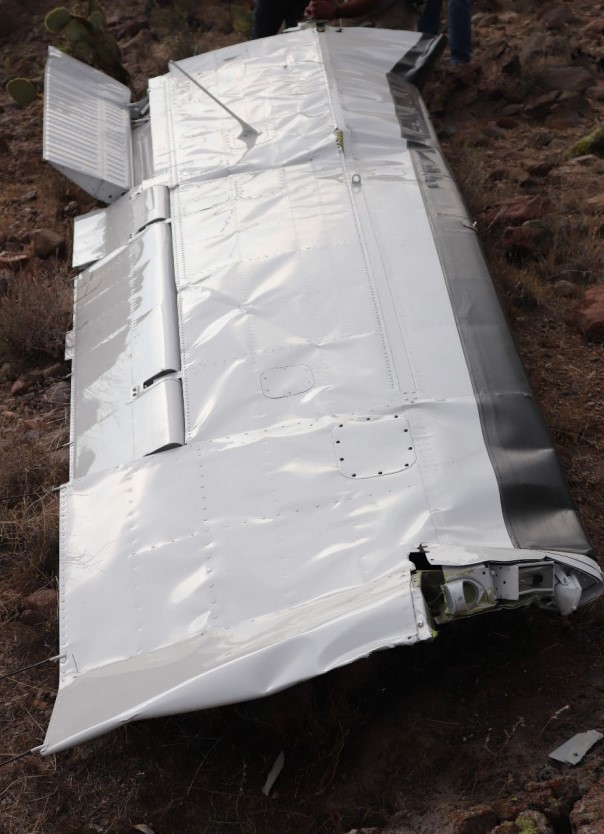
Loss of Sikorsky S-76C+ 5N-BQG of Eastwind Off Nigeria 24 October 2024 On 24 October 2024 Sikorsky S-76C+ 5N-BQG of Eastwind cashed in the sea southeast of Eket, Nigeria at 11:25 in daylight. All 8 occupants perished. The Nigerian Safety Investigation Bureau (NSIB) published their preliminary report on 17 December 2024. The Aircraft Eastwind Aviation Logistics Services Limited is an operator based in Ikeja, Lagos. It has a Nigeria Civil Aviation Authority (NCAA) air operator certificate (AOC). It operated one helicopter, 5N-BQG. This S-76C+ had been imported from the US in 2012 where it had been an executive aircraft for a financial services firm. The NCAA describe its history in Nigeria as follows: At the time of the accident the aircraft had flown just 2783 hours and 5921 cycles since built in 1998. The aircraft had a Cockpit Voice Recorder (CVR) but not was not fitted with a Flight Data Recorder (FDR), despite that being a regulatory requirement. NSIB has consequently issued Safety Recommendation 2024-049: Nigeria Civil Aviation Authority should ensure strict compliance to the Nigerian Civil Aviation Regulations (Nig. CARs) 2023 part 7.8.2.2(q) which requires that all helicopters with a maximum takeoff mass over 3175 kg and up to 7000 kg to be fitted with a Flight Data Recorder (FDR). NSIB do not comment on what offshore modifications this former executive helicopter had. The Radalt was deferred six days earlier on 18 October 2024. The Flight Safety Foundation (FSF) Basic Aviation Risk Standard for Offshore Helicopter Operations (BARSOHO) states in Control 4.4: The radio altimeter must be serviceable for any flight at night or conducted under IFR (even if deferrable in the regulatory approved MEL). For reference the IOGP Report 690 Recommended Practices do not have a recommendation on radalt serviceability as its left to individual customers to agree a contracted Minimum Departure Standard (MDS) with the operator (690-5/1) ‘if applicable’. The Accident Flight The helicopter had departed the Port Harcourt NAF Base (DNPM) at 10:47 enroute to the Nuim Antan, a Floating Production Storage and Offloading (FPSO) vessel of Nigerian National Petroleum Company (NNPC). On board were two pilots and 6 passengers, one of whom was an Eastwind engineer. The Aircraft Commander had 4687 hours of experience, 3972 on type and was Pilot Flying (PF). The Co-pilot had 1719 hours, 1411 on type and Pilot Monitoring (PM). In 2014 Aerossurance published the article: Commanders: Flying or Monitoring? Their 90/28/7 day and 24 hour flight times were identical, suggesting they had been rostered to fly together repeatedly for 3 months (consistent with a small, single aircraft operator). The Meteorological conditions from FPSO Nuim Antan Helideck report were as follows: Based on their CVR analysis NSIB report that: At 11:07:46 h, Nuim Antan contacted 5N-BQG and asked them to repeat their Estimated Time of Arrival (ETA). The flight crew of 5N-BQG relayed their ETA to Nuim Antan at 11:30 h [sic]. Nuim Antan relayed up-take payload…of 1318 Lbs, which was acknowledged by 5N-BQG.At 11:08:27 h, 5N-BQG requested the current weather information at Nuim Antan and was asked to stand by. At 11:08:48 h, Weather information was relayed to 5N-BQG as Wind 180°/08 kts, visibility five miles, cloud one thousand two hundred, temperature 27° C and QNH 1015 hPa with an approaching cloud from the East bearing an easterly direction...
read more
Recent Comments