
AW189 Loss of Control – Ground, Malaysia 2023 (Leonardo AW189 9M-BOF, Fire and Rescue Department of Malaysia)
On 22 July 2023 Leonardo AW189 9M-BOF of the Fire and Rescue Department of Malaysia (FRDM) suffered as Loss of Control – Ground, and rolled over at the Kuala Lumpur University Malaysian Institute of Aviation Technology (UniKL MIAT) Subang Campus in Kuala Lumpur. The 7 occupants escaped with minor injuries.
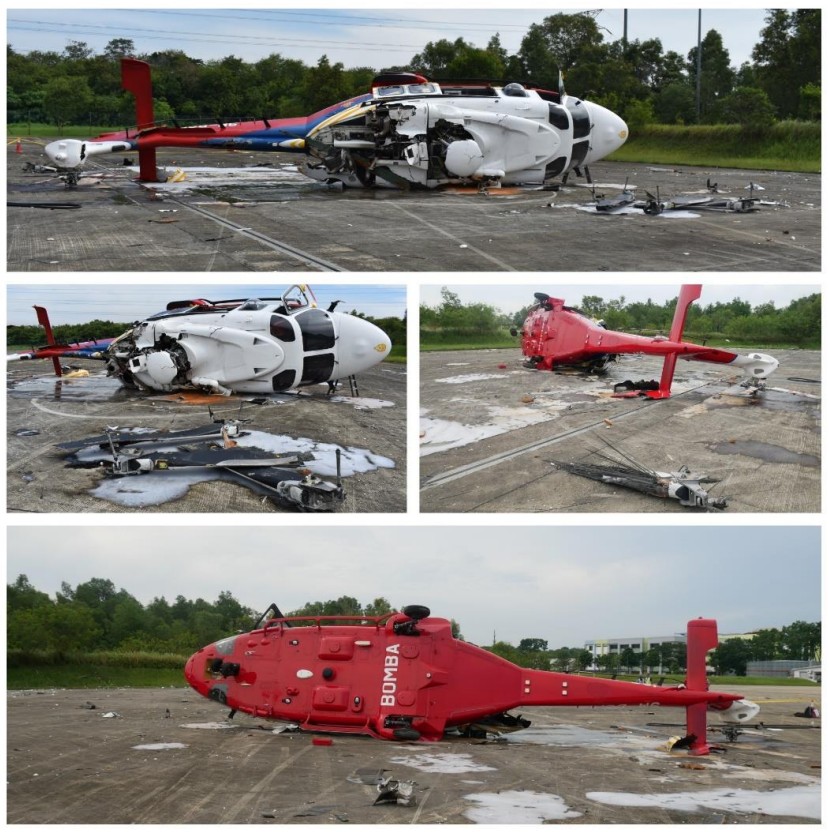
The Air Accident Investigation Bureau (AAIB) of Malaysia released their safety investigation report 12 July 2024. FRDM is part of the Ministry of Housing and Local Government. They created their Fire Air Unit in 1998.
Activity on the Day of the Accident
The aircraft, delivered to FRDM in 2018, had been undergoing base maintenance from 24 March to 21 July 2023, when 8 ground runs were conducted.
FDRM’s contracted CAAM Part 145 maintenance organisation, Galaxy Aerospace Malaysia, had requested further ground runs for Rotor Track and Balance (RTB) on 22 July 2023. Involved in these were two Pilots, one Quarter Master, one Engineer in Charge (EIC), one other Engineer, one Technician and one on-job training student.
The aircraft commander (PIC) had 1820 flying hours experience (774 on type). The copilot had 1187 (1026 on type)
The RTB on the ground went well and after the second ground run the EIC requested they proceed to hover checks at 7 and 70 feet. The investigators say that:
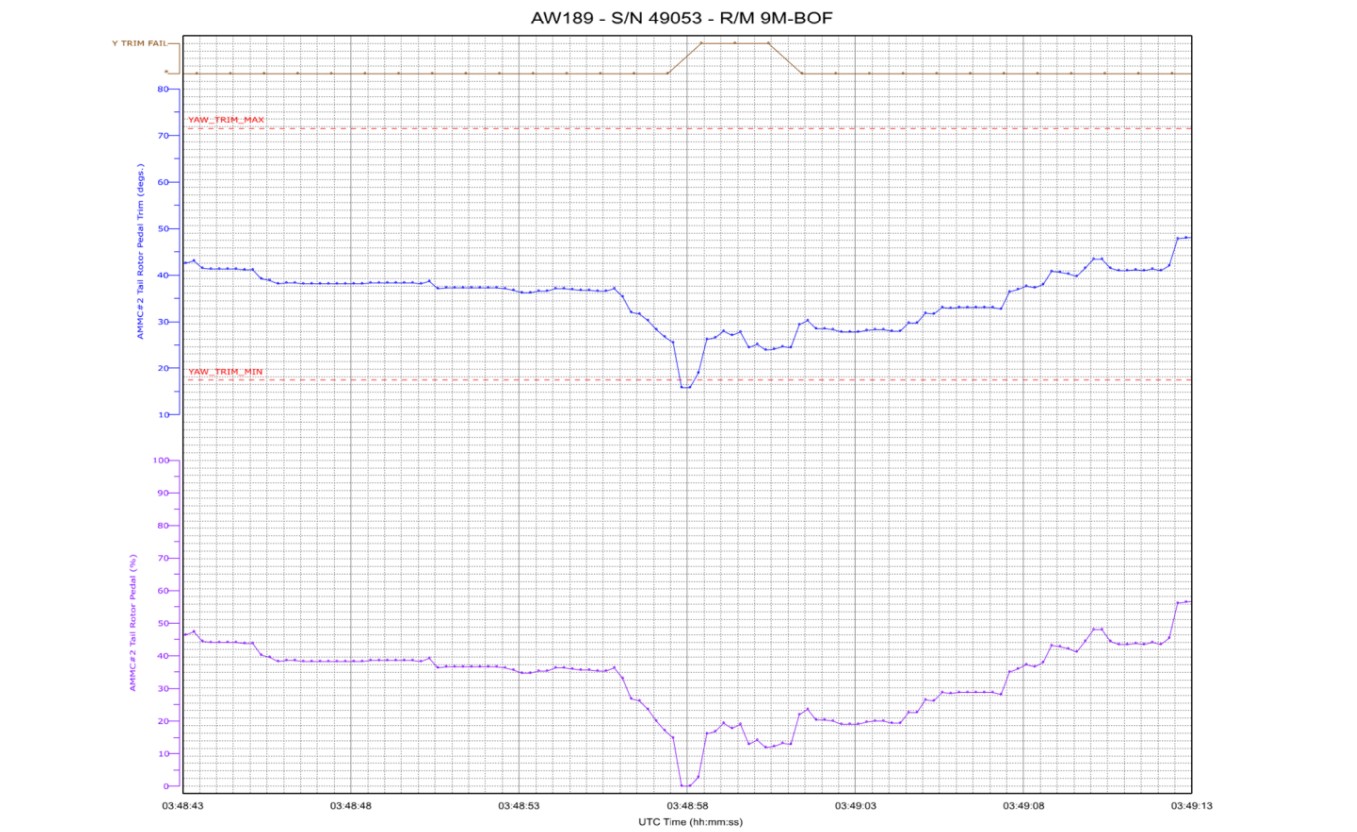
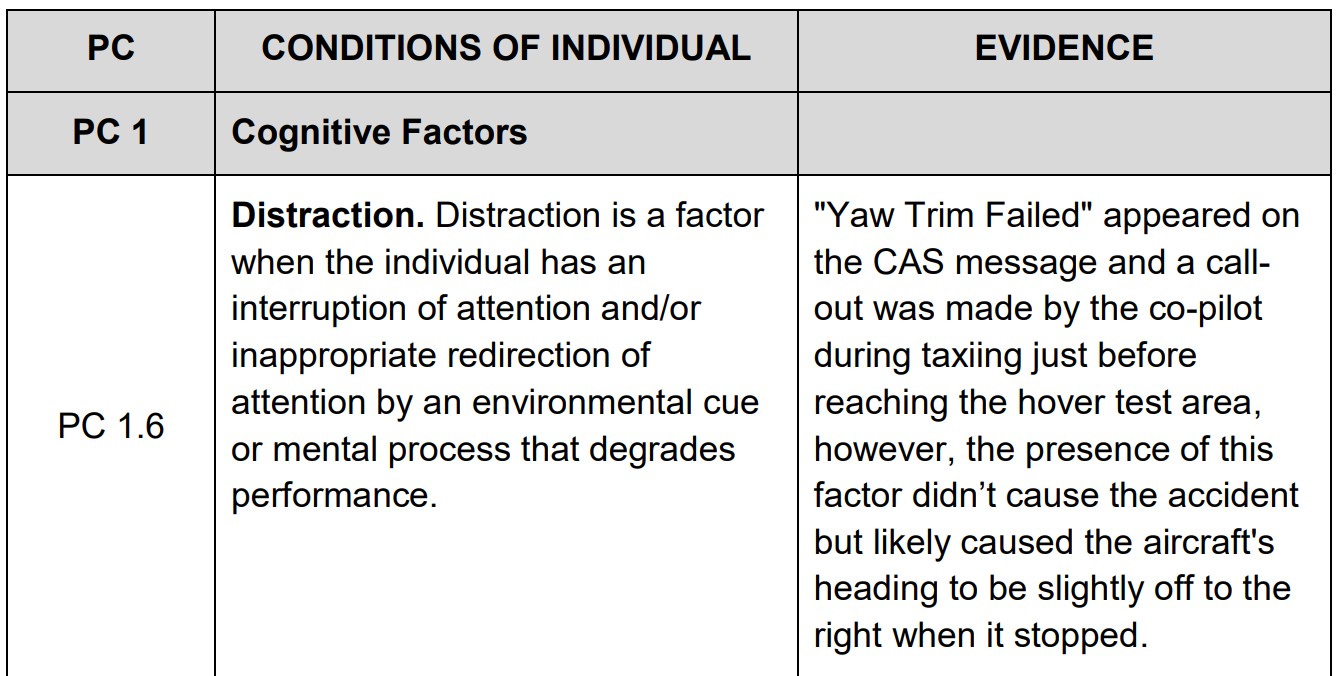
While taxing to the hover test area, all of the aircraft perimeters were in normal condition until the aircraft arrived approximately 3m from the designated take-off and approach area, when the “Yaw Trim Failed” appeared on the CAS [Caution and Advisory System] message, and the co-pilot made a call out to the PIC about the situation.
[T]he PIC stopped the aircraft and informed the rest of the crew that he would make some corrections to the position of the aircraft… …the aircraft suddenly spun to the left continuously and toppled. The PIC tried his best to control the spin but to no avail.
After rotating for one and a half times, the helicopter rolled to the right, the main rotor blades hit the tarmac surface and stopped by itself, and the aircraft finally rested on its right-hand side.
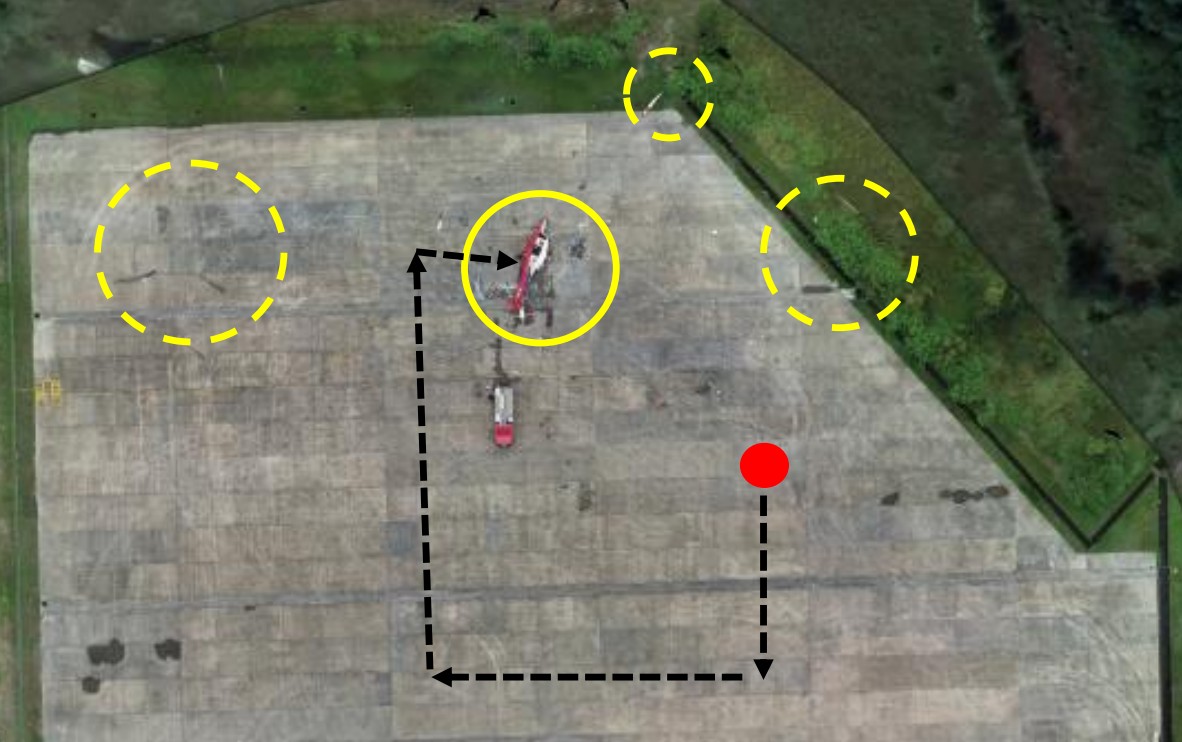
The aircraft was shutdown and everyone evacuated through the left hand side with only minor injuries.
AAIB Safety Investigation
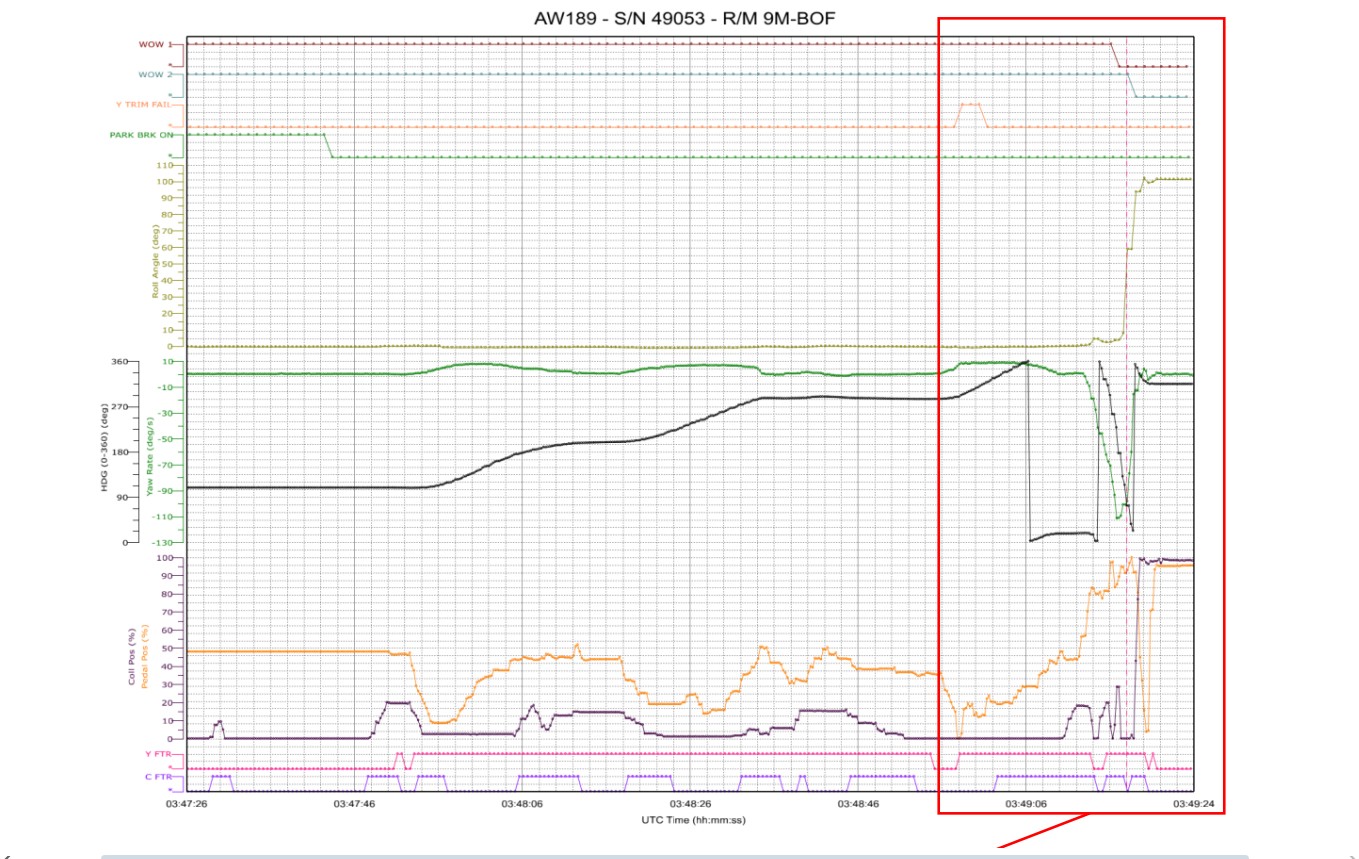
Data from the Flight Data Recorder (FDR) shows that the engine start for the second ground run commenced at T = 03:40 and …at T = 03:47:40 the crew activated both the Autopilot (AP) channels and immediately deactivated the parking brakes.
The investigators concluded that when the pilot applied the full right pedal during taxi the trim parameter was slightly below the minimum allowed value and this likely caused the activation of the related caution message. This was not however relevant for the subsequent event
About 13 seconds after that pedal input and having completed a 90° right turn, the aircraft came to a stop. The investigators comment that the final turn that followed…
…was performed by the pilot using the control technique where an initial collective input was applied to lighten the aircraft on its wheels and a subsequent pedal input in the direction of the desired rotation. Once the rotation was initiated, the pilot reduced the collective to MPOG and controlled the rotation rate acting mainly on the pedal control.
So:
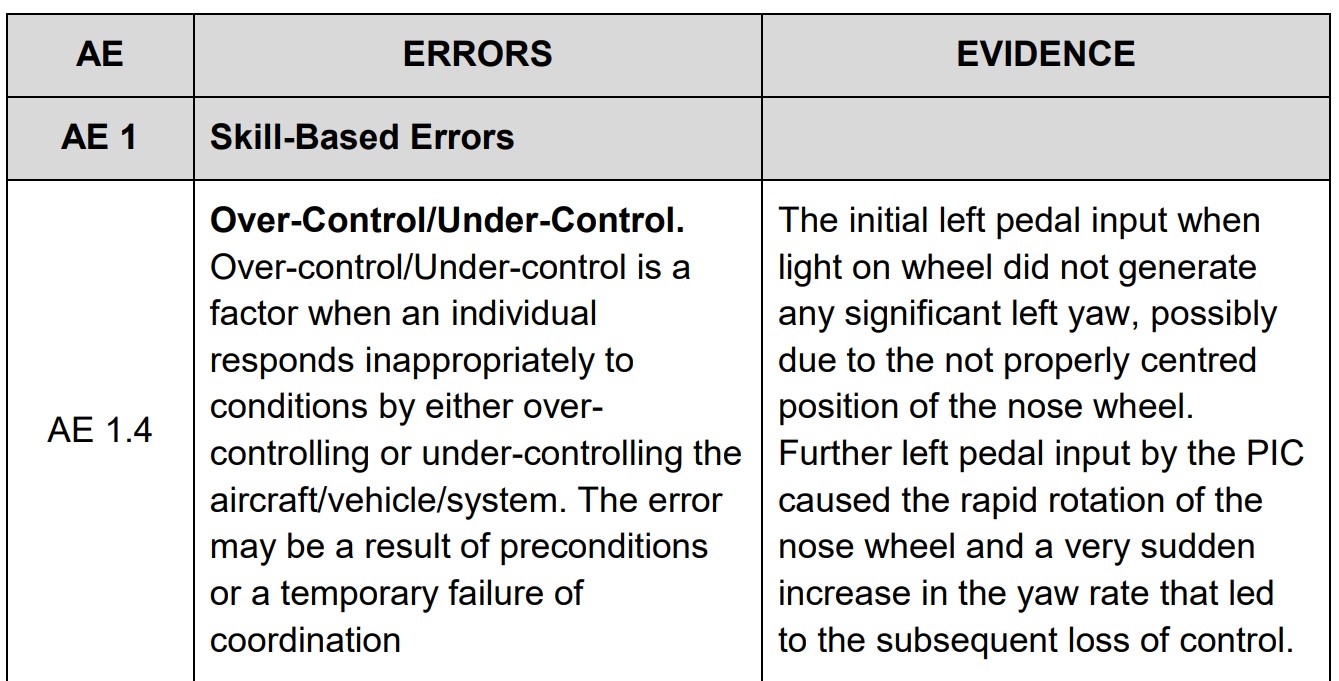
At T = 03:49:10, the PIC started to increase the collective up to 18% while maintaining the pedal almost centred (43%). The collective was maintained at a constant value and an initial left pedal input was recorded up to 56% resulting in a very limited yaw rate (2°). In the subsequent 2 seconds, the pedal was further moved to the left reaching the maximum value of 83%, the yaw stabilisation system reacted accordingly in order to reduce the developing yaw rate, which rapidly reached and exceeded 20°.
The collective control was rapidly reduced with no reduction of the pedal that remained almost at a constant value. The yaw rate continued to increase up to 45° when the flight data recorder highlighted the large and uncoordinated movement of the cyclic control mainly on the lateral axis.
Meanwhile, the left rotation speed continued to increase, and the aircraft rolled slightly on its right side. About 3 seconds after the first pedal input, the yaw rate indication was exceeding 110°, while the roll attitude was still below 10°. The subsequent cyclic inputs, mainly right and forward resulted in a rapid roll to the right, and when reaching 50° the main rotor blades went in contact with the ground. The aircraft rotation progressively reduced but this did not prevent the aircraft from rolling over.

The MIAT hangar facility and the Teaching Factory Area (TFA) apron were equipped with 34 CCTV cameras, but investigators found that 26 were inoperative, including most near the apron area. Investigators did however obtain footage from one CCTV camera inside Hangar 1:
Although the footage was not of high quality, it was clear enough to provide the investigators with visual evidence of the sequence of events leading to the occurrence of the accident.
In the last portion of the video footage, it was possible to observe the final right rotation of the aircraft.
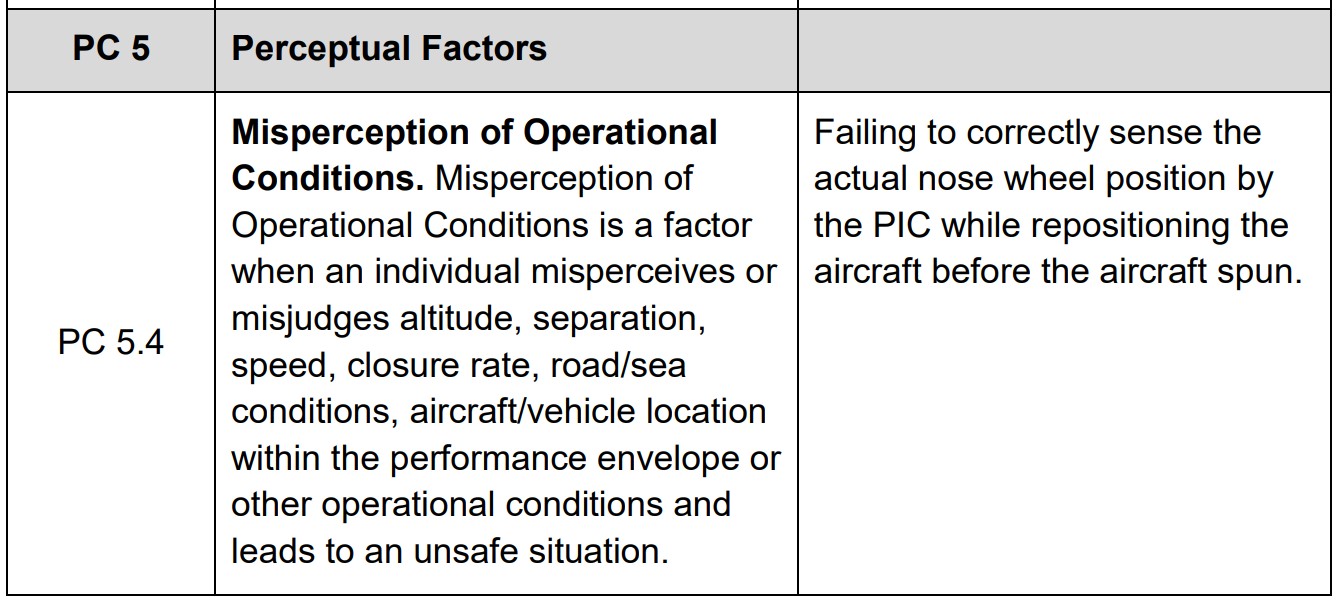
…it is clear that the nose wheel was not in a centred position when the aircraft completed the right turn and came to a stop.
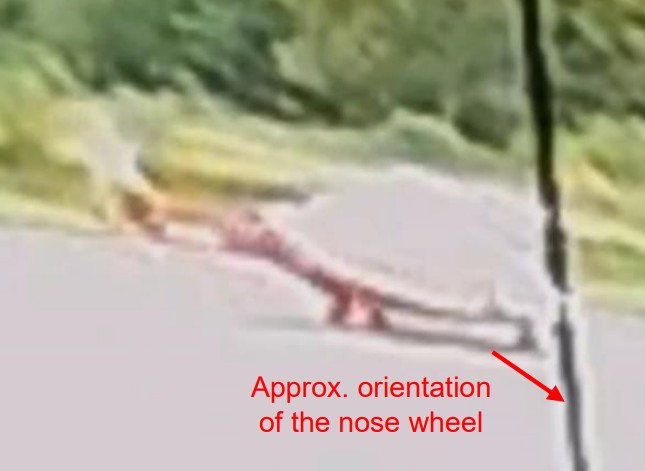
This investigators say explains why…
…the aircraft did not immediately start to rotate on the left when the crew applied the left pedal at time T = 03:49:10. In the off-centred condition, the nose wheel could have counteracted the left rotation, therefore requiring more tail rotor thrust than necessary for a centred (neutral) nose wheel position.
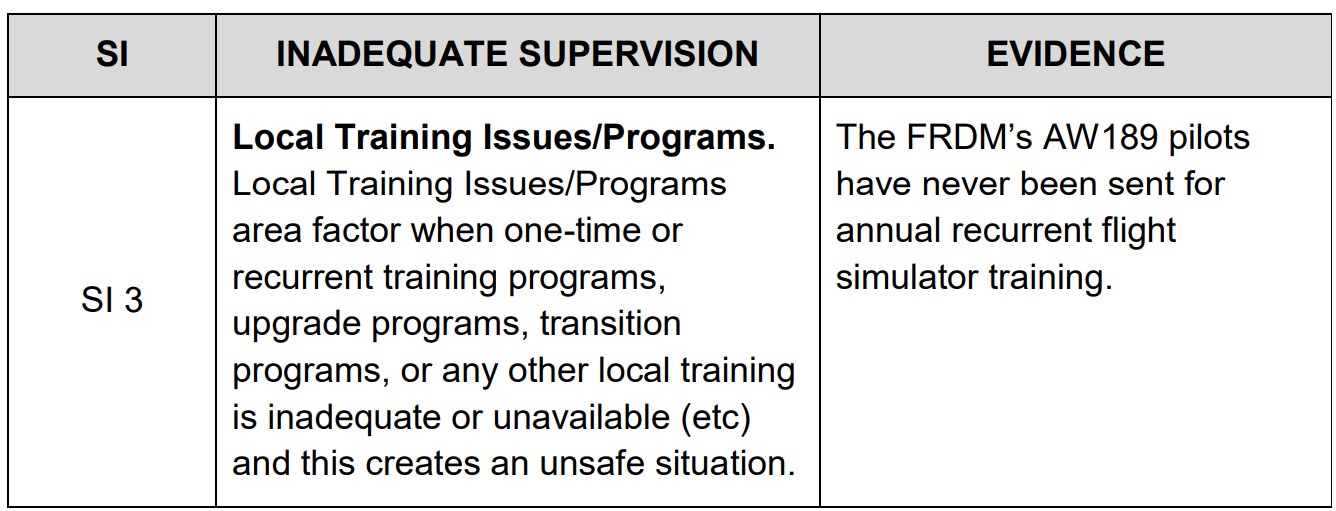
Investigators found that after their initial type conversion training the FDRM AW189 pilots had not undertaken recurrent flight simulator training (unlike those flying other types). This was not compliant with their own Director General Flying Directives (DGFDs).
The investigators comment that simulator training:
…is important because flying an aircraft is a complex task that requires a combination of cognitive, motor, and decision-making skills.
Recurrent simulator training helps pilots keep their skills sharp, ensuring they can effectively handle the aircraft in various situations. It allows pilots to practice and reinforce emergency procedures in a safe and controlled environment.
AAIB conducted a Human Factors Analysis and Classification System (HFACS) analysis to evaluate the relevant human factors. HFACS is based on the work of Wiegmann and Shappell and has four tiers: Organizational Influences, Supervision, Preconditions, and Acts. Each tier is further divided into multiple sub-categories. Their analysis is summarised below
HFACS Tier 1 – Unsafe Acts
HFACS Tier 2 – Preconditions for Unsafe Acts
 HFACS Tier 3 – Unsafe Supervision
HFACS Tier 4 – Organisational Influences

 AAIB Conclusions
The primary cause of the accident is attributed to the over-compensated left pedal input control by the PIC which caused the rapid rotation of the nose wheel and an abrupt increase in the yaw rate, leading to the subsequent loss of control of the aircraft.
Another LOC-G Accident: Guardia di Finanza (GdF) AW169 MM81970 27 March 2021
Coincidentally, Italian GdF (customs) AW169 MM81970 suffered a LOC-G event at Bolzano in March 2021.
In this case it appears the turn was initially attempted with the nose wheel locked but when it was then unlocked the significant pre-existing yaw input resulted in a catastrophic rapid rotation.
Safety Resources
The European Safety Promotion Network Rotorcraft (ESPN-R) has a helicopter safety discussion group on LinkedIn. You may also find these Aerossurance articles of interest:
CHC Scotia AS332L Rollover on West Navion Helideck After Loss of Dynamic Positioning
SAR AW101 Roll-Over: Entry Into Service Involved “Persistently Elevated and Confusing Operational Risk”
Taxiing AW139 Blade Strike on Maintenance Stand
South Korean Fire-Fighting Helicopter Tail Rotor Strike on Fuel Bowser
S-92A Collision with Obstacle while Taxying
Air Ambulance Helicopter Downed by Fencing FOD