
Night HEMS BK117 Loss of Control
Night HEMS BK117 Loss of Control (CHC BK117C2 VH-SYB) On the evening of 21 October 2016, Helicopter Emergency Medical Service (HEMS) Airbus BK117C2 VH-SYB operated by CHC Australia suffered a serious incident over New South Wales. The Accident Flight The Australian Transport Safety Bureau (ATSB) explain in their safety investigation report that: The crew were returning [from Canberra, ACT] to their home base at Orange, New South Wales, after conducting a [HEMS] task [that saw them depart from base at 1650]. The flight was conducted as a night visual imaging system (NVIS) operation under night visual flight rules (NVFR), with the pilot and aircrew member (ACM) both wearing [ITT M949 ANVIS-9] night vision goggles (NVG). The pilot had arrived early, at 1600, for duty due to commence at 1730 as the night shift pilot. She had 5,065 hours total time, 602 on type. The pilot had c 770 hours of night experience including about 300 hours on NVIS. The pilot had completed an NVIS proficiency check flight on 9 August 2016. In contrast the ACM was on a 0730-1730 day shift. Remarkably she would not however exceed a 14 hour duty day report ATSB as ACM duty time only commenced when the aircraft was tasked. The ACM had 859 hours total experience, 465 hours on type. She had last completed an NVIS capability check flight on 31 May 2016. As an ACM, she had been trained to provide assistance to pilots in deteriorating visibility conditions and in-flight recovery procedures. The pilot planned the return flight as an NVIS NVFR flight rather than under instrument flight rules (IFR) “as it provided more diversion options along the planned route” as thunderstorms were forecast. The helicopter departed Canberra Hospital at 2010 for the return flight to Orange, with both the pilot and ACM wearing NVG. ATSB note that: NVGs are not designed to be used for flight under IFR, however, it is possible to ‘see through’ areas of light moisture when using NVGs which increases the risk of inadvertently entering IMC. They report that: Approximately 20 NM north-west of Crookwell the pilot determined that the weather conditions were no longer suitable for continuing the flight due to closing gaps between the storms and reduced visibility ahead. After some discussion between the pilot, ACM and paramedic regarding suitable diversion sites, it was decided to divert to the Crookwell Medical helicopter landing site (HLS). They waited there until 2240 until the storm had passed. The pilot reported that she had no specific pressure or reason to return to Orange that night. However, she felt a responsibility to complete the mission and to return the helicopter back to home base if possible and safe to do so, thereby allowing further emergency medical service (EMS) or search and rescue (SAR) tasking from the Orange base The pilot reported that when the helicopter reached the take-off safety speed, she adjusted the helicopter attitude but the searchlight reflecting off the rain limited her forward visibility. She adjusted the searchlight down and to the right so she could see the ground more clearly, but the forward visibility did not improve enough for her to be comfortable with continuing the flight in that configuration. She then adjusted the helicopter’s attitude to slow the helicopter and help maintain visibility with the...
read moreAir Ambulance Pilot’s Visor Smashed in Double Bird Strike
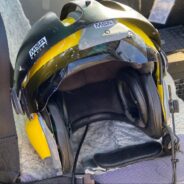
Air Ambulance Pilot’s Visor Smashed in Double Bird Strike (Med-Trans Corp Airbus AS3503e / H125 N853MB) On the afternoon of 5 March 2024 Airbus AS350B3e (H125) helicopter air ambulance N853MB, operated by Med-Trans Corp, suffered a bird strike near its destination at Fort Morgan, Colorado. The operator reported that: The aircraft was flying straight with SAS engaged and a 100-200 FPM decent approximately 700-1000 ft AGL. The pilot remembers scanning left for the aircraft and looking forward and seeing two large birds of prey heading at the windshield. A left turn mitigation was attempted and the medic heard the pilot call out birds, one bird impacted the pilot side window. The second bird is speculated to have hit the rotor blade. The pilot had parts of the window hit his chest, face and helmet. The helmet visor was destroyed and the helmet was removed from his head (chin strap was on, but the helmet had a quick release strap that must of been hit). The pilot side door was opened, speculatively by the pilots helmet. Despite the damage to the helmet the operator noted the helmet did its job. The pilot suffered only minor injuries. The impact and resulting wind caused momentary disorientation and the wind made it difficult to see clearly as well as all verbal communication was lost with the pilot. The pilot did a 270 degree descending left turn to land in an open field. A normal landing, shutdown and egress were performed. According to the US National Transportation Safety Board (NTSB) safety investigation report, issued on 11 July 2024 the birds were identified as red-tail hawks. These typically weighing from 690 to 1,600 g (1.5 to 3.5 lb). The NTSB determined that in fact: The birds struck the windscreen and fragments of the windscreen impacted the rotor blades. Safety Resources The European Safety Promotion Network Rotorcraft (ESPN-R) has a helicopter safety discussion group on LinkedIn. You may also find these Aerossurance articles of interest: HEMS H145 Bird Strike Safety Lessons from a Fatal Helicopter Bird Strike: A fatal accident occurred on 4 Jan 2009 involving Sikorsky S-76C++ N748P of PHI that highlighted a range safety lessons. We also discuss current activity on enhancing bird strike requirements. USAF HH-60G Downed by Geese in Norfolk, 7 January 2014 Swedish Military NOE Helicopter Bird Strike Power of Prediction: Foresight and Flocking Birds looks at how a double engine loss due to striking Canada Geese had been predicted 8 years before the US Airways Flight 1549 ditching in the Hudson (which was just days after the Louisiana helicopter accident). Final Report Issued on 2008 B737 Bird Strike Accident in Rome NTSB Recommendations on JT15D Failure to Meet Certification Bird Strike Requirements USAF T-38C Downed by Bird Strike AS350B3/H125 Bird Strike with Red Kite Big Bustard Busts Blade: Propeller Blade Failure After Bird Strike AW169 Birdstrike with a Turkey Vulture Dusk Duck: Birdstrike During Air Ambulance Flight Aerossurance has extensive air safety, flight operations, HEMS, SAR, airworthiness, human factors, helidecks, aviation regulation and safety analysis experience. For practical aviation advice you can trust, contact us at: enquiries@aerossurance.com Follow us on LinkedIn and on Twitter @Aerossurance for our latest...
read moreFatal USCG SAR Training Flight: Inadvertent IMC
Fatal USCG SAR Training Flight: Inadvertent IMC (Airbus MH-65D CG-6535, 28 Feb 2012) On 28 February 2012 a US Coast Guard (USCG) Airbus MH-65D Dolphin (AS365) CG-6535 impacted the sea in Mobile Bay, Alabama with the loss of all four crew members. This followed an unintended flight into a Degraded Visual Environment (DVE) during a night Search and Rescue (SAR) training flight. The Accident Flight The helicopter was assigned to USCG Aviation Training Center (ATC) at Mobile, Alabama. It was conducting a night training flight that include approaches to the hover, basket hoists with the 41-foot Motor Vessel (MV) Solomon and rescue swimmer hoists. The crew consisted of an ATC instructor as Pilot-in-Command (PIC), a pilot under instruction as Copilot (CP), a flight mechanic hoist operator (FM) and a rescue swimmer (RS). According to the USCG accident report the PIC had 3,972 hours of total, 3,629 on type. The CP had just 263 hours, 39 on type. The CP was nearing the completion of his course, having reported to the ATC on 16 January 2012 for the 7-week MH-65D Transition Course. The weather at the time of departure and forecast for the evening was VMC. The crew completed planned training but the weather had deteriorated during the RS exercises with a ceiling lowered to 400 feet and reduced visibility (4.4 nm at the nearest met station). According to the USCG accident report the crew had some difficulty maintaining position during some of the RS hoists according to witnesses on the MV Solomon. Its not clear if that was related to the weather or not. After the completion of RS hoisting, the PIC transferred the controls to the CP for over-water hover training. The CP spent two minutes practicing over-water hover position keeping using the Hover Augmentation (HOV-AUG) flight director mode. Following the over-water practice hovering, the PIC directed the aircraft to be reconfigured for forward flight and disengaged the HOV-AUG mode. Forty-four seconds prior to the mishap, the CP began a manual instrument takeoff/departure (ITO) from the over-water hover. A manual ITO is conducted without the assistance of the aircraft’s flight director modes. Based on cockpit recorded dialog, it appears that [ANVIS-9] Night Vision Goggles (NVGs) were in use by the PIC. Investigators say both PIC and CP were using NVGs when the aircraft departed. During the ITO, the PIC acknowledged that a positive rate of climb was established and discussed hoisting performance with the RS. Shortly after CG-6535 ascended above 200 feet, but below the maximum achieved altitude of 362 feet, the PIC recognized the aircraft had encountered IMC and verbalized a transfer of control of the aircraft. The PIC assumed control of the aircraft approximately 23 seconds prior to impact. Sixteen seconds prior to impact… ….the PIC stated his intention to slowly come down to try and regain visual conditions and requested that the CP provide the Radar Map page on the PIC’s multi-function display flight instrument. The PIC did not verbalize the minimum altitude he intended to descend to or alter the pilots radar altimeter warning setting. While maneuvering the aircraft without the assistance of the aircraft’s flight director, CG-6535 entered an attitude indicating a right hand turn greater than 43 degrees angle of bank, 5.5 degrees per second yaw rate to the right, and 22 degrees...
read morePilot Induced B407 HEC Power Loss
Pilot Induced B407 HEC Power Loss (Guardian Helicopters N999GH at PG&E Training Site, Livermore, CA) On 11 May 2022 Bell 407 / Eagle 407HP conversion N999GH of Guardian Helicopters was involved in an accident near Livermore, California during a Part 133 rotorcraft external-load flight. The pilot was seriously injured. remarkably, the lineman, suspended on a long line below the helicopter, escaped with only minor injuries. The Accident Flight The US National Transportation Safety Board (NTSB) safety investigation report was issued on 14 May 2024. The NTSB explain that: The pilot was performing a HEC [Human External Cargo] long-line qualification exam flight at the Livermore Electric Safety Academy, a training operations facility owned by the Pacific Gas and Electric Company (PG&E). The pilot was flying the helicopter solo from the right seat with the door removed so that he could lean outside and observe below. According to the helicopter operator, this was the second time he had taken the check ride, having not passed on the first attempt. The maneuvers were observed and monitored on the ground by a group of examiners. The pilot had about 3,500 hours of total flight time, including about 1,000 hours as a flight instructor and agricultural pilot and almost 175 hours on type. He started working for the helicopter operator about 15 months earlier. The pilot had logged c 87 hours of FAR Part 133 external load time before the accident (most in the AS350) and c 10 in the B407. After performing the initial maneuvers, the pilot transitioned to the HEC phase of the exam by carrying a lineman on a 60-ft long line. While maneuvering the helicopter at an altitude of about 175 ft above ground level (agl), the helicopter lost engine power. Multiple witnesses recounted observations that matched the pilot’s statement. All stated that the helicopter appeared to be operating without issue throughout the maneuvers until they heard a change in engine tone, with some then observing the main rotor blades slowing as the helicopter began to rapidly descend In response, the pilot selected what he thought was the “emergency” throttle detent, but the engine did not respond. The pilot maneuvered the lineman away from the landing helicopter and performed an autorotation. The helicopter landed hard and sustained substantial damage. The Safety Investigation [E]xamination of the airframe, engine, and engine control systems did not reveal any evidence of preimpact mechanical malfunction or failures. The helicopter contained fuel, was loaded within its envelope, and weather was not a factor. Onboard video recorded a section of the annunciator panel that showed some, but not all, engine warning lights, none of which illuminated at any point during the flight. The recording did capture an audio tone as the descent began that was the same frequency as the engine out and low rotor warning indicators. The video recording appeared to show the pilot was anxious throughout the flight; however, considering the nature of the work he was performing and the stress he would have been experiencing, this is understandable. It could not be determined if this contributed to the accident. The engine was test run in a test cell and it performed nominally. Significantly: Review of data recorded by the engine control unit (ECU) revealed that at the time of the loss of engine power,...
read moreHEMS Downwash Injuries: Two More Case Studies
HEMS Downwash Injuries: Two More Case Studies We return again to a safety issue we have previously highlighted, namely helicopter downwash. Case Study 1: AW169, G-KSSC, UK, 11 October 2023 On 11 October 2023 a bystander was injured when Leonardo AW169 air ambulance G-KSSC landed at Bearsted Common, Maidstone, Kent. The UK Air Accident Investigations Branch (AAIB) explain in their safety investigation report, issued 13 June 2024, that the Gama Aviation (formerly Specialist Aviation Service) / Air Ambulance Kent Surrey Sussex Helicopter Emergency Medical Service (HEMS) aircraft was on final approach to a cricket pitch, c 80 m from an emergency incident. The crew assessed the field and established that its size, approximately 80 m by 120 m, was more than sufficient to use as a HEMS landing site. In daytime a ‘2D’ sized clear area is required, which AAIB note is 30 m by 30 m for an AW169, though there are other considerations for safe operations, as this occurrence highlights. The crew decided on an approach track that avoided the cricket pavilion and some residential properties to the north-east of the pitch. This also allowed the approach to be conducted largely into wind, which was from the south-west. The crew noted that there were pedestrians at the northern end of the field and some ground covers protecting the playing surface, but the main pitch area was clear. They elected to use a helipad profile approach with a committal height of 180 ft agl to provide sufficient clearance from surface obstructions. On the final approach to land, when passing abeam the pavilion, the crew noticed that two previously unseen members of the public had appeared at the north-eastern edge of the cricket square, near the pavilion. The pilot flying stopped the descent at a height of approximately 160 ft agl to minimise the effect of the rotor downwash and extended his aiming point further into the area. As the crew established the helicopter in a hover at about 40 ft agl, one of the medical crew in the cabin noticed that the ground covers had rolled from their original position. The pilot flying decided to continue with the landing as any additional manoeuvring would risk blowing the covers further. The helicopter was shut down and shortly after the crew were made aware a woman “had suffered a cut to her leg when one of the ground covers rolled towards her, striking her”. She was subsequently taken to hospital. The Safety Investigation It was found that… …the covers were mounted on wheels which were equipped with brakes. The brakes had not been applied and the covers were moved easily. AAIB comment that: HEMS operations are inherently reactive and time sensitive. Due to the urgency involved, it is often impractical to provide formal site security measures to control access to third parties at landing sites. The applicable regulatory guidance material, GM1 SPA.HEMS.100(a), sets out the “HEMS Philosophy” that includes the concept that “potential risk must only be to a level proportionate to the task”, with the following hierarchy of protection: (1) third parties (including property) – highest protection; (2) passengers (including patients); and (3) crew members (including technical crew members) – lowest. Oddly this puts third-party property above passengers and crew and equally with third party individuals. AAIB note that: The speed...
read moreHESLO R44 Snagged by its Own Longline
HESLO R44 Snagged by its Own Longline (Synergy Aviation C-CGEC Oil & Gas Accident Alberta) On 25 August 2023 Robinson R44 C-GNEC of Synergy Aviation crashed during a Helicopter External Sling Load Operation (HESLO) due to the longline being becoming entangled with gas production infrastructure. The Transportation Board of Canada (TSB) published their brief safety investigation report on 4 March 2024. The Accident Flight The helicopter had landed at ‘multi-gas well battery’ east of Grande Cache, Alberta to pick up an empty cargo net to retrieve pipeline integrity gauges from another site. The TSB reported that the pilot (4926 hours total, 4796 on type)… …landed near a work platform but did not shut down the helicopter. He then exited the helicopter and connected the 100-foot longline and cargo net, which was on the platform, to the cargo hook of the helicopter. The pilot got back in the running helicopter and lifted off into a hover. The pilot initiated a vertical climb, observing the longline and cargo net through the window in the pilot’s door. Once the helicopter had cleared the work platform, the pilot turned his attention from the load under the helicopter to the front of the helicopter and began forward flight toward the next site. During the transition to forward flight, the helicopter did not respond to the pilot’s flight control inputs. Unknown to the pilot, the longline had snagged a railing on the work platform. As the pilot attempted to maintain control of the helicopter, the main rotor rpm began to decay. Given the likelihood of a crash, the pilot steered the helicopter away from the piping and tanks, subsequently colliding with terrain at 0931. The pilot, who was not wearing a helmet because it was being repaired, suffered serious injuries. The Emergency Locator Transmitter (ELT) did not activate, not uncommon in helicopter accidents. Satellite flight following did alert the company to the accident. The TSB Safety Investigation When investigators arrived at the accident site, the lanyard that had snagged on the railing of the work platform was still attached. The longline was equipped with a locked latch hook. This type of hook has a locking mechanism that prevents the hook’s keeper from opening, which can mitigate the risk of snagging (top image). The end of the steel lanyard that was attached to the locked latch hook had a spring latch hook installed (bottom image). This type of hook does not have a mechanism to prevent the hook’s keeper from opening, and this is the hook that became snagged on the platform’s railing. Safety Actions After the accident, Synergy Aviation issued an internal memo with the following actions: All loads are to be set and removed from the ground adjacent but clear of the platforms. All lanyards with the spring latch systems are to be removed from service and replaced with a locked latch style hook with a manual release. All longline operations require the pilot to remove the aircraft door to ensure the best visibility of the external load and/or end of the longline. A review of all operations associated with the pilot operating contracts as well as site hazard identification. TSB do not discuss the procedures and risk assessments in place prior to the accident. TSB make no recommendations. Safety Resources The European Safety...
read moreDrift into Danger: AW109SP Night HLS Accident
Drift into Danger: AW109SP Night HLS Accident (G-RAYN, North Wales) On 1 November 2022, a Leonardo AW109SP, G-RAYN, struck trees and crashed during a nighttime departure from an unlit landing site, in a field at Nantclwyd Lodge, near Llanelidan, Denbighshire. The UK Air Accidents Investigation Branch (AAIB) issued their safety investigation report on 18 April 2024. History of the Day’s Operations The pilot (who had 3,815 hours in total, of which 1,565 were on type) flew G-RAYN from Biggin Hill, Kent on the morning of 1 November 2022, to transport passengers to North Wales for a day’s game shooting. The helicopter was owned by the lead passenger, but maintained and routinely operated commercially for third-parties by an approved air operator. When used privately by the owner, the flights were conducted as NCO flights (‘non-commercial air operations with other-than complex motor-powered aircraft’), using a pilot approved by the operator. This pilot had at that point worked for the operator for 5 years but was contracted directly by the owner for an NCO flight. The pilot arrived at Biggin Hill at approximately 0645 hrs. His scheduled duty check-in time was 0700 hrs, 30 minutes before takeoff. While he had arrived early, much of that extra time was taken up with an unanticipated supportive conversation with a very recently bereaved colleague. The pilot self-briefed the weather, refuelled G-RAYN to approximately 600 kg of fuel and completed the prescribed pre-flight walk round check of the helicopter before taking off at 0727 hrs. The helicopter landed at the owner’s private landing site at Lisvane, near Cardiff, at 0830 hrs to collect the passengers. Because the flight was in support of the helicopter owner, who was a frequent flyer, the pilot did not consider that a refresher pre-flight safety briefing was required. He was not aware that some of the passengers had not flown in that model of helicopter before. The flight to North Wales was uneventful and the helicopter landed near Llanelidan at 0920 hrs at a site listed in the operator’s Company Landing Site Directory (CLSD) as ‘LEA2’. The site was a flat area of grass adjacent to a row of trees and a shooting lodge. The ground sloped down and away toward several isolated trees to the north west, as indicated by the chevrons above. The pilot departed to Hawarden aerodrome to refuel. The return flight had originally been scheduled as a day departure at 1630 hrs. The takeoff became delayed until after just after nightfall (that occurred at 1718 hrs). The pilot’s recollection was of having approximately 340 kg of fuel on board the helicopter before the flight and that he “took his time” after engine start to burn off additional fuel because he knew the helicopter would be close to its maximum takeoff weight (MTOW). The landing site was unlit but the pilot was satisfied there were sufficient visual references available for him to safely conduct a vertical departure. The helicopter’s external lights were illuminating the area immediately around the helicopter and he could see what he described as a “vague horizon” ahead. The pilot judged that lights from the shooting lodge’s windows to his right would be an adequate lateral marker for the departure climb. During take off from the unlit ad hoc landing site, at a height of...
read moreFatal Fall after HESLO Helicopter Hooks Worker
Fatal Fall after HESLO Helicopter Hooks Worker (AS350BA C-FHAU) On 20 August 2023, the Expedition Helicopters Airbus AS350BA C-FHAU, was involved in a fatal accident in which a ground crew member died during Helicopter External Sling Load Operations (HESLO). The Transportation Safety Board of Canada (TSB) released its safety investigation report on 28 March 2024. The Accident The TSB explain the helicopter was being flown by a single pilot and moving drilling equipment with a 100 ft longline, in support of mining company Angus Gold‘s exploration activities being conducted by drilling contractor G4 Drilling Canada Ltd approximately 25 nm west of Wawa, Ontario. The pilot had over 4,580 hours total flight time, with 1,210 hours conducting longline operations. The pilot’s door was replaced by a vertical reference bubble window was installed. The conditions allowed day Visual Flight Rules (VFR) flight. The winds at Wawa were reported as being “from the north at 10 knots, variable from 320° to 050° true”. The pilot’s task consisted of transferring surface drilling equipment by longline from an old drill site on an island to a new drill site on a nearby peninsula, approximately 900 feet away. The G4 ground crew consisted of a foreman, an assistant foreman, a driller, and a helper. The pilot started his duty day at approximately 0615 [Local Time] and flew various short flights for about 2.5 hours. He was then off duty until the first drilling equipment transfer flight, which started at approximately 1520. The foreman and the assistant foreman were stationed at the old site, preparing and attaching the drilling equipment to the longline, while the driller and helper were at the new site receiving, positioning, and detaching the drilling equipment from the longline. TSB explain that: The foreman, driller, and helper had completed all required common core training modules including the speciality module on loading and unloading personnel and equipment from helicopters. However: The investigation did not reveal any documentation indicating that the assistant foreman was qualified as a driller or that he had received any of the required common core or specialty module training. The initial loads were successfully moved. By approximately 1630, only the drill shack cage remained to be moved. This cage was to be placed over the drill and equipment on the drilling platform at the new site. On arrival taglines would be used by ground personnel to rotate the cage to align it. However… When the helicopter reached the new site with the cage, the pilot, the driller, and the helper had difficulties positioning the cage. After several unsuccessful attempts, the pilot decided to bring the assistant foreman to the new site to help. The pilot flew back to the old site, released the cage, picked up the assistant foreman and took him to the new site. The pilot then returned to collect the cage and delivered it to the new site. At approximately 1700, the pilot positioned the helicopter into the wind and lowered the cage over the drill. The driller and helper each held 1 tag line and the assistant foreman held 2 tag lines. When the pilot looked down through the vertical reference window, he could see the driller and the helper only, because a piece of plywood on top of the cage was blocking his view of the assistant foreman....
read moreHEMS H145 Bird Strike
HEMS H145 Bird Strike (HB-ZQJ) On 24 March 2021 Airbus H145 air ambulance HB-ZQJ of Schweizerische Luft-Ambulanz was damaged by a bird strike in the cruise. The 1.3 kg bird penetrated the lower cockpit window at rudder pedal level. The Swiss Safety Investigation Board (SUST) issued their safety investigation report in French on 10 March 2024. The Flight The helicopter was undertaking a night patient transfer from Yverdon-les-Bains Hospital to Vaudois University Hospital in Lausanne (both hospitals have elevated helipads). On board were one pilot, two medical personnel and the patient. At 22:01 Local Time, 5 minutes into the flight, the helicopter was in the cruise at c 1000 ft AGL on autopilot when the bird strike occurred over Bretigny-sur-Morrens. The pilot felt a pain in his right leg having been impacted by remains of the bird… [The pilot] took manual control of the helicopter, reduced speed and ensured that the power and airworthiness of the helicopter were not affected by the impact. Despite entry at foot height the pilot was also hit in the head by debris. The pilot’s helmet “had numerous stains from the bird.” The helicopter diverted to their base at Lausanne. SUST Analysis and Conclusions SUST do not report the bird species but explain: The impact of the bird surprised the crew while the helicopter was cruising at night. It was therefore not possible to detect the presence of birds and attempt an avoidance maneuver. The shattering of the canopy with the penetration of the bird and the projection of the remains into the dark cabin must have caused a stressful situation which was well managed by the pilot. …the decision to divert to home base was appropriate. Of note is: The pilot’s equipment including helmet, robust suit and mountain boots contributed to the pilot’s physical integrity. Aerossurance customers who operate the H145 fly HEMS, helicopter hoist and military missions with the helicopter and operate with a similar ‘aircrew equipment assembly’ standard. Design & Certification Standards The current H145 lower cockpit windows are 2mm acrylic, reinforced round the edges. The current windshields are 6mm acrylic. The H145 is a derivative of the original BK117 (the four main rotor blade H145 is the BK117D2 and the five bladed H145 the BK117D3). While, as per the Changed Product Rule (Part-21.A.101), the certification basis for some changed H145 elements are recent amendments of CS-29, the EASA H145 Type Certificate Data Sheet (TCDS) states that otherwise FAR 29 Amdt. 40 from 1996 applies for all the other applicable requirements, except for three reversion to FAR 29 Amdt. 16 from 1978, significantly including “FAR 29.631 (for cockpit windscreens only)“. FAR 29 only introduced a bird strike requirement at FAR 29 Amdt. 40 in 1996: The rotorcraft must be designed to ensure capability of continued safe flight and landing (for Category A) or safe landing (for Category B) after impact with a 2.2-lb (1.0 kg) bird when the velocity of the rotorcraft (relative to the bird along the flight path of the rotorcraft) is equal to VNE or VH (whichever is the lesser) at altitudes up to 8,000 feet. Compliance must be shown by tests or by analysis based on tests carried out on sufficiently representative structures of similar design. So the H145 cockpit windscreen was not required to meet the 1996...
read moreNight Offshore Helicopter Approach Water Impact
Night Offshore Helicopter Approach Water Impact (Bond Offshore Helicopters EC225 G-REDU, BP ETAP CNS) On 18 February 2009 Airbus EC225 G-REDU of Bond Offshore Helicopters impacted the sea during a night visual approach to BP‘s Eastern Trough Area Project (ETAP) Central Production Facility. The crew’s perception of the position and orientation of the helicopter relative to the installation proved erroneous. After entering the water the helicopter floated and everyone on board was rescued. The aircraft capsized subsequently. This article primarily summarises the extensive 171 page UK Air Accidents Investigation Branch (AAIB) safety investigation report published 14 September 2011. Background Bond Offshore Helicopters had been formed in August 2001 and commenced operations in August 2004 with a long term contract for BP for commercial air transport and for Search and Rescue (SAR) operations, known as ‘Jigsaw’. They subsequently gained work with some smaller oil & gas customers and in February 2009 added another large oil and gas customer in Aberdeen. They had also won contracts, commencing in 2010 in Blackpool and Norwich with the AS365N3. Their operations department was structured as follows: On 27 December 2006, at night, in poor weather CHC AS365N G-BLUN, operating from Blackpool, impacted the Irish Sea near the North Morecambe gas platform with 7 fatalities On 12 February 2007, the UK CAA Head of Flight Operations Inspectorate (Helicopters) wrote to all UK offshore helicopter operators to ask they review the following topics and inform their CAA inspector: Consequently the Bond Director of Flight Operations tasked their Flight Safety Officer with “carrying out an audit and Flight Operations Risk Assessment (FORA)” against these issues. AAIB found that the Bond Operations Manual at the time of the G-REDU accident summarised crew approach and landing duties as follows: However: There were no specific vertical or horizontal profiles set out in the Operations Manual for an offshore visual approach. More comprehensive duties, challenges and responses were set out for precision and non-precision instrument approaches. These included altitude calls and instrument crosschecks as well as any deviation from the horizontal or vertical profile of the approach. Also: There was no specific company lesson plan for teaching offshore approach and landing techniques. However, the training staff had detailed lesson plans which identified the need to use the flight instruments to monitor the approach and the Oculogravic illusions which may be experienced when pitching up. However: Neither crew member could recall receiving this information during their company training. G-REDU, registered in May 2008, was the first EC225 in their fleet, that until that point had consisted of AS332L2s. A Honeywell MkXXII Enhanced Ground Proximity Warning System (EGPWS) Terrain Awareness Warning System (TAWS) had been retrofitted to G-REDU in November 2008. This modification was not required by regulation but was “recommended” for “long term” contracts in the Aircraft Management Guidelines (AMG Report 390) of the International Association of Oil and Gas Producers (IOGP, then OGP), of which BP was a member. This recommendation was subject to the caveat that “when an approved modification exists for the aircraft type and it is recommended by Company Aviation Advisory personnel”. The TAWS replaced the original Automatic Voice Alerting Device (AVAD), also an OGP recommendation for long term contracts. Although recommended by OGP, AAIB note that because helicopters can “land close to or on nominally hazardous terrain or...
read more
Recent Comments